 Save
Save There's something magical about having a pot of dumpling soup simmering on the stove when you're short on time but need something that tastes like you've been cooking all day. I discovered this version on a Tuesday evening when my freezer held nothing but a bag of Trader Joe's dumplings and the vague memory of a soup I'd had at a restaurant months before. Twenty-five minutes later, I was ladling bowls of something so aromatic and satisfying that my roommate actually looked up from their phone to ask what smelled so good.
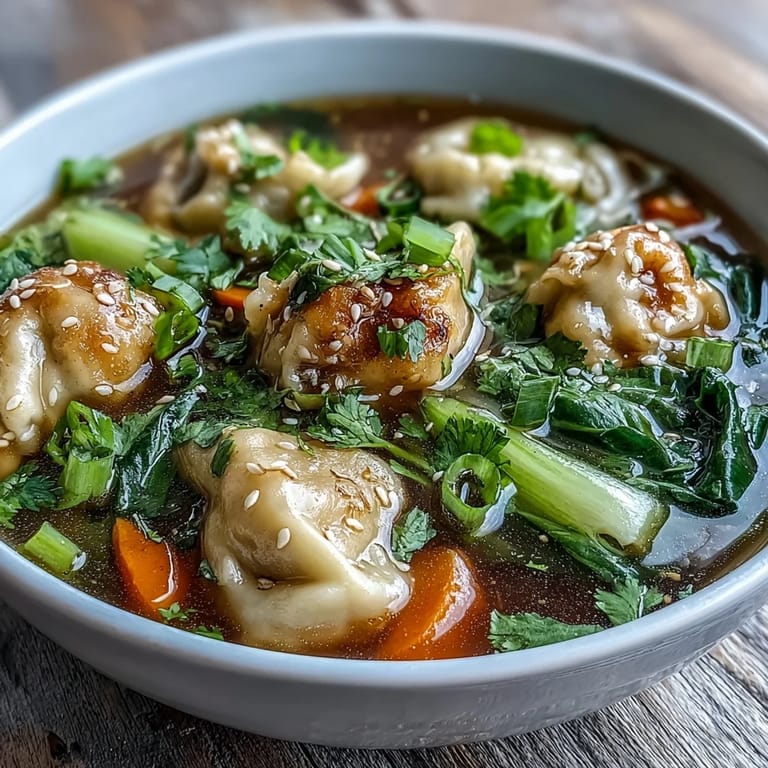
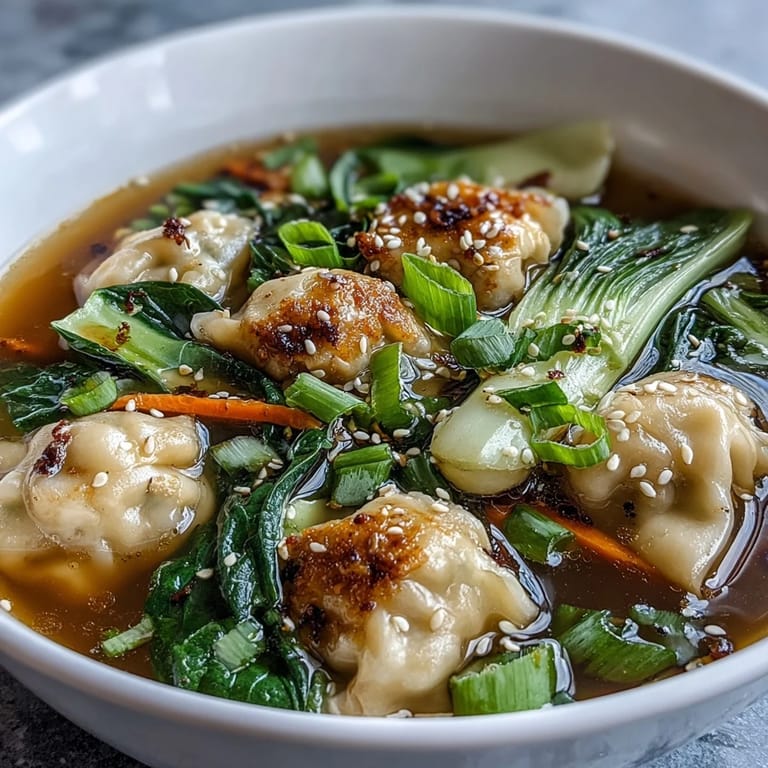
I made this for my sister after she mentioned craving something warm but didn't want me to stress in the kitchen. She sat at the counter while I worked, and by the time I set the bowl in front of her, steam rising with cilantro and sesame seeds catching the light, she said it felt like the kind of soup someone made for you when they cared. That's when I realized this recipe had become something more than just convenient—it was comfort wrapped in simplicity.
Ingredients
- 16 Trader Joe's frozen dumplings: These are the shortcut that makes this whole dish possible; any variety works, though pork dumplings add the most richness to the broth.
- 6 cups low-sodium chicken or vegetable broth: Low-sodium is essential because the soy sauce and sesame oil will add their own punch, and you want control over the final saltiness.
- 1 tablespoon sesame oil: This is where the soul of the soup comes from; it adds warmth and nuttiness that makes people ask what your secret ingredient is.
- 1 teaspoon grated fresh ginger: Fresh ginger gives the broth a subtle bite that keeps it from tasting one-note, and the smell as it hits the hot oil is irresistible.
- 2 garlic cloves, minced: Garlic and ginger together create that aromatic base that makes you feel like you're cooking something impressive.
- 1 teaspoon rice vinegar: This brightens everything and keeps the soup from feeling heavy, even though it's warming and substantial.
- 1/4 teaspoon ground white pepper: White pepper adds a gentle heat that doesn't overpower, and it dissolves into the broth seamlessly.
- 2 heads baby bok choy, halved lengthwise: These wilt in minutes and add a mild, slightly sweet vegetable element that balances the richness of the dumplings.
- 2 scallions, thinly sliced: Scallions belong at the very end, scattered across the top where they stay bright and add a sharp, fresh note.
- 1 medium carrot, julienned: Thin-sliced carrots add color and a subtle sweetness without weighing the soup down.
- 1/4 cup fresh cilantro leaves: Cilantro is optional but transforms the soup into something that feels thoughtfully composed rather than thrown together.
- 1 tablespoon toasted sesame seeds: These add texture and a final toasted note that ties the whole bowl together.
- Chili crisp or sriracha: Keep these on the table so people can add heat to their own taste, making the soup feel personalized.
Tired of Takeout? 🥡
Get 10 meals you can make faster than delivery arrives. Seriously.
One email. No spam. Unsubscribe anytime.
Instructions
- Warm the oil and awaken the aromatics:
- Pour sesame oil into a large pot over medium heat and let it warm for about a minute until you can smell its toasted aroma. Add your minced garlic and grated ginger, then stir for 1 to 2 minutes, watching as the kitchen fills with that deep, savory fragrance that signals something delicious is about to happen.
- Build the broth foundation:
- Pour in your broth, soy sauce, rice vinegar, and white pepper, stirring once or twice to combine everything smoothly. Bring it all to a gentle simmer, not a rolling boil, because you want the flavors to meld together quietly.
- Introduce the dumplings:
- Drop your frozen dumplings directly into the simmering broth—no thawing needed—and let them cook uncovered for 6 to 8 minutes, stirring occasionally to prevent sticking. You'll know they're ready when they float to the surface and feel tender when you test one.
- Add the vegetables:
- Nestle your bok choy halves and julienned carrots into the broth and let everything simmer together for another 2 to 3 minutes, just until the greens wilt and the carrots soften but still have a slight bite to them. The vegetables should stay vibrant, not fade into mush.
- Taste and adjust:
- Take a sip of the broth and ask yourself if it needs more salt, another splash of sesame oil, or a bit more ginger. This is your moment to make it taste exactly how you want it.
- Serve and garnish:
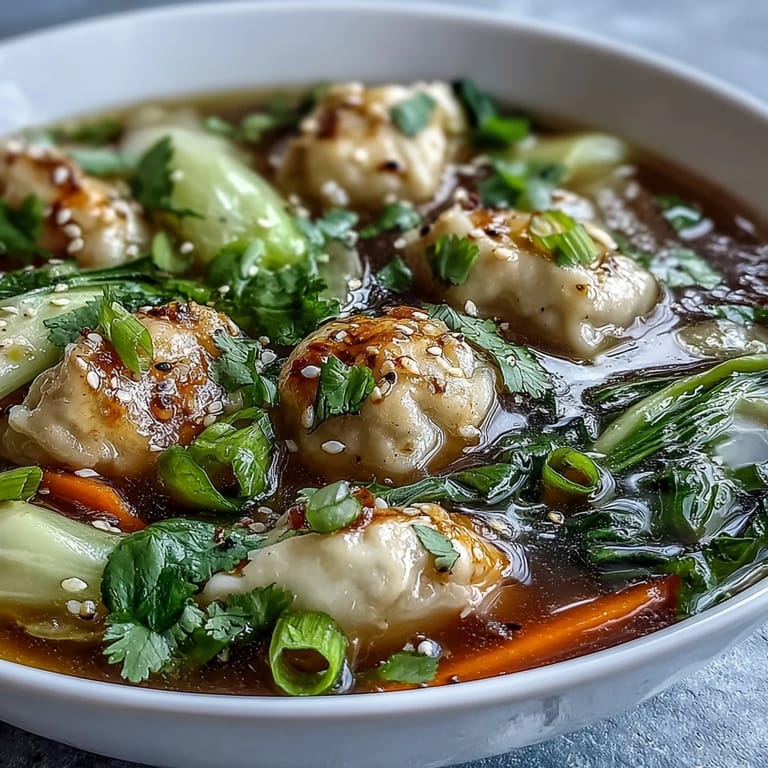
- Ladle the soup into bowls, making sure each one gets dumplings and vegetables distributed evenly. Top with scallions, cilantro if you're using it, and a scatter of toasted sesame seeds, then set out bottles of chili crisp and sriracha for anyone who wants to add heat.
 Save
Save One evening I made this soup and my neighbor, who lives alone, asked if she could join me. We ended up sitting at the kitchen table for hours, just eating slowly and talking, and I realized that sometimes the best recipes are the ones that give you permission to sit down and be present. This soup does that—it doesn't demand your attention once it's simmering, so you can focus on the moment instead.
Why This Works as a Main Dish
The dumplings provide protein and substance, so this isn't a light starter but an actual meal that fills you up. The broth is flavorful enough to carry the whole bowl, and the vegetables add nutrition without making you feel like you're eating rabbit food. Together, they create something balanced and satisfying that works for lunch, dinner, or even late-night comfort eating when nothing else sounds right.
Making It Your Own
The beauty of this recipe is that it's a framework, not a rule. I've made it with spinach when I was out of bok choy, added mushrooms when I had them lying around, and even thrown in cooked noodles on nights when I wanted something extra hearty. The core—the broth, the ginger, the garlic, the sesame oil—stays constant, but everything else can bend to what you have and what you're in the mood for. The dumplings themselves are the anchor, so you really can't go wrong as long as those are there.
Quick Upgrades and Variations
If you want to make this feel more special without adding much time, there are a few small moves that elevate it. A splash of fish sauce adds complexity without tasting fishy, a piece of kombu or a star anise can add depth if you have them, and some people swear by a touch of honey to balance the saltiness. These aren't necessary, but they're the kinds of tweaks that make you feel like you're cooking rather than simply assembling.
- Napa cabbage or fresh spinach work beautifully if bok choy isn't available, and they wilt down even faster.
- For a vegetarian version, use vegetable broth and make sure your dumplings are plant-based; the flavor is every bit as satisfying.
- If you want it heartier, stir in cooked rice noodles during the last minute of simmering so they warm through without getting mushy.
 Save
Save This soup has become my go-to recipe for busy nights, unexpected guests, and mornings when I need something warm and grounding. It's proof that you don't need hours in the kitchen or complicated ingredients to make food that feels like love.
Recipe Q&A
- → Can I use homemade dumplings instead of frozen ones?
Yes, homemade dumplings can be used; just adjust cooking time to ensure they are cooked through and float to the surface.
- → What can I substitute for bok choy?
Spinach or napa cabbage makes a great alternative, providing a similar texture and fresh flavor.
- → Is it possible to make this dish fully plant-based?
Absolutely, by choosing vegetable broth and vegetarian dumplings, this dish becomes entirely plant-based.
- → How do I adjust the flavor if the broth tastes bland?
Try adding a bit more soy sauce or a splash of rice vinegar to brighten and deepen the flavor profile.
- → Can I add noodles to the soup?
Yes, cooked rice noodles added during the last minutes of simmering will create a heartier dish.