 Save
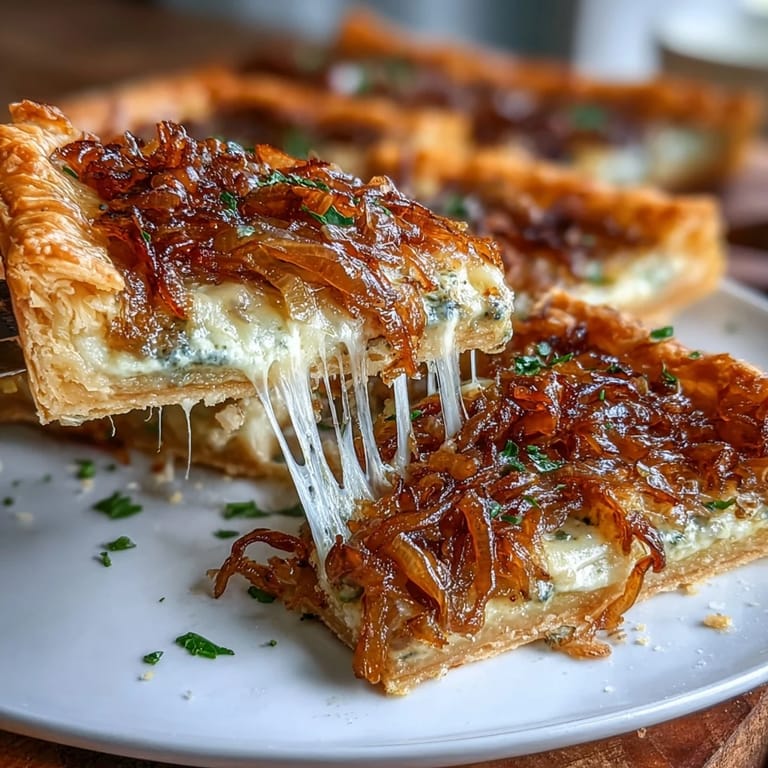
Save There's something almost meditative about watching onions transform in a hot pan—the way they start out sharp and crunchy, then slowly surrender to heat until they're jammy and sweet. I discovered this tart on a gray Sunday afternoon when I had a fridge full of onions and the vague sense that something elegant should happen with them. The buttery puff pastry, those pools of creamy custard, and the nutty Gruyere all coming together felt like I'd accidentally uncovered a secret that French cooks have been protecting for centuries.
I made this for my book club when it was my turn to host, and I remember the quiet that fell over the table when everyone took their first bite—not the awkward kind, but the kind where people just want to taste and appreciate. One friend asked if I'd gone to culinary school, which made me laugh because I'd nearly burned the onions twice trying to hurry the process. That afternoon taught me that sometimes the most impressive dishes are the ones where you actually slow down and let things happen naturally.
Ingredients
- 1 9-inch round sheet of puff pastry, thawed if frozen: This is your foundation, so don't skip thawing it properly—a cold pastry sheet that's rushed leads to uneven baking and dense layers instead of those crispy, flaky clouds you're after.
- 2 tablespoons unsalted butter and 2 tablespoons olive oil: The combination gives you the best of both worlds—butter for richness and flavor, olive oil to prevent burning during that long, slow caramelization.
- 4 large yellow onions, thinly sliced: Yellow onions are your workhorse here; they caramelize beautifully and turn almost candy-sweet without becoming too soft.
- 1 teaspoon salt, 1/2 teaspoon freshly ground black pepper, and 1 teaspoon sugar: These seasonings work together to coax out the onions' natural sweetness and amplify their savory depth.
- 2 teaspoons fresh thyme leaves: Fresh thyme is worth seeking out for this dish—it adds an earthy note that dried simply can't match, though dried works if that's what you have.
- 3 large eggs, 1 cup heavy cream, and 1/2 cup whole milk: This custard base is silky and rich without being heavy, holding everything together while baking into a tender, set filling.
- 1/4 teaspoon ground nutmeg: Just a whisper of nutmeg creates complexity and warmth without announcing itself—this is where restaurant-quality depth sneaks in.
- 1 1/2 cups grated Gruyere cheese: Gruyere melts smoothly and brings a slightly nutty, caramelized flavor that complements the onions perfectly; don't substitute with pre-shredded if you can avoid it.
- 1 tablespoon Dijon mustard: A thin layer of mustard on the pastry base adds a subtle tang that brightens the whole dish and prevents the pastry from getting soggy.
Tired of Takeout? 🥡
Get 10 meals you can make faster than delivery arrives. Seriously.
One email. No spam. Unsubscribe anytime.
Instructions
- Prepare your oven and pastry shell:
- Heat your oven to 375°F (190°C) and fit the thawed puff pastry into your tart pan, pressing it gently into the corners and up the sides. Prick the base all over with a fork—this prevents it from puffing up unevenly—then slide it into the fridge while you work on everything else.
- Start the slow magic with onions:
- In a large skillet over medium-low heat, melt your butter into the olive oil until foamy. Add all your sliced onions along with the salt, pepper, and sugar, then settle in for the long haul—this is about 30 to 35 minutes of stirring every few minutes as the onions gradually soften, shrink, and turn golden brown.
- Build your custard base:
- While the onions are working, whisk together your eggs, heavy cream, milk, nutmeg, salt, and pepper in a mixing bowl until the mixture is smooth and pale. This is your silky filling that will set into something almost quiché-like but richer and more luxurious.
- Layer your filling:
- When the onions are caramelized and glossy, stir in the fresh thyme and let them cool for a minute or two. Pull your pastry shell from the fridge, brush the base with a thin layer of Dijon mustard, then scatter the warm caramelized onions evenly across the bottom. Sprinkle the grated Gruyere over top in an even layer.
- Add the custard and bake:
- Pour your whisked egg mixture slowly and carefully over the onions and cheese, filling the shell until it reaches just below the rim. Bake for 35 to 40 minutes, until the filling is set but still has the slightest jiggle in the center and the top is golden brown.
- Rest and serve:
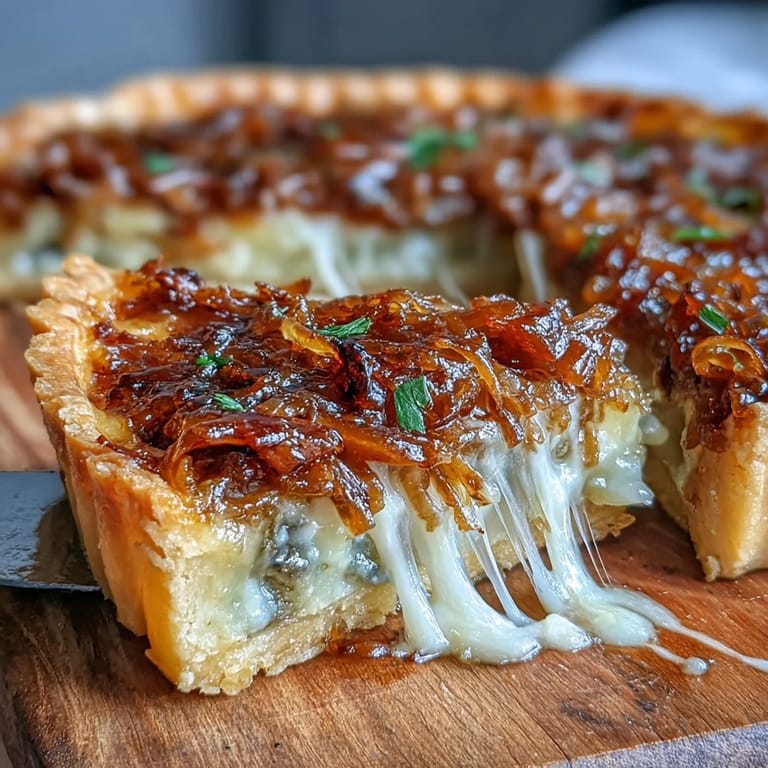
- Let your finished tart cool for 10 minutes before running a thin knife around the edges and releasing it from the pan. This resting period lets everything set just enough so slices come out clean and beautiful.
 Save
Save There's a moment about 35 minutes into the bake when your kitchen smells like toasted cheese and caramelized onions, and somehow the smell alone makes you feel like you've accomplished something real. I realized then that cooking isn't just about feeding people—it's about creating these small, delicious moments that everyone at the table gets to share, and that's worth showing up for.
The Art of Caramelizing Without Burning
Caramelizing onions is actually a lesson in patience disguised as a cooking technique. Medium-low heat is your friend here—it allows the natural sugars in the onions to break down and concentrate slowly, creating that deep, complex sweetness. If you crank the heat up, you'll end up with burnt edges and raw centers, which is the opposite of what you want. The key is to stir frequently but not obsessively, letting the onions sit in contact with the hot pan long enough to develop color between stirs. I usually aim for a golden-brown color that looks almost like caramel sauce, glossy and dark but not black.
Why Puff Pastry Needs a Fork
Puffing pastry is meant to puff, but when you're making a tart, you want the base to stay relatively flat and sturdy so it can hold a custard filling without buckling or creating air pockets. Pricking it with a fork before it goes into the oven might seem counterintuitive, but it allows steam to escape gradually instead of building up and creating huge bubbles. You don't need to go crazy and prick every millimeter—just a few dozen pokes across the surface does the job, and it makes an enormous difference in the final texture.
Serving Suggestions and Wine Pairings
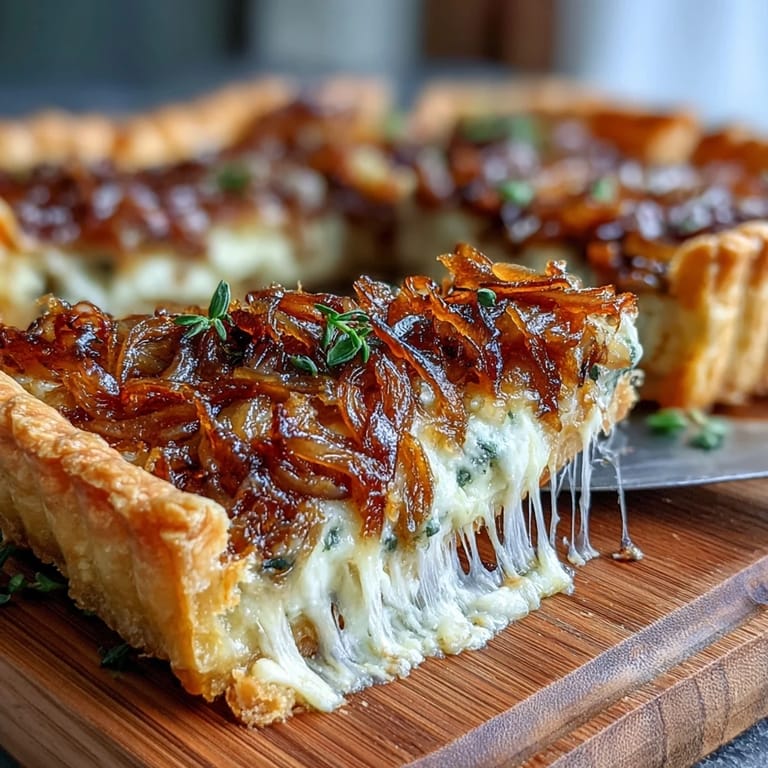
This tart is equally at home on a brunch table with fresh greens and mimosas as it is as a light dinner with a simple salad alongside. I've found that serving it warm, straight from the cooling period, gives you the best texture—the cheese is still creamy, the filling is set but tender, and the pastry is at its most flaky and buttery. A crisp white wine like Sauvignon Blanc or Chablis is the natural partner, cutting through the richness with just enough acidity to make you want another slice.
- Pair with a simple arugula salad dressed in lemon vinaigrette to keep things fresh and balanced.
- A chilled Albariño or Vermentino also works beautifully if you want something with more mineral notes.
- Leftovers reheat gently in a 325°F oven for about 12 minutes and taste surprisingly good even at room temperature.
 Save
Save This tart has become one of those dishes I make when I want to feel proud of what I've created without exhausting myself in the process. There's real elegance in simplicity, and that's what this recipe taught me.
Recipe Q&A
- → How do I properly caramelize onions for this tart?
Cook sliced onions slowly over medium-low heat with butter and olive oil, stirring frequently until they turn golden brown and sweet, about 30-35 minutes. Adding thyme during the last few minutes enhances flavor.
- → Can I substitute Gruyere cheese with another cheese?
Yes, Emmental or Swiss cheese make good alternatives, offering a similar meltability and mild nutty flavor.
- → What type of pastry works best for this tart?
Frozen puff pastry sheets that are thawed before use provide a flaky, buttery base that complements the savory filling perfectly.
- → How should this tart be served?
It is delicious warm or at room temperature. Pairing it with mixed greens and a crisp white wine such as Sauvignon Blanc enhances the overall dining experience.
- → Can I add any extra ingredients to the filling?
A splash of white wine added while caramelizing the onions can deepen the flavor. Adding fresh herbs like thyme is also recommended for aromatic complexity.