 Save
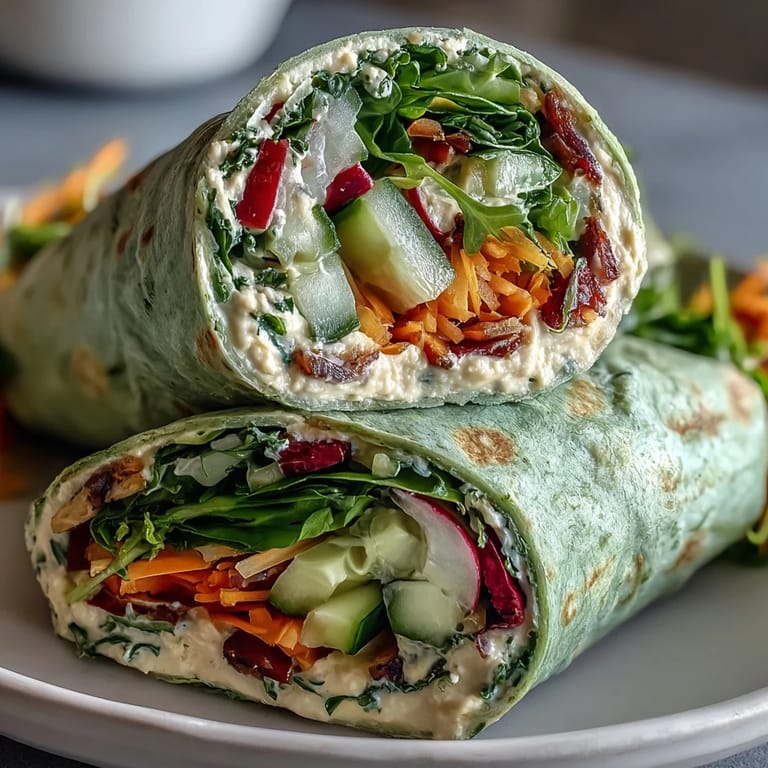
Save One afternoon, my friend showed up at my door with a farmers market haul and exactly twenty minutes before she had to leave for work. We spread everything across my kitchen counter—those jewel-toned vegetables practically glowing under the light—and I suddenly remembered why I fell in love with wraps in the first place. There's something magical about building them, layer by layer, like you're creating something both nourishing and beautiful at the same time. She grabbed a spinach tortilla, laughed at how green it was, and said, 'This is exactly what I needed today.' We made four wraps, she ate two on her drive, and texted me later that it completely turned her day around.
I made these for my partner during one of those busy spring mornings when nobody had time for breakfast but we were both starving. I assembled them while they answered emails at the kitchen table, and by the time they looked up, I was already wrapping the second one. They grabbed it mid-roll, took a bite, and just nodded—the kind of approval that comes from actual satisfaction, not politeness. That became our Thursday morning ritual for the entire season.
Ingredients
- Spinach tortillas: These are the beautiful, verdant foundation of everything, and they taste earthy without being heavy—look for ones that are soft and pliable, not stiff or brittle.
- Hummus: Creamy, protein-packed, and it acts as both binding agent and flavor anchor; I learned the hard way that thinner hummus spreads easier than thick versions, so don't be shy with a spoon.
- Baby spinach leaves: Tender and mild, they add bulk without overwhelming the wrap, and I always pat them dry or they'll make everything soggy.
- Julienned carrots: Sweet, crisp, and they hold their structure through rolling; using a peeler to create ribbons instead of chunks gives a more elegant bite.
- Cucumber strips: Cooling and refreshing, they're the textural counterpoint that makes every wrap feel bright and alive.
- Red bell pepper: Adds sweetness and visual pop; I slice them thinly so they don't create bulky seams when rolling.
- Radishes: These are my secret weapon—they bring a subtle peppery snap that nobody expects but everyone remembers.
- Purple cabbage: Its natural crunch and mild flavor tie everything together while adding nutritional depth and stunning color contrast.
- Fresh herbs: Parsley, mint, or dill scattered throughout lifts the entire wrap into something more intentional and memorable.
- Optional avocado: Creamy richness that transforms a simple wrap into something indulgent, though it does add a time constraint since avocado browns.
- Seeds: A handful of toasted sunflower or pumpkin seeds adds unexpected crunch and makes the wrap feel more substantial.
- Salt, pepper, and lemon: These three things are not optional—they're the final brushstrokes that make the vegetables taste like themselves.
Tired of Takeout? 🥡
Get 10 meals you can make faster than delivery arrives. Seriously.
One email. No spam. Unsubscribe anytime.
Instructions
- Lay your stage:
- Smooth that spinach tortilla flat on a clean counter or cutting board, making sure there are no creases or cold spots that might resist rolling later. Think of it like preparing canvas for painting.
- Spread with intention:
- Use about a quarter cup of hummus and spread it gently from edge to edge, leaving a narrow border so nothing escapes when you roll. The spreading motion itself should feel purposeful and even, almost meditative.
- Build your layers:
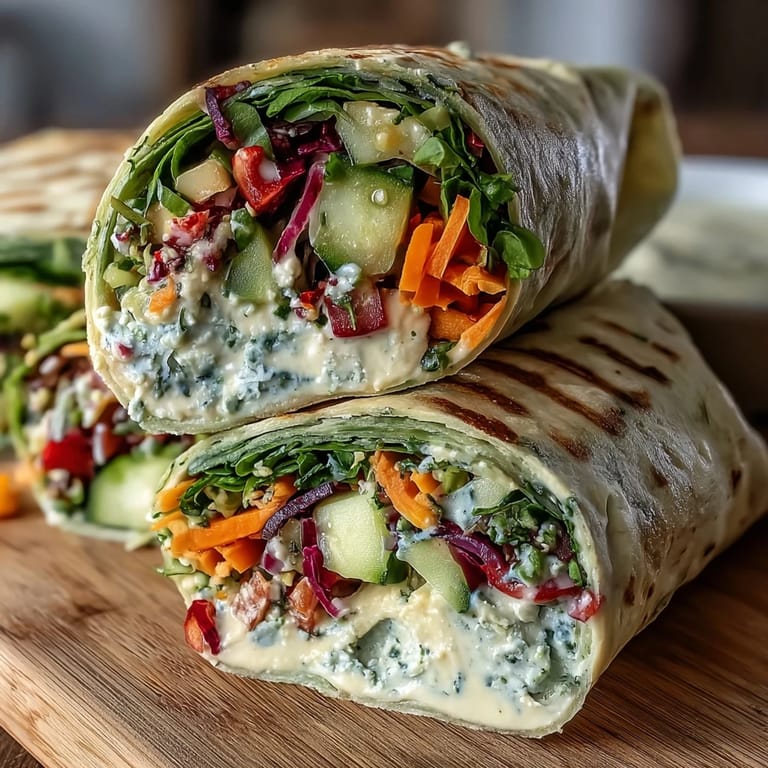
- Start with spinach leaves as a base, then layer your vegetables in the center in the order that feels most logical to you—carrots, cucumber, pepper, radishes, cabbage. I always leave about two inches of tortilla visible on each side so there's room to fold.
- Season and embellish:
- Scatter your herbs across like confetti, then add avocado slices if you're using them, and a pinch of seeds for surprise crunch. This is where the wrap goes from simple to special.
- Season if needed:
- A light sprinkle of salt and pepper here, just enough to wake up the vegetables without overpowering them.
- The fold and roll:
- Fold in those side edges first, pulling them tightly inward, then use the far edge of the tortilla to roll everything toward you in one smooth, confident motion. It should feel snug but not strained.
- Complete your collection:
- Repeat with the remaining tortillas and ingredients, working efficiently so that the earlier wraps stay cool and fresh.
- The finishing cut:
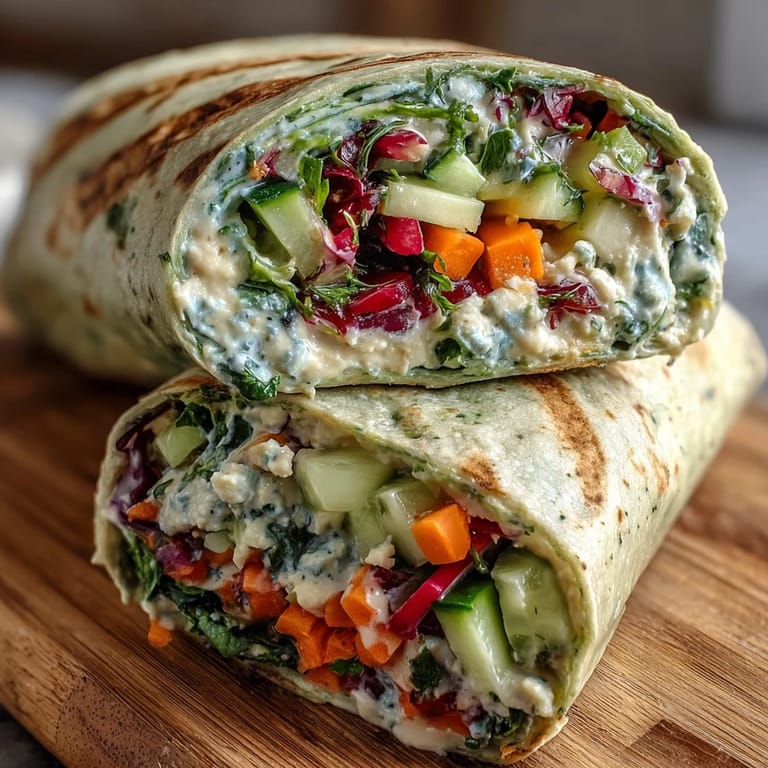
- Slice each wrap diagonally with a sharp knife in one swift motion—diagonal cuts look more elegant and help the wrap hold together. Serve immediately with lemon wedges on the side so people can squeeze and adjust to taste.
 Save
Save There was this moment last spring when my neighbor came over and I made these wraps to share while we sat on the porch. She bit into hers, and the first thing she said was, 'I can taste how fresh this is'—not as a compliment, but as pure observation, almost wonder. It hit me then that these wraps aren't just convenient; they're a way of celebrating what's actually in season, what's actually good right now, what actually nourishes you.
The Art of Assembly
There's a rhythm to building these wraps that you'll find once you've made a couple. Your hands learn the right pressure, the right amount of filling, the angle that makes rolling intuitive instead of fussy. I've learned that colder vegetables roll more cleanly than room temperature ones, and that holding the wrap just slightly off the surface as you roll prevents the edge from getting crushed. The whole process becomes less about following steps and more about your own momentum.
Timing and Prep Strategy
These wraps thrive on advance prep, which is partly why they became my go-to for anyone who claims they don't have time to eat well. You can slice and store all your vegetables the night before, keep them in separate containers, and then assemble fresh wraps in the morning or whenever hunger strikes. I've found that having everything ready actually makes the wrapping process faster and less stressful, almost meditative once you know what you're reaching for.
Variations That Work
The beauty of these wraps is how naturally they adapt to whatever you have on hand or whatever you're craving. Some weeks I'll add roasted chickpeas for extra protein, other times I'll swap in thinly sliced beets or shredded zucchini when those arrive in my farmers market bag. One evening I added some mashed white beans mixed with lemon to the hummus layer, and it changed everything—creamy, protein-rich, and completely unplanned. The vegetable combinations are infinite, but the core technique and spirit remain exactly the same: fresh, colorful, built with care, and ready when you are.
- Try mixing different hummus flavors—roasted red pepper or garlic-based versions add depth without extra steps.
- Non-vegan options like crumbled feta, grilled chicken, or even a soft cheese spread work beautifully within this same framework.
- Wraps stay fresh and rollable for up to four hours in the refrigerator if you slice them just before eating or wrap each individually in parchment.
 Save
Save These wraps remind me that good eating doesn't require complexity or time, just attention and fresh ingredients assembled with care. They're the kind of meal that makes you feel good immediately and stays with you through the afternoon.
Recipe Q&A
- → What vegetables work best in these wraps?
Crunchy spring vegetables such as baby spinach, carrots, cucumber, red bell pepper, radishes, and purple cabbage complement the creamy hummus and provide great texture.
- → Can I prepare the wraps in advance?
Yes, these wraps can be assembled up to 4 hours ahead and kept chilled to maintain freshness before serving.
- → Are there gluten-free options for the tortillas?
Gluten-free tortillas can be used instead of wheat-based spinach tortillas to accommodate gluten sensitivities.
- → How can I add extra flavor to the spreads?
Try flavored hummus varieties like roasted red pepper or garlic to enhance the wrap’s taste profile.
- → What optional ingredients add texture and nutrition?
Adding sliced avocado and toasted sunflower or pumpkin seeds introduces creaminess and a satisfying crunch.