 Save
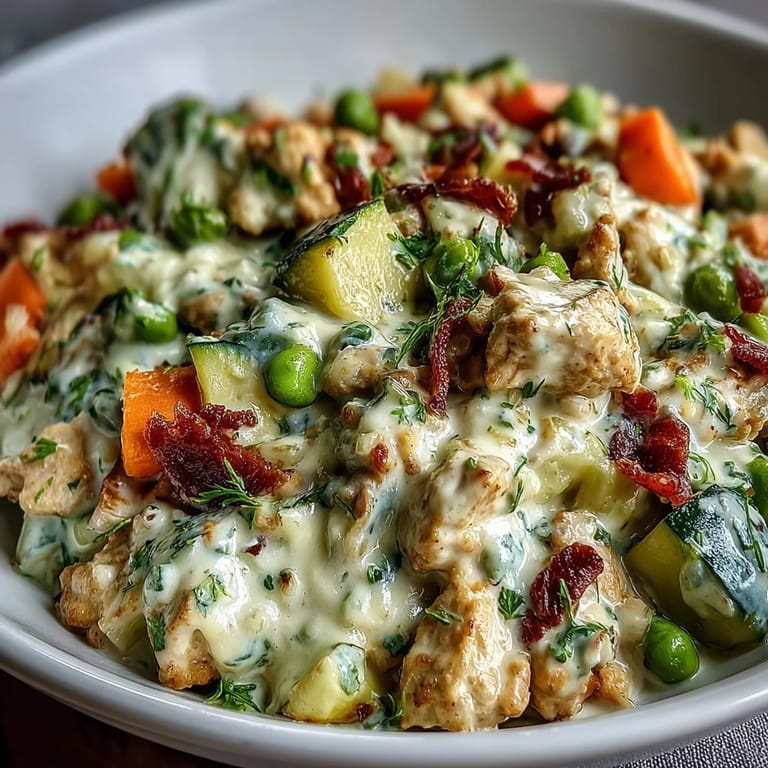
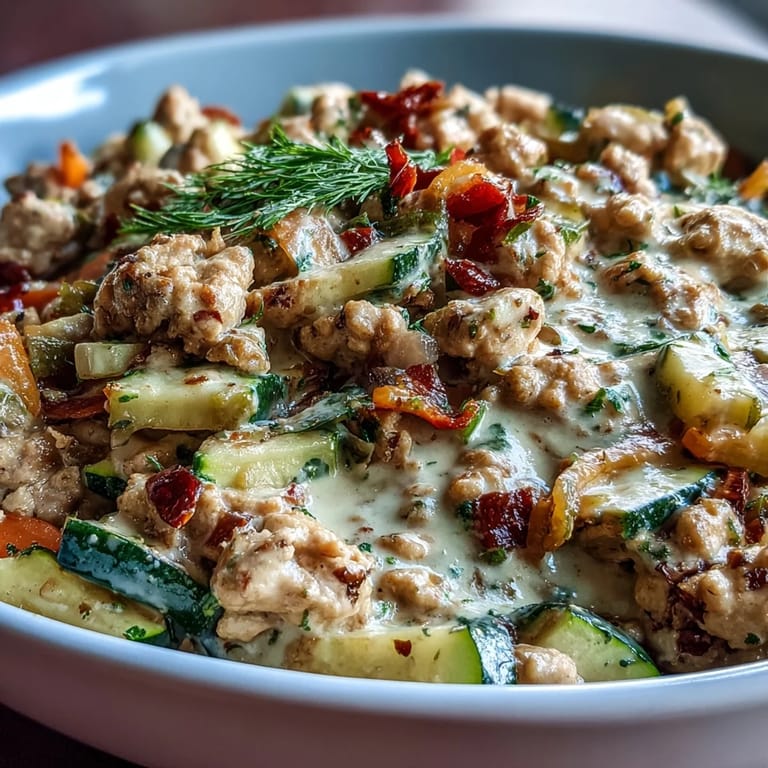
Save My neighbor stopped by one Thursday evening asking what smelled so good, and honestly, I hadn't thought much about what I was making until she said that. It was this creamy ranch skillet with turkey and vegetables, something I'd thrown together on a whim because the fridge was looking a little sparse. She ended up staying for dinner, and we laughed about how the simplest dishes sometimes turn into the ones people ask for again and again.
There was this Tuesday when I made this for my kids, and my youngest, who usually picks vegetables out of everything, actually ate the whole bowl without complaining. I watched him discover that zucchini and carrots taste completely different when they're swimming in a creamy sauce, and I think that's when this recipe became a permanent fixture in our rotation.
Ingredients
- Ground turkey: One pound gives you enough protein to feed four people generously, and it cooks faster than beef while staying lean and tender in the sauce.
- Bell peppers, zucchini, carrots, and peas: Mix and match these based on what you have, but the variety gives you color, texture, and genuine nutrition without anyone noticing they're eating their vegetables.
- Red onion and garlic: These build the flavor foundation before the cream goes in, so don't skip sautéing them properly.
- Heavy cream and broth: The cream makes it rich, the broth keeps it balanced and prevents it from feeling too heavy.
- Ranch seasoning mix: This is the backbone of the sauce, but check your bottle because some brands vary in saltiness.
- Olive oil: Just enough to coat the skillet and cook the turkey without it sticking.
- Pasta or rice: Whatever you prefer serves as your base, and the sauce clings beautifully to both.
Tired of Takeout? 🥡
Get 10 meals you can make faster than delivery arrives. Seriously.
One email. No spam. Unsubscribe anytime.
Instructions
- Brown the turkey:
- Heat your skillet until it's hot enough that a drop of water sizzles, then add the oil and turkey. Break it into small pieces as it cooks, and listen for that gentle sizzle that tells you everything's happening right. After about five to seven minutes, it should be completely cooked through with no pink remaining.
- Wake up the aromatics:
- Toss in the onion and garlic and let them soften for a couple minutes. You'll notice the kitchen suddenly smells like something special is happening, which is exactly what you want.
- Build the vegetable layer:
- Add your harder vegetables first—the peppers, zucchini, and carrots—and let them start to soften around the edges. This takes about four or five minutes and gives everything a head start before the final additions.
- Finish with the peas:
- Frozen peas go in last because they only need a couple minutes. They'll warm through and add a pop of green to the whole thing.
- Create the creamy sauce:
- Pour in the cream and broth, sprinkle the ranch seasoning over everything, and stir gently until it's all combined and smooth. The sauce will be thin at first, but that's exactly right.
- Let it simmer and thicken:
- Keep the heat at a gentle simmer for about four or five minutes and watch as the sauce transforms, becoming thick enough to coat the back of a spoon. Taste it now, add salt and pepper if it needs it, and you're done.
- Serve and garnish:
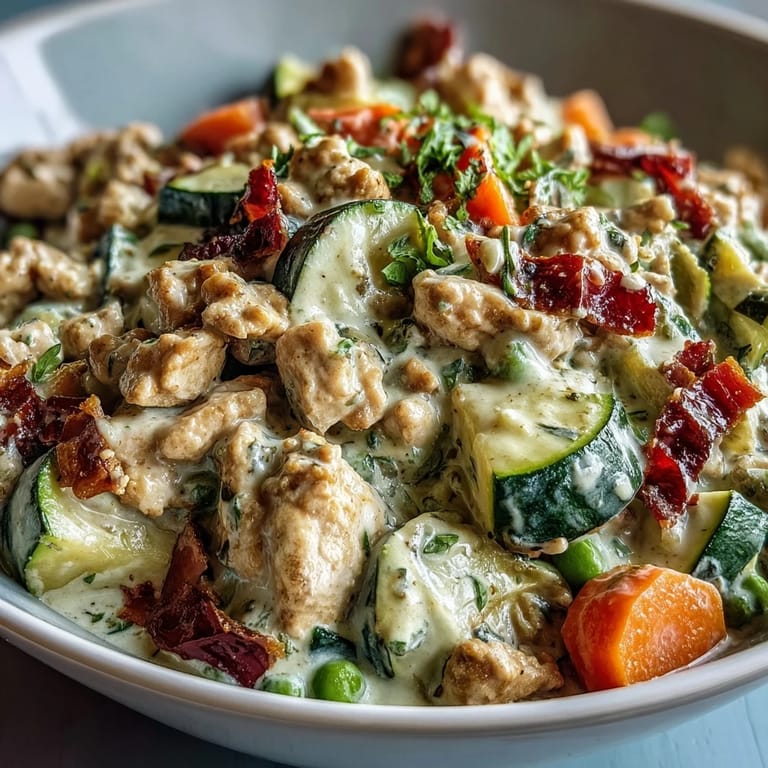
- Spoon everything over your pasta or rice, add a tiny handful of fresh parsley if you have it, and bring it to the table while it's still steaming.
 Save
Save I remember making this on a rainy Saturday and realizing halfway through that it was exactly the kind of dish that makes you feel cared for, even when you're the one doing the cooking. There's something about cream and ranch and familiar vegetables that turns a regular dinner into comfort.
Variations That Work Beautifully
This skillet is incredibly flexible, and that's part of why it keeps showing up in my kitchen. You can swap ground chicken for the turkey, use fresh herbs instead of the seasoning mix if you prefer, or add a handful of spinach at the very end for extra greens. I've even made it with ground beef when that's what I had, and it still tastes delicious.
Making It Lighter Without Losing Flavor
If you want to cut back on the richness, half-and-half or even whole milk works instead of heavy cream, though the sauce will be thinner. The dish still tastes creamy and satisfying, just not quite as decadent. Some nights that's actually what you want.
Kitchen Timing and Prep
The whole thing moves pretty quickly once you start, so having your vegetables chopped before you turn on the heat makes everything smoother. I usually do my prep while the water for pasta boils, and by the time the pasta's almost done, the skillet is ready to meet it on the plate. Spend two minutes getting organized and the rest of the evening feels less frantic.
- Chop everything before you start cooking—once you begin, there's no convenient stopping point.
- Keep your ranch seasoning bottle handy so you can check the ingredient list for allergens or add more if you're making a larger batch.
- If you're serving over rice instead of pasta, start the rice first since it needs more time to cook.
 Save
Save This recipe taught me that the best dishes are often the ones you don't overthink, the ones that come together because you had the ingredients and someone you wanted to feed. It's become the kind of thing I make without really looking at a recipe anymore.
Recipe Q&A
- → Can I make this dish lighter?
Yes, you can substitute half-and-half or whole milk for the heavy cream to reduce the calorie and fat content while maintaining a creamy texture.
- → What vegetables work best in this skillet?
Bell peppers, zucchini, carrots, and peas are classic choices, but you can use any mixed vegetables you have on hand. Broccoli, corn, or green beans would also work well.
- → Is ranch seasoning mix necessary?
The ranch seasoning provides the signature tangy flavor, but you can substitute with a combination of dried dill, garlic powder, onion powder, and parsley if preferred.
- → Can I make this dairy-free?
Yes, use coconut cream or a dairy-free cream alternative in place of heavy cream, and ensure your ranch seasoning is dairy-free or make your own blend.
- → How should I store leftovers?
Store cooled leftovers in an airtight container in the refrigerator for up to 3 days. Reheat gently on the stovetop with a splash of broth to loosen the sauce.