 Save
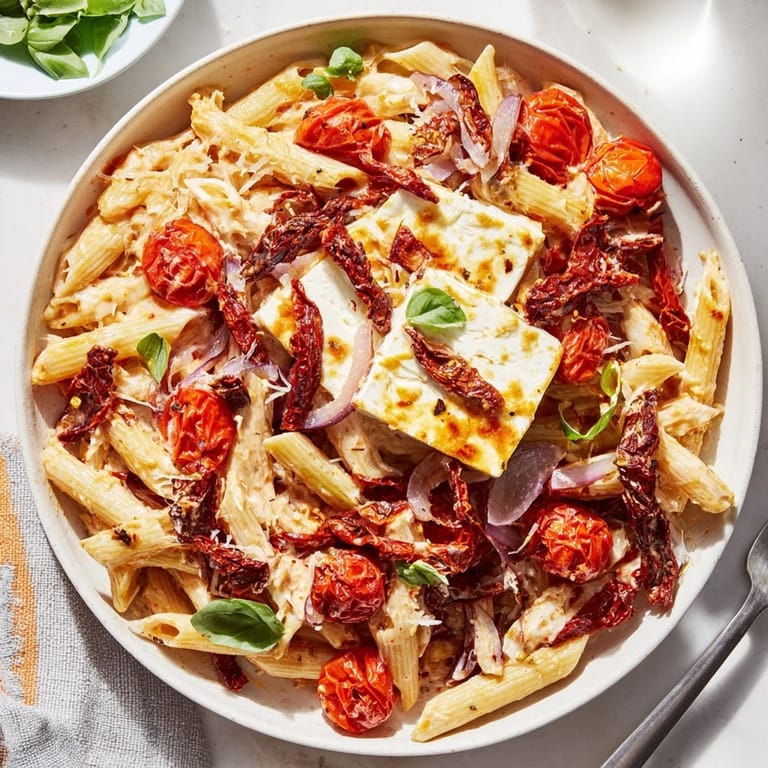
Save The first time I made this dish, I wasn't trying to follow a viral trend—I was just standing in front of my open fridge on a random Tuesday evening, staring at a block of feta and a pile of cherry tomatoes that were about to go soft. I roasted them almost out of stubbornness, something to do while the pasta water boiled, and when the cheese started to collapse into that creamy, golden mass, the smell alone made me stop and just breathe it in. That one accidental dinner has become my go-to when I want to feel like I'm cooking something impressive without actually trying very hard.
I made this for my partner on a night when everything felt hectic, and watching them twirl the pasta around their fork, getting that feta-tomato sauce on every bite, made all the chaos of the day just dissolve. There's something about a dish that looks fancy but asks almost nothing of you that feels like a small gift you're giving yourself, or someone you care about.
Ingredients
- Feta cheese (200 g block): This is the star that does the heavy lifting—when it bakes, it softens into a creamy base that clings to every piece of pasta without needing cream or butter.
- Cherry tomatoes (500 g, whole): Keep them whole so they collapse into the dish on their own schedule, releasing their juices slowly and evenly.
- Sun-dried tomatoes in oil (100 g, drained and chopped): These are the flavor concentrators, adding a tangy sweetness that makes people ask what your secret ingredient is.
- Garlic (3 cloves, thinly sliced): Slice it thin so it softens completely into the sauce rather than leaving sharp bites throughout.
- Red onion (1 small, thinly sliced, optional): If you add it, the sweetness deepens as it roasts, creating layers of flavor.
- Pasta (350 g short shapes like penne or fusilli): Short pasta catches the sauce in all its crevices—long pasta slides right through.
- Extra-virgin olive oil (4 tbsp): This is where quality actually matters; it becomes part of the sauce itself.
- Dried oregano and basil (1 tsp each): These dry herbs bloom and intensify in the oven's heat, infusing everything with Mediterranean warmth.
- Red pepper flakes (½ tsp, optional): Just enough to add a gentle whisper of heat that builds with each bite.
- Fresh basil (½ cup, torn): Save this for the very end so it stays bright and doesn't turn bitter from the heat.
- Salt and black pepper: Season boldly—the feta will mellow the salt as it melts.
Tired of Takeout? 🥡
Get 10 meals you can make faster than delivery arrives. Seriously.
One email. No spam. Unsubscribe anytime.
Instructions
- Get your oven ready and prep the tomatoes:
- Heat your oven to 200°C (400°F). While it's warming, slice your garlic thin and scatter it into a large baking dish along with both the whole cherry tomatoes and the chopped sun-dried tomatoes, plus the red onion if you're using it.
- Build the flavor foundation:
- Drizzle everything with 3 tablespoons of olive oil, then scatter the dried oregano, basil, and red pepper flakes over the top. Toss it all together so the oil and herbs coat every tomato, then taste and season with salt and pepper—remember that feta is already salty, so be measured here.
- Nestle the feta in its bed:
- Place your whole block of feta right in the center of the baking dish like it's settling into a warm bath. Drizzle the remaining tablespoon of olive oil over the top of the cheese.
- Let the oven do its thing:
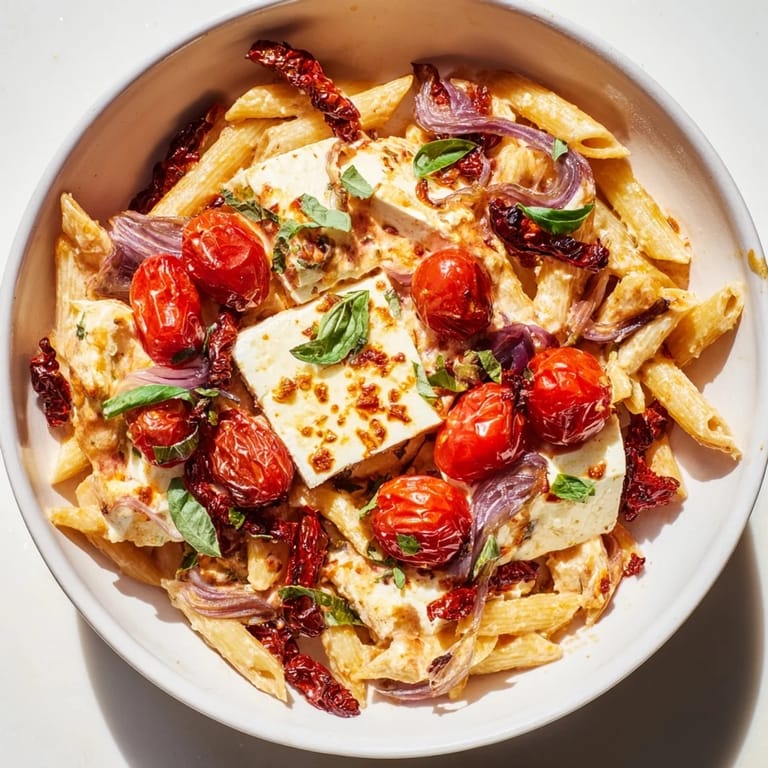
- Slide the dish into the oven for 30–35 minutes. You'll know it's ready when the cherry tomatoes have burst open and collapsed, their skins wrinkled and darkened, and the feta block has turned golden on top and feels soft to the touch when you nudge it with a fork.
- Cook your pasta in parallel:
- While everything's roasting, get a big pot of salted water boiling and cook your pasta according to the package directions, but pull it out a minute earlier than you normally would—it will continue softening in the hot sauce. Before you drain it, scoop out and reserve about half a cup of that starchy pasta water.
- Make the magic sauce:
- Pull the baking dish from the oven and let it cool for just a minute, then use a fork or the back of a spoon to break up and mash the feta right in the dish, stirring it together with all those burst tomatoes, the released juices, and the oil. Don't overthink it—you want a chunky, creamy sauce, not a smooth purée.
- Bring it all together:
- Add your drained pasta directly to the baking dish with the feta-tomato sauce. Pour in a splash of that reserved pasta water and toss everything together, adding more water if it looks dry. The starch in the pasta water will help the sauce cling to each piece.
- Finish with brightness:
- Tear in your fresh basil leaves and give everything one more gentle toss. Taste and adjust the seasoning—you might need a pinch more salt or a grind of pepper.
- Serve and celebrate:
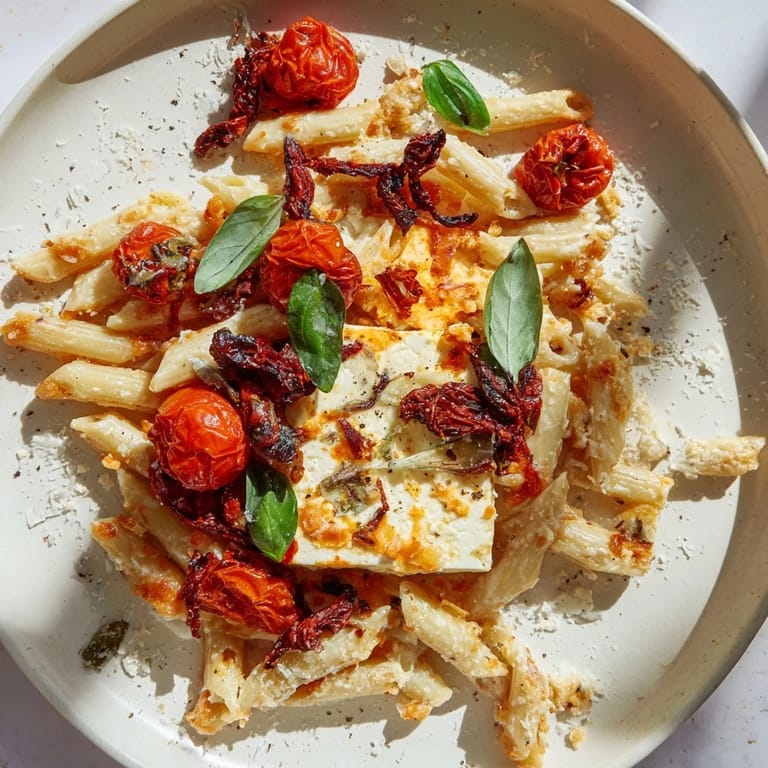
- Plate it up hot and top with Parmesan and lemon zest if you have them on hand, but honestly, it's already perfect as is.
 Save
Save There was an evening when my friend brought her young daughter over and the little one watched the tomatoes burst in the oven through the glass door, gasping each time one exploded, and then tasted the feta-coated pasta and declared it "the best thing that ever happened." That's when I realized this dish does more than just taste good—it creates tiny moments of genuine delight, the kind that cost almost nothing but feel like everything.
Why This Works So Well
The beauty of this recipe is in its simplicity and how it plays with temperature and texture—you've got the warm, creamy feta contrasting with the bright burst of roasted tomatoes, the tender pasta capturing everything, and then the cool, fresh basil waking it all up at the end. There's no cream to go bad, no complicated technique to mess up, just heat doing what it does best and coaxing flavor out of honest ingredients.
Variations and Additions That Work
Once you've made this a few times and it becomes muscle memory, you can play with it—add Kalamata olives for a briny punch, scatter toasted pine nuts for crunch, or throw in fresh spinach right at the end so it wilts into the pasta. Some people add a splash of balsamic vinegar when they toss the tomatoes, which adds another layer of sweetness and depth. The foundation is so strong that it welcomes these small experiments.
Storage and Make-Ahead Tips
Leftovers last about three days in the fridge, though honestly this rarely has leftovers in my house. You can prep everything up to the baking step hours in advance and then roast it when you're ready—the components don't mind sitting together. If you want to make it gluten-free, swap the pasta for a rice or chickpea shape, which will actually catch the sauce better than some traditional pastas.
- Reheat gently in a low oven with a splash of water to restore the creamy texture rather than the microwave, which can make it grainy.
- This dish tastes even better the next day when all the flavors have settled and melded together.
- If you're cooking for someone dairy-free, quality vegan feta has come a long way and works almost identically here.
 Save
Save This pasta has become my answer to the question "what's for dinner?" on nights when I have thirty minutes and zero inspiration. It tastes like cooking with care even when you're not really trying, and that's a kind of magic worth having in your kitchen.
Recipe Q&A
- → What type of pasta works best for this dish?
Short pasta shapes like penne, fusilli, or rigatoni hold the creamy sauce well and complement the textures of the baked ingredients.
- → Can I use fresh tomatoes instead of sun-dried?
While fresh tomatoes add juiciness, sun-dried ones contribute a concentrated tang that enhances the overall flavor complexity.
- → How can I make this dish vegan?
Replace the feta with a plant-based alternative and use vegan-friendly pasta to maintain the creamy texture and flavor profile.
- → What herbs are ideal for enhancing the flavors?
Dried oregano and basil provide depth, while fresh basil added at the end adds a bright, aromatic finish.
- → Is there a recommended garnish to finish the dish?
Grated Parmesan and lemon zest brighten the dish and add a savory, citrusy accent to the creamy sauce.