 Save
Save There's a moment in early January when you catch yourself standing in front of the pantry, suddenly aware of how many rich dinners you've made, and you just want something that feels like a gentle reset. That's when I reach for this soup—a weeknight discovery that happened purely by accident when I had half a zucchini, some chicken breasts, and a lemon that needed rescuing from the back of the fridge. What started as me trying not to waste vegetables became my go-to remedy whenever I need something that tastes bright and uncomplicated.
I made this for my sister after she mentioned feeling overwhelmed by her diet, and watching her face when she tasted that first spoonful—the surprise of how satisfying something so light could be—made me realize why I keep coming back to it. She asked for the recipe before she even finished the bowl, which told me everything I needed to know about whether it was worth keeping in rotation.
Ingredients
- Boneless, skinless chicken breasts (about 350 g): Cut these into bite-sized pieces so they cook quickly and distribute evenly throughout the pot—nobody wants to fish around for chicken in a spoonful of broth.
- Carrots and celery: These form the aromatic base that builds flavor as they soften, so don't skip them even if your vegetable drawer is looking sparse.
- Zucchini: Adds body and a subtle sweetness without heaviness, though you can swap it for summer squash if that's what you have.
- Onion and garlic: The backbone of every soup worth making—mince them fine so they practically disappear into the broth.
- Baby spinach: Goes in at the very end to stay bright green and tender, a trick I learned after one too many pots of murky, overcooked greens.
- Potato (optional): I use this when I want the soup to feel more substantial, but it's genuinely optional depending on whether you're craving something lighter.
- Low-sodium chicken broth: The quality of your broth matters more than you'd think—it's the foundation, so choose one you'd actually drink on its own.
- Lemon juice: This is what wakes the whole thing up at the end, so use fresh if you can; bottled will work but tastes noticeably different.
- Bay leaf, thyme, oregano, parsley, and dill: The herb combination gives it an almost Mediterranean feel—fresh herbs are genuinely better here, though dried thyme works just fine when that's what you have.
- Olive oil: A tablespoon is all you need for sautéing the vegetables before everything goes into the broth.
Tired of Takeout? 🥡
Get 10 meals you can make faster than delivery arrives. Seriously.
One email. No spam. Unsubscribe anytime.
Instructions
- Soften the base:
- Heat olive oil over medium heat and add onion, carrots, and celery—you'll know they're ready when they start turning tender and the kitchen starts smelling like actual cooking, usually around five minutes. Listen for that gentle sizzle and resist the urge to rush this step, as it's building flavor you can't get any other way.
- Bloom the aromatics:
- Add minced garlic and let it cook for just one minute until it becomes fragrant; this is the moment your kitchen will smell incredible. Don't let it brown or it'll turn bitter.
- Brown the chicken:
- Stir the chicken pieces into the pot and let them get lightly colored on the outside, about three to four minutes total. You're not making a fancy sear here, just letting them lose that raw, pale look.
- Build the broth:
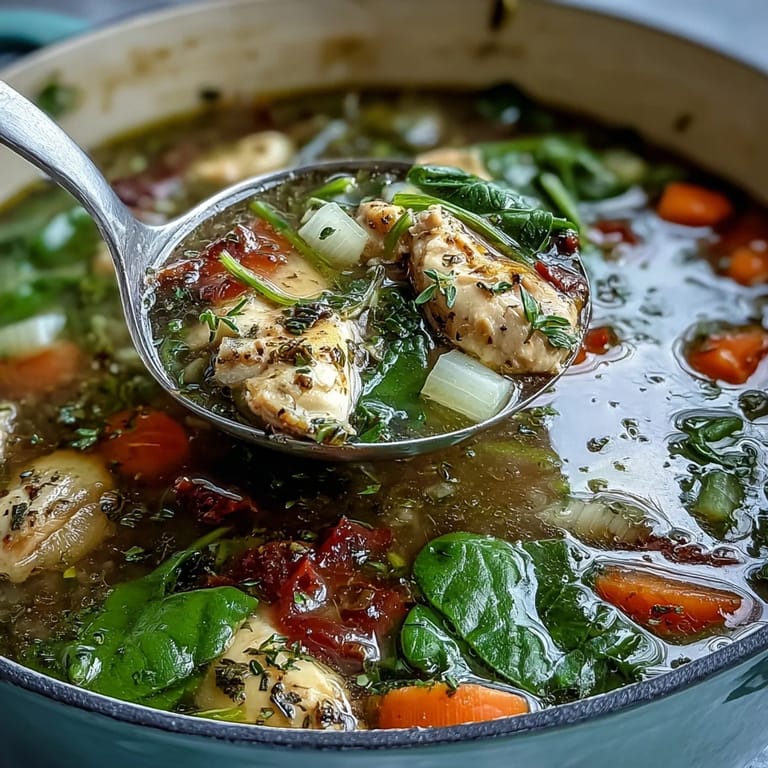
- Pour in chicken broth and water, then add your potato if using, along with zucchini, bay leaf, and dried herbs—the pot will come alive with color and possibility. Season generously with salt and pepper, tasting as you go.
- Simmer gently:
- Bring everything to a gentle boil, then lower the heat and cover the pot, letting it simmer peacefully for twenty minutes until vegetables are tender and chicken is cooked through. The lid traps steam and keeps flavors concentrated, so don't skip this part.
- Add the greens:
- Stir in spinach, parsley, and dill, then let it all cook for another three to four minutes just until the spinach wilts down. This is where the soup goes from warm to genuinely nourishing-feeling.
- Finish with brightness:
- Squeeze in fresh lemon juice, taste, and adjust your salt and pepper—the lemon should make you do that little satisfied nod where you realize everything just came together. Remove the bay leaf before serving.
 Save
Save There was an afternoon when my neighbor stopped by just as this soup was finishing, and the smell alone made them linger long enough to accept a bowl. They sat at my kitchen counter and we talked about recipes and seasons and how sometimes the simplest meals say the most.
Why This Soup Works Year-Round
Winter calls for a warm hug in a bowl, and spring demands something light that doesn't weigh you down—this soup answers both needs without any fussing. Summer becomes different when you chill it and serve it cold with extra lemon wedges, and autumn actually improves the flavors as something about the cooler air makes the herbs sing louder. I've made it in every season and it never feels out of place, which is honestly the mark of a recipe worth keeping.
Making It Your Own
This recipe is more suggestion than rulebook, so feel free to swap vegetables based on what's in your kitchen or what you're craving—I've added green beans, swapped zucchini for mushrooms, and once used frozen peas when my fresh vegetables had seen better days. The core technique stays the same, just the supporting players change. What matters is that you're starting with good broth, adding chicken, letting it simmer, and finishing with something bright.
Storage and Second Servings
Leftovers keep in the refrigerator for three days, and honestly they taste better on day two when all the flavors have gotten to know each other properly. You can also freeze it if you want to, though I find myself eating it too quickly for that to ever happen. If you're meal prepping, make a bigger batch and portion it into containers—your future self will be genuinely grateful when lunch is ready without any thinking required.
- Store in airtight containers and let it cool completely before refrigerating to avoid condensation and bacterial growth.
- Reheat gently on the stovetop rather than microwaving if you want the herbs to stay bright and alive-tasting.
- Add an extra squeeze of lemon when you reheat, as the brightness fades slightly and needs refreshing.
 Save
Save This soup has become my answer to a lot of questions—the question of what to cook when you want to feel good, what to make when someone needs nourishment, and what to reach for when you've forgotten that simple food done well is all you ever really need. Make it, share it, adjust it, and most importantly, don't overthink it.
Recipe Q&A
- → What ingredients add brightness to this dish?
Fresh lemon juice and a variety of herbs like parsley and dill bring bright, fresh notes to the flavor profile.
- → Can this be made vegetarian?
Yes, by substituting chicken with canned chickpeas or white beans, you can maintain a hearty texture and protein.
- → How can I enhance the soup’s warmth?
A pinch of chili flakes added during seasoning introduces gentle heat without overpowering the flavors.
- → Is it necessary to use fresh herbs?
Fresh herbs provide the best flavor; however, dried herbs like thyme and oregano are excellent for simmering in the broth.
- → What’s the best way to store leftovers?
Store the dish in the refrigerator in an airtight container for up to three days, allowing flavors to meld overnight.