 Save
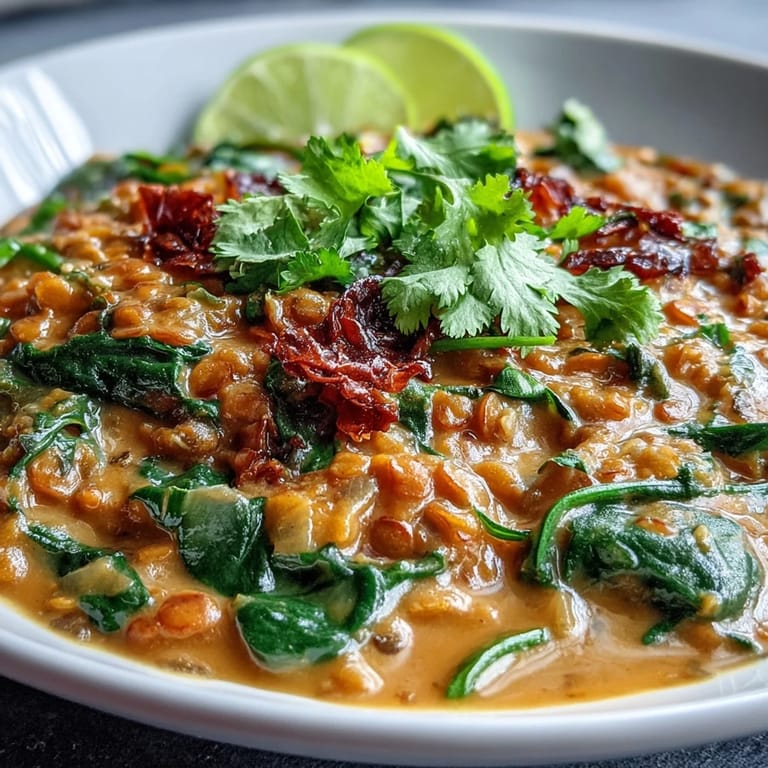
Save There's something about the smell of ginger hitting hot oil that instantly transports me to a tiny kitchen in London where my friend Priya taught me how to make proper dahl. She'd laugh at my tentative spice measurements and just say, go by feel, by smell, by what your gut tells you. This creamy coconut lentil dahl became my go-to when I needed comfort that didn't require dairy or fancy ingredients, just a single pot and about forty minutes of gentle simmering.
I made this for a dinner party where someone mentioned they were vegan, dairy-free, and gluten-free, and I remember standing in the kitchen feeling slightly panicked until I remembered this recipe. Everyone went quiet on the first spoonful, which is always a good sign, and someone asked for seconds before finishing their first bowl. That's when I realized this wasn't a workaround recipe—it was genuinely delicious on its own terms.
Ingredients
- Red lentils: Unlike brown or green lentils, red ones break down into a soft, almost creamy texture that's exactly what dahl should be—rinse them well before using or you'll end up with a gritty finish.
- Yellow onion: Diced small and cooked until translucent, it becomes the sweet base that balances all the spice and heat.
- Garlic and ginger: The holy duo that makes this smell like a real restaurant, not just your kitchen—mince them fine and don't skip either one.
- Curry powder, cumin, turmeric, coriander: These four work together as a team; toasting them for even 30 seconds intensifies their flavor and makes the whole pot smell incredible.
- Cayenne pepper: Optional but optional in name only—a quarter teaspoon adds warmth without overwhelming, skip it if you're serving young kids or someone spice-averse.
- Full-fat coconut milk: The richness matters here, don't reach for light or lite versions, they water down the whole thing.
- Vegetable broth: This is your volume control, use quality broth because you taste it throughout—homemade is ideal if you have it on hand.
- Spinach: Baby spinach wilts in seconds and adds a bright earthiness that contrasts beautifully with the warm spices.
- Lime and cilantro: The final touches that turn this from good to memorable, acid and fresh herbs cut through the richness perfectly.
Tired of Takeout? 🥡
Get 10 meals you can make faster than delivery arrives. Seriously.
One email. No spam. Unsubscribe anytime.
Instructions
- Warm your aromatics:
- Heat the coconut oil in a large pot over medium heat and add your diced onion, letting it soften and turn golden at the edges for about 3 to 4 minutes. You want it translucent and slightly caramelized, not harsh or raw.
- Wake up the flavors:
- Add your minced garlic and grated ginger, stirring for just a minute until the kitchen fills with that unmistakable aromatic smell. This is when you know you're on the right track.
- Toast the spices:
- Scatter in your curry powder, cumin, turmeric, coriander, cayenne if using it, plus salt and pepper, stirring constantly for about 30 seconds. This brief toasting releases the essential oils and deepens every flavor that follows.
- Build your base:
- Stir in the rinsed red lentils and diced tomato, letting them coat with all that spiced oil. The tomato will start breaking down almost immediately, adding natural sweetness and body.
- Add your liquids:
- Pour in the full can of coconut milk and all your vegetable broth, stirring well to make sure nothing is stuck to the bottom. Bring the whole thing to a gentle boil, which should take about 5 minutes.
- Let it simmer:
- Reduce the heat to low, cover the pot, and let it bubble quietly for 20 to 25 minutes, stirring occasionally to prevent sticking. The lentils will gradually soften and the liquid will thicken into something creamy and luxurious.
- Finish with green:
- Add your fresh spinach and stir for about 2 minutes until it's completely wilted and dark. Taste as you go and adjust your salt, spice level, or even add a splash more broth if it's thicker than you prefer.
- Serve with brightness:
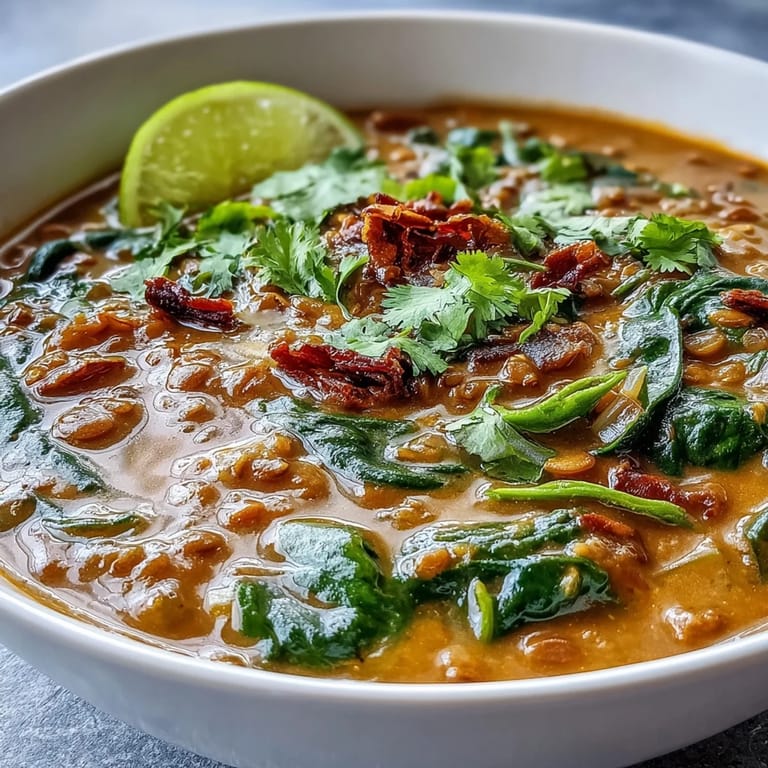
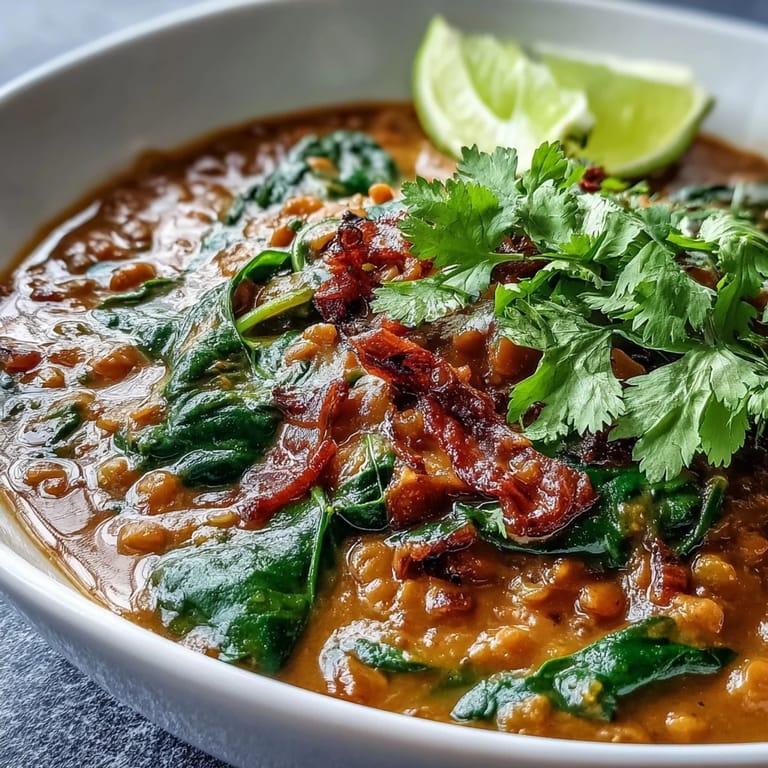
- Ladle into bowls and squeeze fresh lime juice over the top, scatter cilantro generously, and maybe add a lime wedge on the side for anyone who wants extra tang.
 Save
Save My neighbor stopped by one evening while this was simmering and asked what smelled so good, then sat at my kitchen counter with a bowl before I'd even finished plating mine. We didn't talk much, just ate and watched the steam rise from our spoons, and I realized that's what good food does—it makes people want to stay.
Why This Works as a Complete Meal
Red lentils pack about 9 grams of protein per cooked cup, so this dahl is genuinely nourishing on its own, though plenty of people serve it over rice or with naan because the ritual of scooping and tearing bread is part of the pleasure. The coconut milk isn't just luxe—it balances the earthy lentils and lets every spice shine without any single flavor dominating. It's the kind of recipe that tastes like you spent hours cooking but honestly asks very little of you.
How to Make It Your Own
I've made this dozens of ways now—sometimes with thick chunks of carrot that soften into sweetness, sometimes with bell pepper for brightness, even once with a handful of cooked chickpeas stirred in at the end for someone who needed the extra protein. The base is flexible enough to take whatever vegetables need using up in your crisper drawer, as long as you keep the core spices and that coconut milk constant. Some people swear by a splash of pomegranate molasses instead of lime, others add a star anise to the spices for something more complex and layered.
Storage and Reheating Notes
This dahl actually tastes better the next day, which is rare and wonderful—the spices deepen and meld overnight, so don't hesitate to make a double batch and eat it all week. It keeps for about four days in the fridge in a sealed container, and reheats beautifully on the stovetop with just a splash of water or broth to loosen it back up if it's thickened too much. You can even freeze it in portions, though add fresh cilantro and lime when you serve it again since those flavors fade during freezing.
- Always taste and adjust seasoning before serving, as flavors can shift during storage.
- If it's too thick when reheating, add broth or water a splash at a time rather than all at once.
- Serve it warm with fresh garnishes for the best flavor and texture.
 Save
Save This dahl taught me that comfort food doesn't need cream or butter to feel luxurious, just good ingredients given time and attention. Make it whenever you need something warm and real.
Recipe Q&A
- → Can I make this dahl in advance?
Yes, the dahl tastes even better the next day as the flavors meld. Store it in an airtight container in the fridge for up to 3 days.
- → What lentils work best for this dish?
Red lentils are ideal because they cook quickly and create a creamy texture, but yellow lentils can be used as well.
- → Can I adjust the spice level?
Absolutely. Modify the cayenne pepper amount or omit it altogether to suit your preferred heat level.
- → Is there a substitute for coconut milk?
Full-fat coconut milk provides creaminess and flavor; however, cashew cream or almond milk can be alternatives though the taste will differ slightly.
- → Can I add other vegetables?
Yes, diced carrots, bell peppers, or cooked chickpeas can be added to increase texture and protein.