 Save
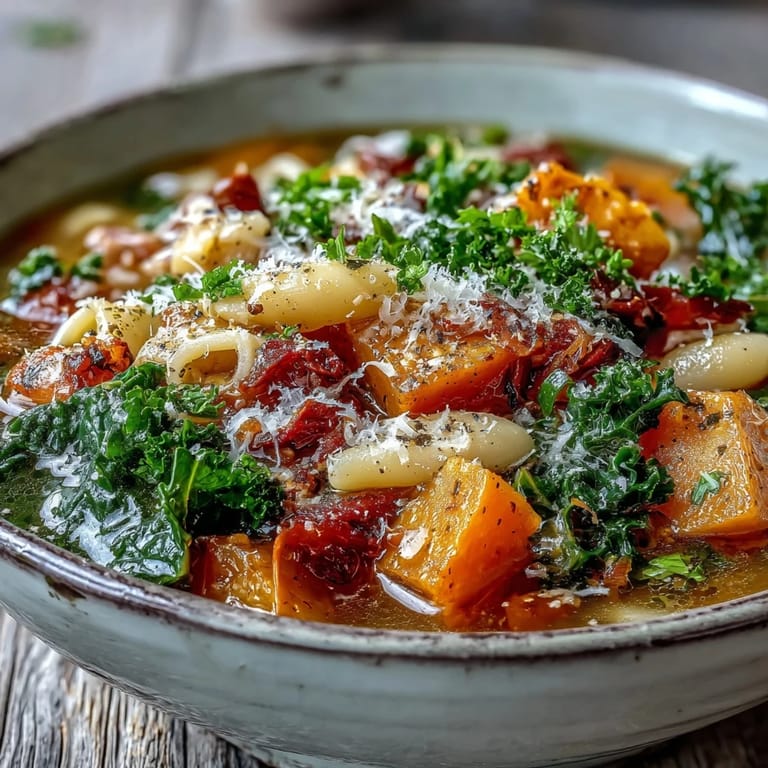
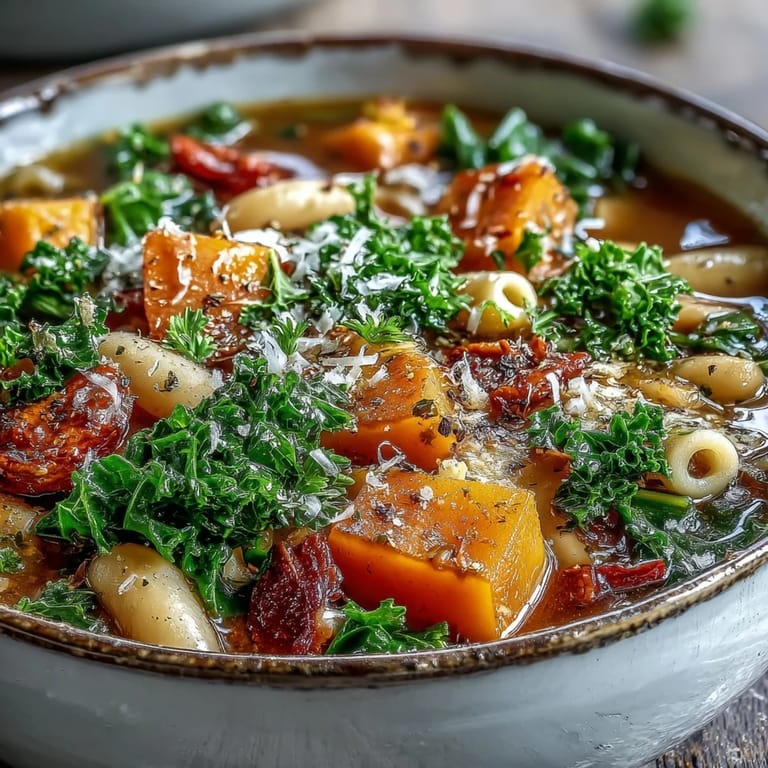
Save My neighbor knocked on my door one January afternoon with snow piling up outside, carrying a container of minestrone her grandmother used to make. She ladled it into a bowl while I watched the steam rise, and something about that simple gesture—someone sharing warmth in the middle of winter—made me want to recreate it. That first spoonful was pure comfort, loaded with tender squash and kale, nothing fancy or pretentious, just honest vegetables doing what they do best. I've been making it ever since, tweaking it slightly each time, but always coming back to that same generous, nourishing spirit.
I made this for my book club one February, and halfway through the conversation someone went quiet mid-sentence, spoon halfway to their mouth, just savoring a bite. That moment said more than any compliment could—this soup has a way of making people slow down and actually taste their food instead of rushing through it.
Ingredients
- Olive oil: Use good quality if you can, since it's the foundation of everything that comes next—it carries the flavor of the vegetables as they soften.
- Yellow onion, carrots, and celery: This is your flavor base, and I've learned that taking the full 5 minutes to let them soften properly makes an enormous difference in depth.
- Garlic cloves: The moment you smell it hitting the hot oil, you'll know it's ready—don't let it brown or it turns bitter.
- Butternut squash: Cut it into small-to-medium cubes so they cook evenly and don't leave you with some chunks still hard while others are falling apart.
- Zucchini: Adds lightness and a subtle sweetness that balances the earthiness of everything else.
- Diced tomatoes: Canned is honestly perfect here—they're picked at peak ripeness and already broken down slightly, which saves time.
- Kale: Remove those tough stems or they'll stay chewy no matter how long you simmer; just the leaves, roughly chopped.
- Cannellini beans: They're creamy and mild, blending into the soup without overpowering it, and they add protein that makes this a complete meal.
- Small pasta: Ditalini or elbow macaroni work beautifully because they don't overwhelm the vegetables—they're just there to add a little body.
- Vegetable broth: The quality matters here since it's six cups worth; homemade is wonderful if you have it, but a good store-bought version works perfectly fine.
- Bay leaf, oregano, thyme, and rosemary: These three dried herbs together create that classic Italian soup flavor—I've tried leaving any one out and it's just not the same.
- Salt and pepper: Always taste as you go near the end; the broth already has some salt, so you're adjusting rather than building from scratch.
Tired of Takeout? 🥡
Get 10 meals you can make faster than delivery arrives. Seriously.
One email. No spam. Unsubscribe anytime.
Instructions
- Build your flavor base with gentle heat:
- Pour the olive oil into your pot and let it warm for just a moment, then add the onion, carrots, and celery together. Let them sizzle quietly for those full 5 minutes, stirring once or twice—you're not rushing, just coaxing out their natural sweetness as they begin to soften.
- Wake it up with garlic:
- Add the minced garlic and let it cook for exactly 1 minute while the kitchen fills with that unmistakable aroma. This step is short because garlic goes from fragrant to burnt faster than you'd think.
- Introduce the squash and zucchini:
- Stir in your cubed butternut squash and diced zucchini, cooking for another 5 minutes so they start to soften slightly around the edges. The heat is still medium, nothing aggressive—you're building flavors, not racing.
- Bring everything together:
- Pour in the diced tomatoes and all that vegetable broth, then add the bay leaf and all three dried herbs. Turn the heat up until you see a gentle boil breaking the surface, then immediately lower it to a simmer and cover the pot.
- Let the squash finish cooking:
- This 15 minutes of covered simmering is when everything becomes tender and the flavors start to weave together. You can step away, but the smell will probably pull you back to check on it.
- Finish with beans, pasta, and greens:
- Add the drained beans, pasta, and chopped kale all at once, then leave it uncovered so you can see the pasta cooking and make sure the kale wilts down. This part takes 10 to 12 minutes depending on your pasta, so just keep an eye on it—you want the pasta tender but not mushy.
- Season and serve:
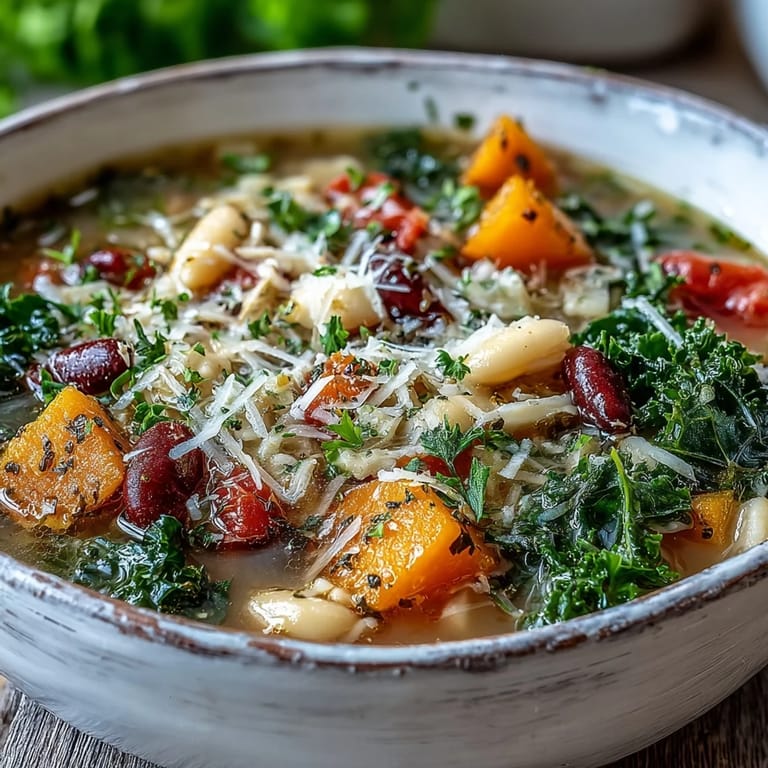
- Fish out that bay leaf, then taste and adjust salt and pepper until it feels right. Ladle it into bowls and top with Parmesan and fresh parsley if you like, alongside some crusty bread for soaking up every last drop.
 Save
Save My daughter asked for this soup three times in one week last winter, which was shocking since she's normally a picky eater. Watching her drag a piece of bread through the bowl and ask for seconds made me realize this isn't just dinner—it's the kind of meal that quietly shows up for people when they need something warm and real.
Making It Your Own
One of the best things about minestrone is how forgiving it is when you want to improvise. If you don't have butternut squash, sweet potato works beautifully, or even extra carrots if that's what you've got on hand. I've swapped in spinach for kale when that's what was in the crisper drawer, and honestly, the soup doesn't care—it just adapts and stays delicious.
Gluten-Free and Dairy-Free Options
Since the main gluten comes from the pasta, switching to gluten-free pasta is completely straightforward and the soup won't miss a beat. For a dairy-free version, just skip the Parmesan and let the soup speak for itself—it truly doesn't need it, though it's nice to have as an option. A secret I learned: adding a piece of Parmesan rind while simmering and then removing it before serving adds incredible depth without any dairy touching the final bowl if that matters to you.
Storage and Reheating
This soup actually tastes better the next day because the flavors have more time to get to know each other, which is a rare gift in the kitchen. It keeps well in the fridge for about four days in an airtight container, and you can also freeze it for up to three months—just leave out the pasta if you're freezing and add fresh pasta when you reheat, so it doesn't turn to mush.
- Reheat gently over medium heat, adding a splash of broth or water since the pasta will have absorbed liquid as it sits.
- If you're freezing, let it cool completely before transferring to freezer containers, leaving a little headroom since liquids expand slightly when frozen.
- This is the kind of meal that tastes even better when you're eating it five days after making it, so don't hesitate to make a double batch.
 Save
Save There's something deeply satisfying about making a soup that feeds your body and your soul at the same time, and this one does both without demanding much from you in return. Once you make it, it becomes the soup you come back to when you want to feel like yourself again.
Recipe Q&A
- → Can I make this soup gluten-free?
Yes, simply substitute the regular pasta with gluten-free pasta varieties like rice pasta or corn pasta. Alternatively, omit the pasta entirely and add an extra can of cannellini beans for more protein and substance.
- → How long does this minestrone keep in the refrigerator?
This soup stores well in an airtight container in the refrigerator for 4-5 days. The pasta will continue to absorb liquid, so you may need to add extra vegetable broth when reheating leftovers.
- → Can I freeze this soup?
Absolutely, though it's best to freeze without the pasta. Cook the soup through step 5, cool completely, then freeze. When ready to serve, thaw and reheat, then cook fresh pasta separately and add it in.
- → What vegetables can I substitute?
Feel free to use spinach instead of kale, or swap butternut squash for sweet potatoes or potatoes. Other great additions include green beans, peas, or diced bell peppers depending on what's in season.
- → How can I add more protein?
Beyond the cannellini beans, you can stir in shredded chicken during the last few minutes of cooking, add turkey sausage with the vegetables in step 1, or serve with a sprinkle of nutritional yeast for extra protein.
- → What type of pasta works best?
Small shapes like ditalini, elbow macaroni, shells, or small pasta rings work perfectly as they fit neatly on the spoon. Avoid long pasta or very large shapes that are difficult to eat in soup.