 Save
Save There's something about October when the farmers market suddenly overflows with butternut squash that makes me want to fill a pot with something warm and alive. My neighbor stopped by one afternoon with an armful of kale from her garden, and I realized I had everything on hand to make this soup—a dish that somehow tastes like both comfort and discovery at the same time. The first time I made it, the kitchen filled with this golden steam, and I knew I'd be making it all season long.
I made this for my book club on a freezing November evening, and people actually asked for seconds—which never happens with soup. Someone said it tasted like autumn in a bowl, which sounds cheesy but honestly felt right. That night I learned that minestrone is less about following rules and more about paying attention to what the vegetables need.
Ingredients
- Olive oil: Start with good quality if you can, because it carries the whole flavor profile of the soup from the first sauté.
- Yellow onion, carrots, and celery: This holy trinity is your flavor foundation—don't skip the full amounts or rush their softening time.
- Garlic cloves: Minced fresh is non-negotiable; the fragrance that blooms in the oil tells you you're on the right track.
- Butternut squash: Peel and dice it yourself if you have time, or buy the pre-cut kind from the produce section when you're tired—both work beautifully.
- Zucchini: Any size works, though smaller ones tend to be less watery and hold their shape better.
- Fresh kale: Strip it from the stems with your fingers, tearing larger leaves into bite-sized pieces so they wilt evenly.
- Canned diced tomatoes: Don't drain them; those juices are flavor gold.
- Cannellini beans: Drain and rinse them well so you avoid starchy, cloudy broth.
- Small pasta: Ditalini is traditional, but elbow macaroni or even tiny shells work just as well.
- Vegetable broth and water: Use broth you actually enjoy drinking, not the sad stuff that's been lingering in your pantry.
- Dried oregano, thyme, and rosemary: These Mediterranean herbs are what make this soup taste intentional rather than improvised.
- Red pepper flakes: Optional, but a whisper of heat wakes up all the other flavors.
- Salt and black pepper: Season boldly—soup needs more salt than you'd think.
- Fresh parsley: A handful stirred in at the end brings brightness that canned herbs simply cannot.
- Parmesan cheese: Grated fresh over the top is a small luxury that transforms the whole experience.
Tired of Takeout? 🥡
Get 10 meals you can make faster than delivery arrives. Seriously.
One email. No spam. Unsubscribe anytime.
Instructions
- Build your flavor base:
- Heat olive oil in a large pot over medium heat and add your diced onion, carrots, and celery. Let them soften for five to six minutes, stirring occasionally, until the edges start to turn golden and the kitchen smells like home cooking.
- Wake up the garlic:
- Add your minced garlic and cook for just one minute—you're listening for that fragrant sizzle, not waiting for browning. Move quickly to the next step so it doesn't scorch.
- Introduce the squash:
- Stir in your butternut squash and zucchini, cooking for another four to five minutes while everything gets to know each other. The vegetables will start to soften slightly at the edges, which is exactly what you want.
- Pour in the liquid foundation:
- Add your canned tomatoes with their juices, then the vegetable broth and water, stirring everything together. Bring the whole pot to a boil, which should take about five minutes.
- Season and simmer:
- Stir in your dried oregano, thyme, rosemary, and red pepper flakes if using them. Reduce the heat to low and let everything simmer uncovered for fifteen minutes, allowing the flavors to deepen and meld.
- Add the beans and pasta:
- Stir in your drained cannellini beans and small pasta, then simmer for another eight to ten minutes until the pasta is tender and the squash practically falls apart when you spoon it. Taste as you go and adjust seasoning.
- Finish with the greens:
- Add your chopped kale and cook for just two to three minutes until it wilts down and loses its raw edge. This final step keeps the kale from becoming bitter.
- Final touches:
- Remove from heat and stir in your fresh parsley, which brings a bright note that ties everything together. Ladle into bowls and top with grated Parmesan if you'd like.
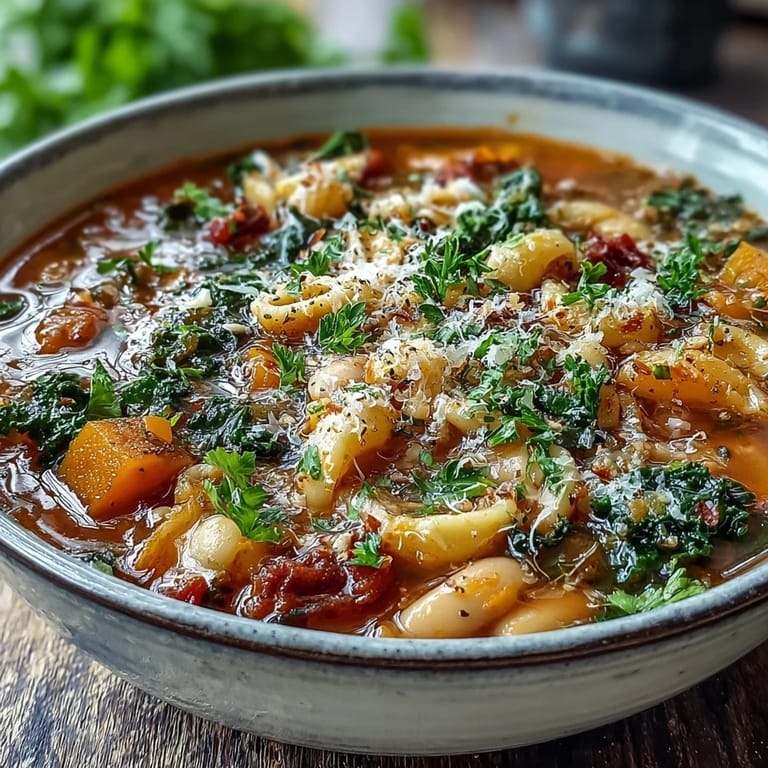 Save
Save My daughter asked me last week why I always make this soup on the first really cold day of the year, and I realized I didn't have a logical answer—just that it feels like a ritual, like I'm settling into the season properly. There's something grounding about a pot of vegetables that keeps giving you something warm to hold onto.
Variations That Work
This soup is forgiving in the best way, which is probably why it's survived centuries of Italian cooking. I've made it with chickpeas instead of cannellini beans when that's what I had, used spinach in place of kale, and once added a handful of diced sweet potato because I forgot I'd already added squash. Every version felt intentional, not like I was improvising.
Pairing and Serving Ideas
Serve this with crusty bread for dipping—the bread soaks up all the tomato-forward broth in a way that feels necessary, not optional. A crisp white wine like Pinot Grigio cuts through the richness of the Parmesan, or you could skip wine entirely and just add a drizzle of your best olive oil on top of each bowl.
Storage and Make-Ahead Tips
This soup actually improves after a day or two in the refrigerator as all the flavors get to know each other better. Store it in an airtight container for up to four days, or freeze it in portions for up to three months—just remember to thaw it slowly and add water when you reheat since it tends to thicken as it sits.
- Make a big batch on Sunday and you'll have lunch ready whenever you need it most.
- If you're freezing, hold off on adding the kale and parsley, then stir those in fresh when you reheat.
- A Parmesan rind simmered in the broth adds deep umami complexity, but always remove it before serving.
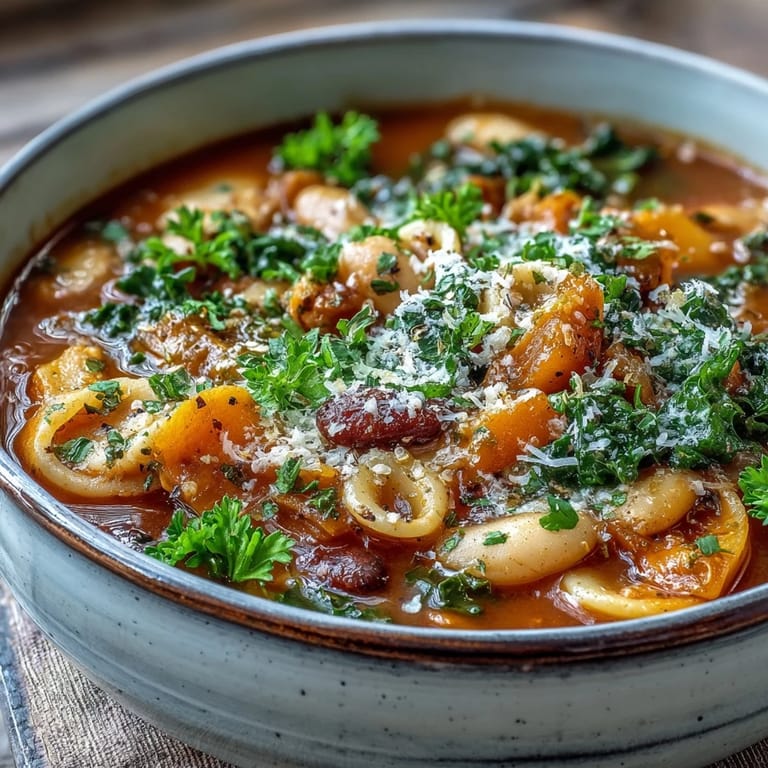 Save
Save Make this soup when you need to remember that simple, honest cooking can be just as nourishing as anything complicated. It's the kind of dish that says you care without announcing it.
Recipe Q&A
- → How long does winter minestrone keep in the refrigerator?
This soup stores well for 4-5 days in an airtight container. The pasta will absorb more liquid over time, so you may need to add extra broth when reheating leftovers.
- → Can I freeze this minestrone?
Yes, freeze for up to 3 months. For best results, slightly undercook the pasta before freezing as it will soften during reheating. Thaw overnight in the refrigerator.
- → What pasta works best in minestrone?
Small shapes like ditalini, elbow macaroni, or small shells work well because they spoon easily with vegetables. Orzo and small tubetti are also excellent choices.
- → How do I make this vegan?
Simply omit the Parmesan cheese or use a dairy-free alternative. The rest of the soup is naturally plant-based with vegetable broth as the base.
- → What vegetables can I substitute?
Swap butternut squash for sweet potato or pumpkin. Replace kale with spinach or chard. Green beans, bell peppers, or Swiss chard also work beautifully in this versatile soup.
- → Should I cook pasta separately?
Cooking pasta directly in the soup allows it to absorb flavor and thicken the broth. If you prefer separate pasta, cook it al dente and add just before serving to prevent mushiness.