 Save
Save The first time I made pho at home, I was chasing a craving that wouldn't quit—that deep, comforting warmth of the Vietnamese restaurant down the street where the cook knew my order before I sat down. What surprised me wasn't how complicated it seemed, but how quickly it came together when I stopped overthinking it. Those first few bites, with the beef turning silky in the hot broth, taught me that pho doesn't need hours of fussing to taste like home.
I remember bringing this to a friend's kitchen on a cold evening, and watching her face when that first spoonful hit—the kind of quiet moment where good food needs no words. She kept adding more cilantro, more lime, more sriracha, and each bowl became its own creation. That's when I realized pho isn't really about following rules; it's about giving people permission to make it theirs.
Ingredients
- Beef or chicken broth (8 cups): The foundation of everything—use low-sodium so you can control the salt and let the spices shine without competing noise.
- Fresh ginger (2-inch piece, sliced): Don't peel it; the skin holds flavor and you'll strain it out anyway, so let it do its work.
- Star anise, cinnamon stick, cloves: These three do the heavy lifting—they're what makes your kitchen smell like a Vietnamese restaurant in ten minutes flat.
- Fish sauce and soy sauce: Both are non-negotiable umami hits; together they anchor the broth in authenticity.
- Rice noodles (bánh phở): Fresh noodles cook in seconds if you can find them; dried work just as well and actually hold their texture better in hot broth.
- Beef sirloin, thinly sliced: The thinner you slice it, the faster it cooks when the hot broth hits—this is where the magic happens.
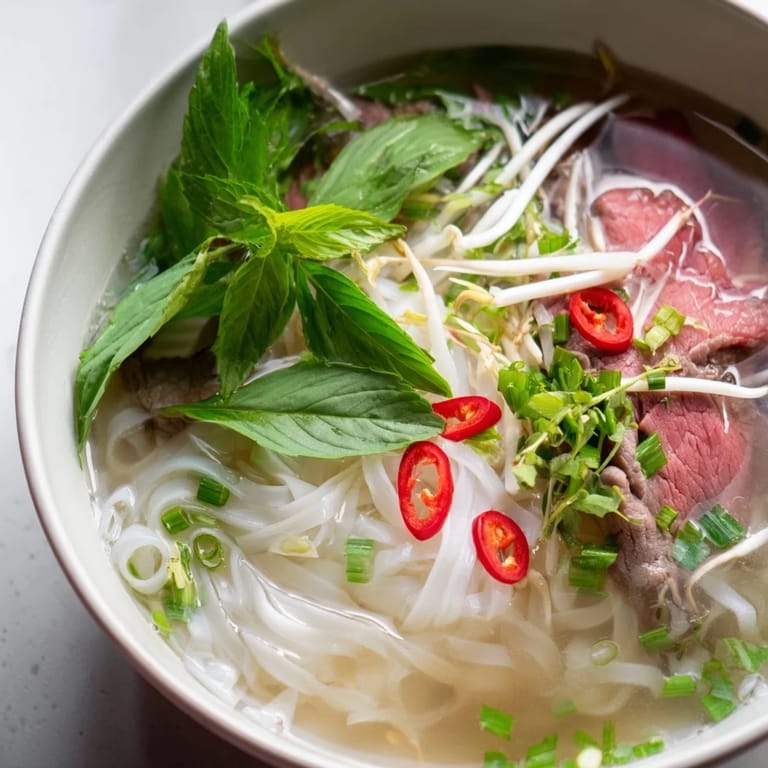
- Fresh herbs and lime: Bean sprouts, basil, cilantro, and lime aren't garnishes; they're the second half of the flavor story, where each person gets to write their own ending.
Tired of Takeout? 🥡
Get 10 meals you can make faster than delivery arrives. Seriously.
One email. No spam. Unsubscribe anytime.
Instructions
- Build the aromatic base:
- Combine broth with onion, ginger, star anise, cinnamon, and cloves in a large pot. Bring it to a boil and watch how quickly the kitchen fills with warmth and spice—that's when you know you're on the right track. Simmer uncovered for 20 minutes to let the flavors meld and deepen.
- Season and strain:
- Stir in fish sauce, soy sauce, sugar, and salt, then let it bubble gently for 5 more minutes. Strain through a fine-mesh sieve to remove the solids, leaving behind a clear, aromatic broth that's ready to showcase everything else.
- Cook the noodles:
- While the broth simmers, cook your rice noodles according to package instructions. Drain them well and divide evenly among four bowls—this is your canvas.
- Arrange the meat:
- Layer thin slices of beef (or chicken) directly over the warm noodles in each bowl. The thinner the slices, the better they'll respond to the heat that's about to blanket them.
- Pour and watch it happen:
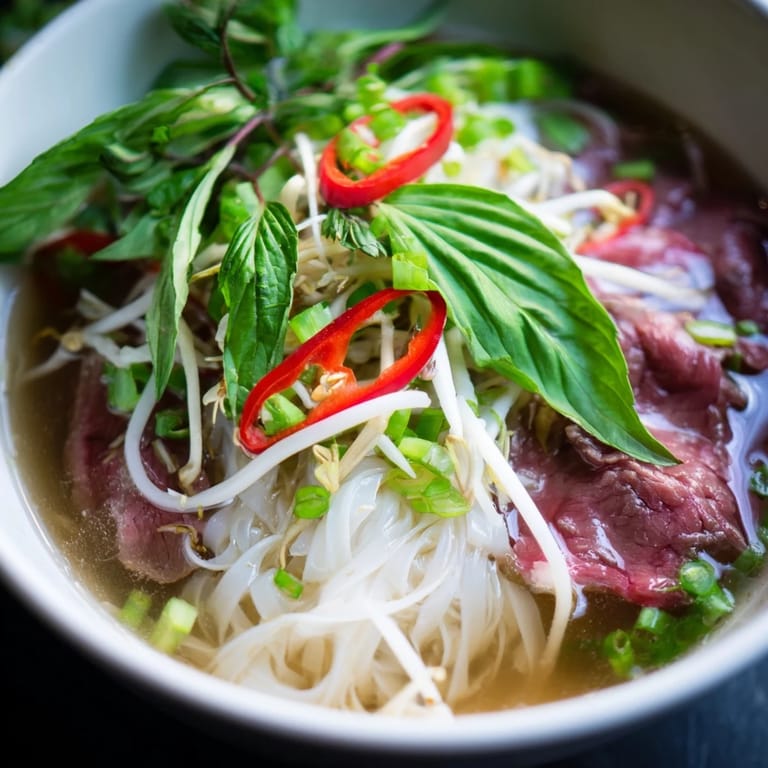
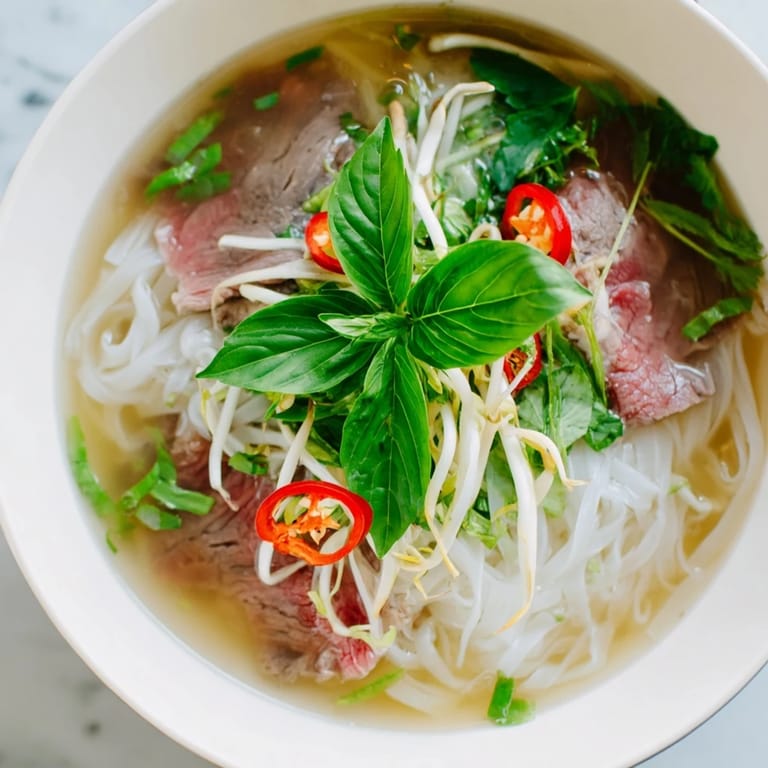
- Ladle the steaming broth directly over the meat and noodles. You'll see the beef go from raw to tender and cooked in seconds—there's something satisfying about that instant transformation.
- Top and serve:
- Add bean sprouts, basil, cilantro, scallions, and chili slices to each bowl. Set out lime wedges, hoisin, and sriracha on the side so everyone can adjust the flavor to match their mood.
 Save
Save There's something about pho that turns a simple dinner into a ritual—everyone leaning over their bowl, squeezing lime, tasting, adjusting, tasting again. It's meal as conversation, where the food is just an excuse to slow down and pay attention.
Why This Works in 35 Minutes
The secret to quick pho is understanding that you don't need a 12-hour broth to get real flavor. Those spices—star anise, cinnamon, cloves—work fast and hard, and the fish sauce and soy sauce seal the deal with umami depth. By the time your noodles are cooked, your broth has already developed the character that makes people come back for more. The real time saver is cooking the beef in the bowl itself, letting the residual heat do all the work.
Building Your Own Flavor
I stopped thinking of pho as a fixed recipe a long time ago and started seeing it as a framework for appetite. Some days I want more cilantro and lime, almost bright and sharp. Other nights I crave sriracha heat or extra basil. The beauty is that the broth is solid enough to support whatever direction you take it—it's confident without being bossy, which is the mark of good food.
Variations and Swaps
Vegetarian pho comes together just as easily; swap the beef broth for vegetable broth and use crispy tofu instead of meat—it absorbs the flavors beautifully. You can also experiment with whatever herbs speak to you: mint, Thai basil, regular basil, even dill works in a pinch. Some people add fried shallots for crunch, others stir in a splash of lime juice at the end. The framework stays solid; everything else is flavor play.
- Fresh rice noodles, if you can find them at an Asian market, cook in literal seconds—almost too fast, so stay close.
- Freeze your beef sirloin for 20-30 minutes before slicing to make thin cuts feel almost effortless.
- Keep the broth hot and ready before you start plating, so the whole experience stays warm and cohesive from bowl to table.
 Save
Save Pho has a way of becoming comfort food not because it's complicated, but because it's generous—it asks you to gather around and make it yours. That's worth 35 minutes any night of the week.
Recipe Q&A
- → What spices create the distinctive pho broth aroma?
Star anise, cinnamon sticks, and cloves combine to give the broth its warm, aromatic character, enhanced by fresh ginger and onion.
- → Can chicken be used instead of beef?
Yes, thinly sliced chicken breast works well and absorbs the hot broth's flavors just as tenderly as beef.
- → How are the noodles best prepared?
Cook flat rice noodles according to package instructions, drain well, and serve hot to maintain their soft, slippery texture.
- → What garnishes complement the broth and meat?
Fresh Thai basil, cilantro, bean sprouts, scallions, sliced chili, and lime wedges provide bright, fresh contrasts in flavor and texture.
- → How can I make this dish vegetarian-friendly?
Use vegetable broth and replace meat with tofu; also adjust seasonings and toppings to maintain depth of flavor.
- → What sauces are traditionally served alongside?
Hoisin sauce and Sriracha add sweet and spicy notes when drizzled according to taste preferences.