 Save
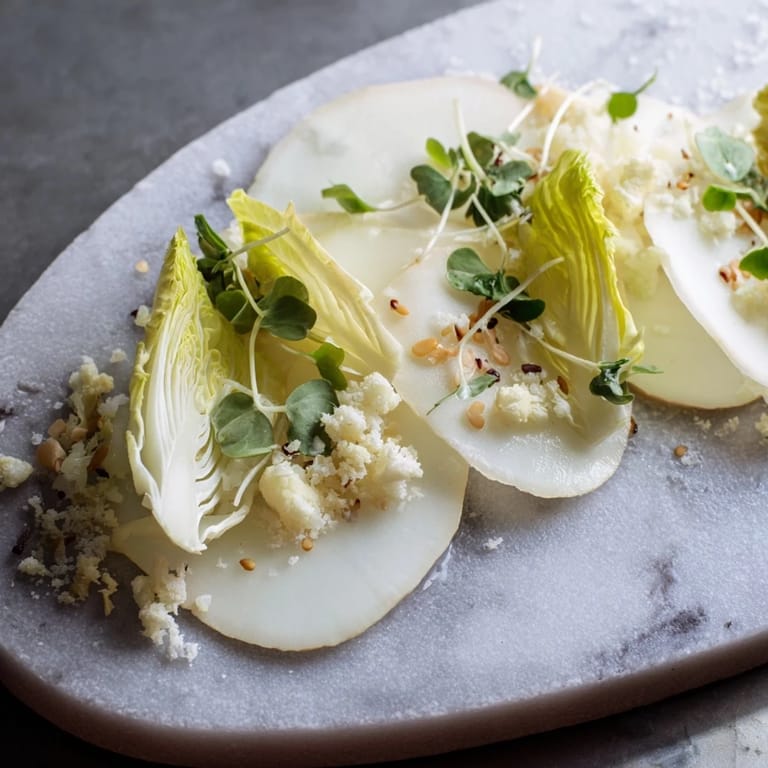
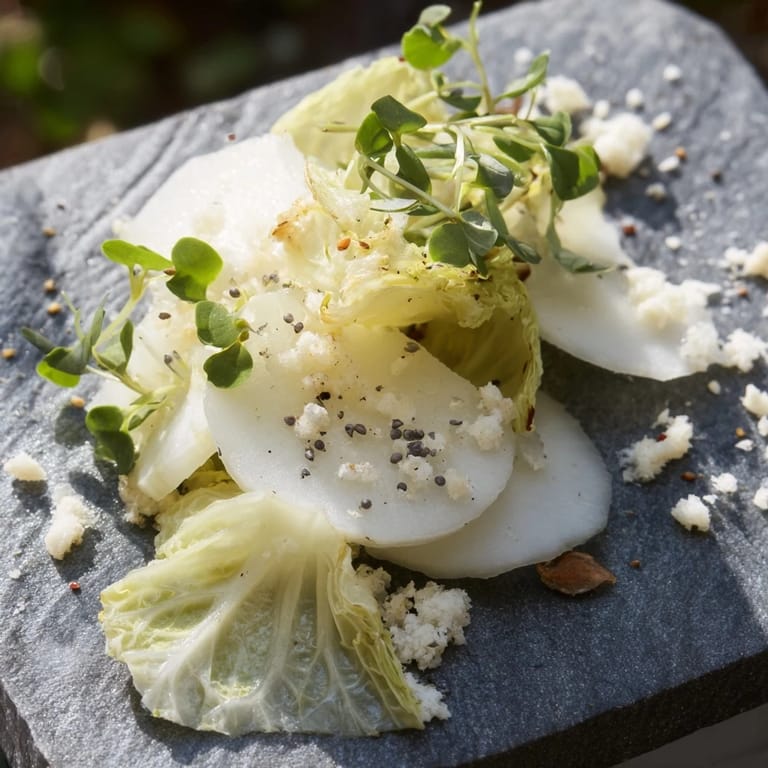
Save I discovered this dish on a late autumn evening when a friend showed me a photography book of the Arctic—all those stark whites and pale blues seemed impossibly elegant. That night, I started slicing vegetables almost without thinking, arranging them on a cold stone plate like I was recreating those frozen landscapes. The simplicity caught me off guard. There's something powerful about a dish that asks so little of you but demands absolute precision in every slice.
I made this for a dinner party where everyone arrived stressed and hungry, and somehow plating it on that frozen stone plate shifted the whole mood. Watching my guests pause before eating, actually looking at what they'd been served—that moment reminded me why I cook at all. It wasn't complicated food, but it felt like an experience.
Ingredients
- Daikon radish: Thinly sliced, it becomes almost translucent and adds a clean bite that isn't aggressive.
- Kohlrabi: Pale and subtly sweet when raw, it's the vegetable that makes people ask what they're eating.
- Belgian endive: The leaves create natural structure and a gentle bitterness that balances everything else.
- Cauliflower florets: Finely chopped into florets about the size of pea shoots so they scatter naturally across the plate.
- Coconut flakes: Unsweetened ones add texture without sweetness—they catch the light beautifully.
- White and black sesame seeds: The white ones lightly toasted bring a subtle nuttiness; the black ones are pure visual contrast.
- Microgreens: Pea shoots or radish sprouts work equally well and add that final burst of green without overwhelming the palette.
- Flaky sea salt: Sprinkle it last so it doesn't dissolve into the vegetables.
- Extra-virgin olive oil: A good one matters here since it's doing all the work in the dressing.
- Fresh lemon juice: Bright and essential—bottled won't give you the same clarity.
- White wine vinegar: The restraint of white vinegar keeps the acidity refined rather than sharp.
- White pepper: It's warmer and less aggressive than black pepper, letting you taste the vegetables first.
Tired of Takeout? 🥡
Get 10 meals you can make faster than delivery arrives. Seriously.
One email. No spam. Unsubscribe anytime.
Instructions
- Chill your canvas:
- Place the stone or marble platter in the freezer for 15 minutes before you start slicing anything. A cold plate keeps the vegetables crisp and makes the whole presentation feel intentional.
- Build your dressing:
- Whisk the olive oil, lemon juice, vinegar, and white pepper together in a small bowl until they're emulsified. Taste it—the acid should feel bright but not aggressive.
- Arrange the foundation:
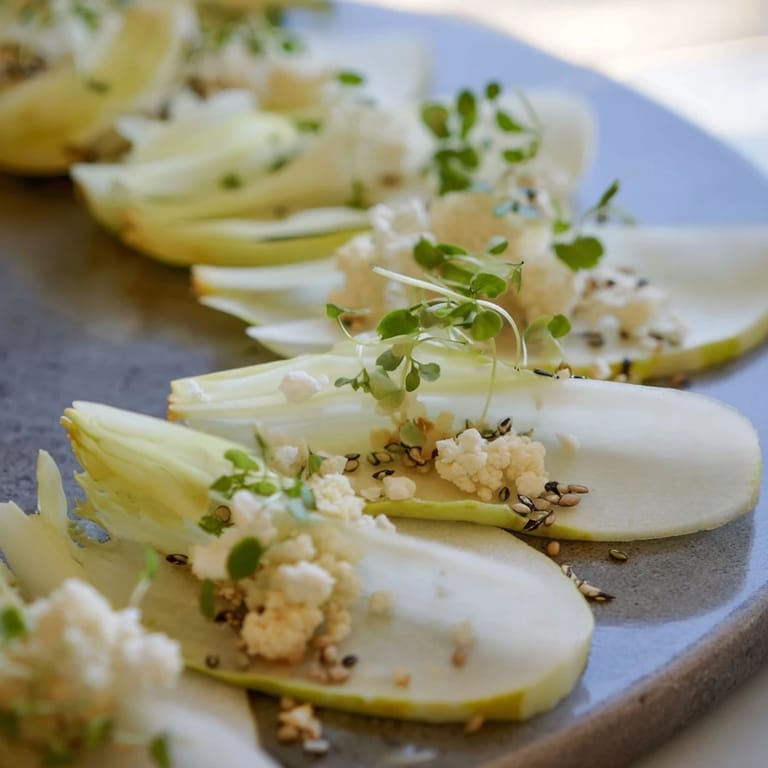
- Pull the cold stone out and start arranging daikon, kohlrabi, and endive leaves across it with intention but not fussiness. Think scattered, not scattered randomly—each piece should have breathing room around it.
- Layer the texture:
- Sprinkle the finely chopped cauliflower, coconut flakes, and both types of sesame seeds in a windswept pattern. Step back and look at it from above—you want visual balance, not symmetry.
- Add the dressing:
- Drizzle the dressing lightly across the arrangement, favoring some sections while leaving others dry. The vegetables should taste fresh and glistening, not dressed like a traditional salad.
- Final touches:
- Right before serving, scatter the microgreens across the plate and finish with a pinch of flaky sea salt. Serve immediately so everything stays cold and crisp.
 Save
Save I remember my mother tasting this for the first time and saying it reminded her of Scandinavian food she'd eaten once, though there's nothing traditionally Nordic about it. That comment stayed with me because it showed how a dish can feel like a place even when it's purely your own invention.
The Philosophy of Minimal Food
Cooking this taught me that restraint is harder than abundance. It's easy to add another ingredient, another flavor, another texture. But here, every element exists because it serves something—the color, the temperature, the narrative you're telling on the plate. There's no hiding behind sauce or technique. It's just you, honest vegetables, and a commitment to let them be what they are.
Vegetables That Deserve Your Attention
Daikon and kohlrabi are vegetables that most people encounter in Asian cooking, but they shine in this context. They're crisp and pale and almost aquatic in their delicacy. Approaching them as a Modern European chef might—slicing them thin, serving them cold, letting their natural sweetness speak—opens up a whole side of these vegetables you might never have noticed. The Belgian endive provides a bittersweet anchor that keeps the dish from feeling too innocent.
Plating as Meditation
This is the kind of dish that asks you to slow down. You can't rush the plating without losing something important. Take time arranging the vegetables, thinking about negative space, about how light will catch the sesame seeds. This dish isn't trying to impress with complexity—it's trying to create a moment of pause.
- If you don't have access to a stone or marble plate, a large chilled ceramic platter works just as well.
- The vegetables can be prepped an hour or two ahead, but keep them in the fridge until assembly—the closer to serving time, the crisper everything will be.
- This dish scales beautifully; if you need to feed more people, just expand it to a larger platter and let the arrangement breathe accordingly.
 Save
Save This dish reminds me that sometimes the most beautiful meals are the ones that ask the least of your ingredients and the most of your attention. Serve it with a cold glass of something crisp and watch what happens when you give people permission to just sit with simplicity.
Recipe Q&A
- → What is the best way to prepare the vegetables for this dish?
Thinly slice the daikon radish and kohlrabi for crispness, separate endive leaves gently, and finely chop cauliflower to create delicate textures.
- → Why use a chilled stone or marble plate?
Serving on a chilled stone plate enhances the crisp texture and fresh flavors, while evoking the tundra-inspired aesthetic of the dish.
- → Can the dressing be altered for different flavor profiles?
Yes, try swapping white wine vinegar with yuzu juice or rice vinegar to add different acidity and brightness to the dressing.
- → What garnishes are included to complement the vegetables?
Toasted white and black sesame seeds, unsweetened coconut flakes, and microgreens add texture, subtle nuttiness, and freshness.
- → Is this dish suitable for special diets?
Yes, it is vegetarian and gluten-free, focusing on fresh vegetables and simple seasonings.