 Save
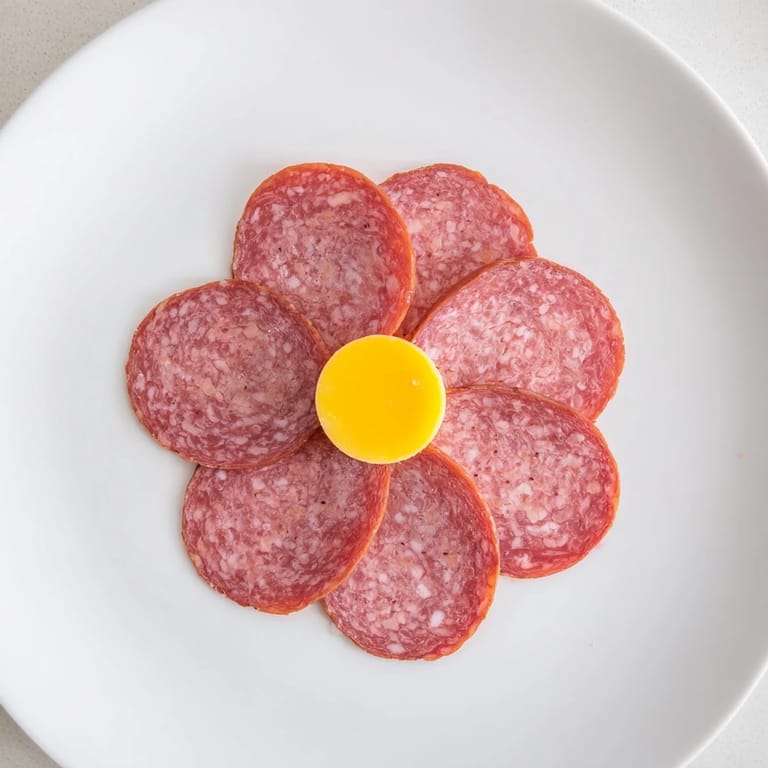
Save I discovered the Tudor Rose at a sprawling countryside wedding, where the appetizer table seemed to belong in a Renaissance painting. Among the usual cheese cubes and olives sat these perfect little flowers—salami petals arranged so deliberately they almost felt like art you weren't supposed to eat. When I finally tried one, I realized it was the simplicity that made it memorable. No cooking, no stress, just five slices of salami and a button of golden cheese creating something that looked like it took hours. I've been making them ever since for moments when I want food to feel intentional.
The real test came when my mother-in-law arrived unannounced with her book club friends, and I had nothing prepared but cold cuts and cheese in the fridge. I remembered the Tudor Rose and suddenly had something that felt intentional and thoughtful instead of scattered leftovers. Three of them went straight into my mother-in-law's mouth before anyone else had a chance, and she asked for the recipe thinking I'd learned it from some fancy cooking class. I love that moment—when something so simple becomes the thing people remember.
Ingredients
- Salami slices: Five thin slices work best when they're about the size of your palm—thick enough to hold their shape but pliable enough to overlap without cracking. Look for slami that's not too waxy or it'll be hard to arrange gracefully.
- Yellow cheese round: A firm cheese like Gouda or aged Cheddar works beautifully because it holds its shape and has that golden warmth that makes the whole thing feel intentional. If your cheese is a different shape, a small knife makes quick work of cutting a tidy circle.
Tired of Takeout? 🥡
Get 10 meals you can make faster than delivery arrives. Seriously.
One email. No spam. Unsubscribe anytime.
Instructions
- Arrange the petals:
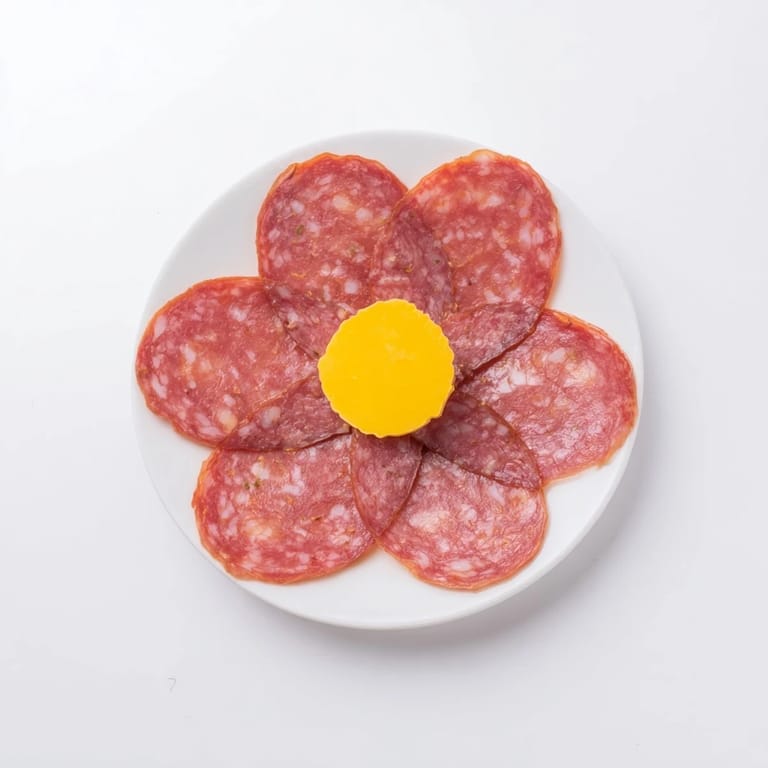
- Place your salami slices on the plate in a circle, letting each one slightly overlap the next like you're building a flower from the outside in. The overlapping is what makes it feel planned rather than random.
- Set the center:
- Place your yellow cheese round in the middle, pressing it gently so it covers where all those salami edges meet. This is the moment it transforms from scattered meat into something intentional.
- Perfect the symmetry:
- Step back and look at it like you're arranging flowers—nudge any petals that feel off-balance and make sure each one catches the light the same way. A few seconds of adjustment makes all the difference in how it photographs and how it feels to eat.
- Serve right away:
- This is best enjoyed fresh when the salami still has that slight curl and the cheese hasn't started to soften into the warmth of the room.
 Save
Save This became my go-to move at potlucks and impromptu gatherings, the thing I could make while someone was talking to me, all while looking like I had my life together. It taught me that sometimes the most impressive moments in the kitchen aren't about technique—they're about arrangement and intention.
Variations Worth Trying
Once you understand the architecture of the Tudor Rose, you can play with it endlessly. Prosciutto makes the petals more delicate and refined, while spicy chorizo gives it a completely different personality. I've used aged Manchego for a nuttier base, Brie for creaminess that pools slightly under the salami, and even sharp provolone when I wanted something with more bite. Each version tells a different story but follows the same beautiful logic.
Pairing and Presentation
The Tudor Rose belongs on a board with contradictions—dark cured meats next to bright fruits, creamy things next to crisp things. It holds its own next to olives, cornichons, and toasted nuts because it has that visual anchor that makes the whole spread feel curated. I like to leave space around it rather than crowding it with other things, treating it like a small work of art that deserves its own moment on the plate.
Hosting and Storage Thoughts
Make these closer to serving time rather than hours in advance—salami can dry out on the edges if it sits too long, and cheese starts to soften and lose its clean shape. If you're building a larger platter ahead of time, keep the components separate and assemble the roses just before guests arrive. The pleasure of this appetizer is partly in how fresh and intentional it feels, so protect that by timing it right.
- You can prep the components hours ahead and assemble in the final minutes with zero stress.
- Leftovers (if there are any) stay fresh covered loosely in the fridge for a day, though the salami petals lose their delicate curl.
- Double or triple the recipe for larger gatherings—each rose only takes seconds once you've done it once.
 Save
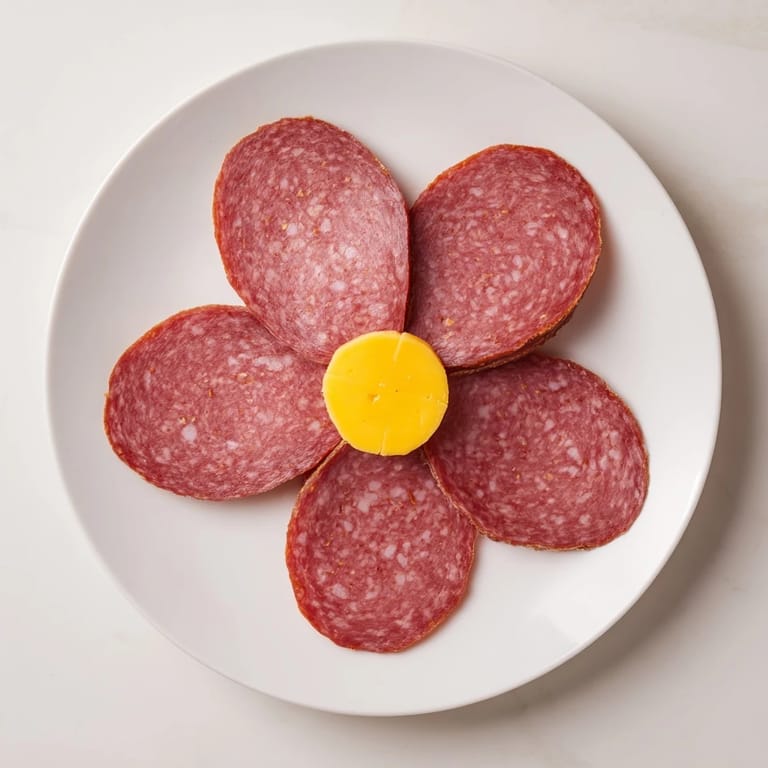
Save The Tudor Rose taught me that hospitality isn't always about effort—sometimes it's about noticing what you have and arranging it with care. It's the kind of appetizer that makes people feel welcome without making you feel stressed.
Recipe Q&A
- → How do I create the Tudor Rose shape?
Arrange five salami slices in a circle, overlapping slightly to form petals, and place a round slice of yellow cheese in the center.
- → Can I use other meats or cheeses?
Yes, try different cured meats or cheeses for variety while maintaining a similar size and shape for easy assembly.
- → What garnishes work well with this appetizer?
Fresh herbs like basil or parsley tucked between the salami slices add color and a slight herbal note.
- → Is any cooking required for this dish?
No cooking needed; preparation involves arranging ingredients for an elegant presentation.
- → What should I serve alongside the Tudor Rose?
Offer crackers or fresh bread to complement the flavors and add texture contrast.