 Save
Save I'll never forget the summer afternoon when my sister brought home a pineapple from the farmer's market with its crown still perfectly green and vibrant. She challenged me to make something that looked as good as it tasted, and that's when I discovered the magic of turning a simple fruit into a centerpiece. The moment I halved that pineapple and saw how it could become the heart of something beautiful, I knew I'd found a recipe that would become a signature moment at every gathering.
The first time I served this at a dinner party, my usually chatty friend went completely quiet, just staring at the platter for a moment before smiling. That's when I realized this wasn't just about feeding people—it was about giving them a moment of joy before the first bite. Now, whenever someone asks how I made it look so impressive, I get to share the secret that it's all about letting the fruit speak for itself.
Ingredients
- 1 large ripe pineapple, halved vertically: This is your canvas. Choose one that feels heavy for its size and has a sweet, fragrant aroma at the base. The leaves become your natural centerpiece crown, so pick one with vibrant, full foliage.
- 2 kiwis, peeled and sliced: The bright green interior is stunning against the other fruits. Slice them about quarter-inch thick so they hold their shape and color beautifully.
- 1 mango, peeled and sliced: Choose a mango that yields slightly to pressure—this means it's perfectly ripe and sweet. The golden hue adds warmth to your platter.
- 1 papaya, peeled, seeded, and sliced: This tropical beauty brings a delicate sweetness. Remove those black seeds completely so they don't distract from the visual feast.
- 1 small dragon fruit, peeled and sliced: Its magenta skin and speckled white flesh are nature's gift for color contrast. If you can't find it, starfruit works beautifully too.
- 1 cup strawberries, hulled and halved: The red against all those tropical colors is essential. Fresh, fragrant strawberries make all the difference.
- 1 cup seedless grapes (red or green), halved: I learned to halve them rather than serve whole—they're easier to eat and look more intentional on the platter.
- 1/2 cup blueberries: These jewel-like berries fill gaps and add little pockets of deep purple elegance.
- 1/2 cup raspberries: Delicate and charming, add these last so they don't get crushed or lose their perfect shape.
- 1/2 cup pomegranate arils: Those ruby-red seeds are pure joy—they catch the light and make everything feel special.
- 1/4 cup unsweetened shredded coconut: This adds a tropical touch and creates interesting texture. Toast it lightly if you want deeper flavor, or keep it raw for pristine white contrast.
- Fresh mint leaves: More than just garnish, the fragrance makes people smile before they even taste anything.
Tired of Takeout? 🥡
Get 10 meals you can make faster than delivery arrives. Seriously.
One email. No spam. Unsubscribe anytime.
Instructions
- Start with your centerpiece:
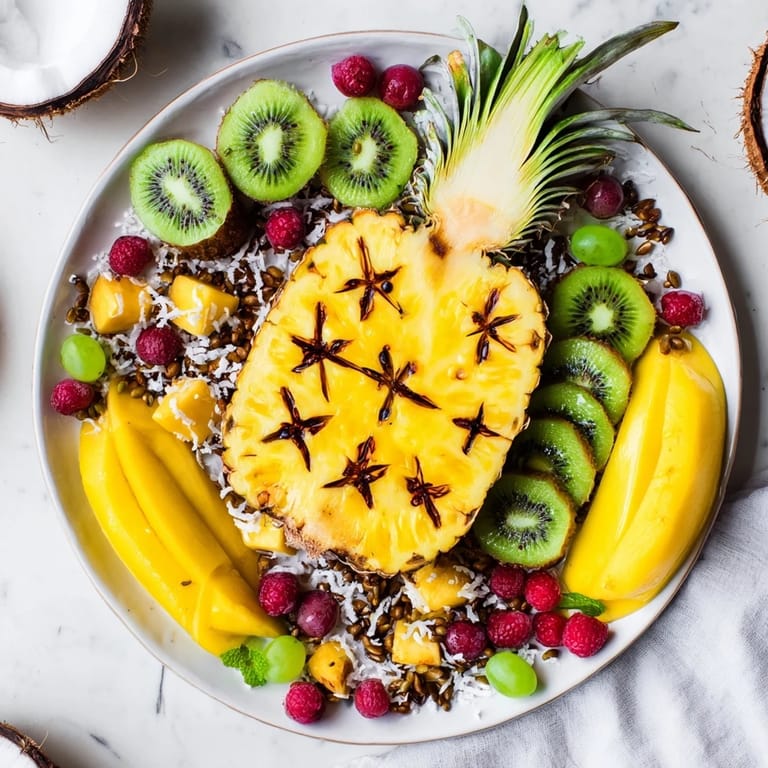
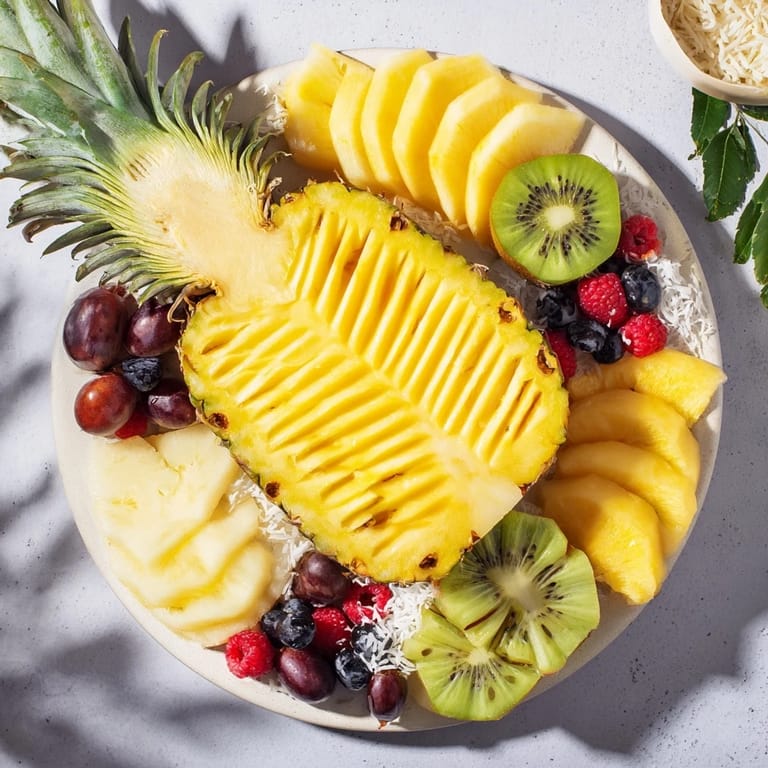
- Place the pineapple half cut-side up in the very center of your largest serving platter. Using a small sharp knife, score the flesh in a crosshatch pattern, being careful not to cut through the skin. You're creating little cubes that practically invite people to grab them. The skin and those glorious green leaves stay completely intact—they're your frame.
- Build your color wheel:
- Start with the largest slices: mango, papaya, and dragon fruit. Fan them outward from the pineapple in alternating colors, like you're painting a sunset. This is where the platter begins to transform into art.
- Fill the spaces with intention:
- Arrange the kiwi slices next, then strawberries, then grapes. You're looking for balance—imagine you're dividing the platter into sections, and each section should have a little bit of color variety. This is surprisingly meditative work.
- Create layers of color:
- Tuck blueberries and raspberries into any remaining gaps. They're like little jewels filling in the spaces. Go slowly here—you want the platter to look abundant but not crowded.
- Add the finishing textures:
- Sprinkle the shredded coconut across the fruit in a few strategic areas. It catches the light and adds that tropical-paradise feeling. Scatter pomegranate arils throughout for pops of ruby color and a hint of shimmer.
- Crown it with freshness:
- Tuck fresh mint leaves around the arrangement, especially near the pineapple crown. The green becomes part of the design, and the fragrance becomes part of the experience.
 Save
Save I'll remember standing in my kitchen at dusk, the late afternoon light streaming through the window and hitting the platter at just the right angle. My daughter ran in, gasped, and asked if we were really allowed to eat something that beautiful. That moment taught me that food is about so much more than taste—it's about creating memories.
The Art of Arrangement
The secret to making this platter absolutely stunning is thinking in terms of color zones and symmetry. You're not just placing fruit randomly—you're creating visual harmony. I always start by imagining the platter divided into sections radiating from the pineapple, like spokes on a wheel. Each section should have a balance of colors: warm tones like mango and strawberry next to cool tones like kiwi and blueberries. The eye naturally follows this pattern, and suddenly you have something that looks professionally designed, even though you're just following your instincts.
Ripeness and Flavor
This recipe taught me that ripeness is everything in a fruit platter. With no cooking or heavy preparation to hide behind, every fruit needs to be at its absolute peak. A perfectly ripe mango is sweetness incarnate, while an underripe one feels almost starchy. I learned to shop the day before and let my fruits sit on the counter overnight. They continue to ripen slightly, and the flavors concentrate. The pineapple should smell sweet and fragrant—if it doesn't, it won't be the star you need it to be.
Timing, Storage, and Special Touches
One of my favorite discoveries is that this platter actually improves slightly over the first two hours of refrigeration. The fruit juices mingle, the mint releases its aroma into the cold air, and everything tastes more cohesive. You can prepare this up to 2 hours ahead—perfect for when you need to focus on other dishes. For added flair in the final moments, I like to drizzle just a touch of fresh lime juice across the pineapple—it brightens everything and adds a subtle complexity. If you want to serve something on the side, a small bowl of coconut cream or Greek yogurt becomes the perfect companion.
- Try swapping in seasonal tropical fruits like starfruit, passion fruit, or lychee based on what looks best at your market
- For a special occasion, arrange everything on a bed of edible flowers or fresh coconut fronds for even more drama
- If you're concerned about browning, keep a small bowl of lemon water nearby and lightly mist the platter just before serving
 Save
Save This platter has become my answer to the question of how to make someone feel special without spending hours in the kitchen. It's proof that simplicity, when done with intention and care, is its own form of elegance.
Recipe Q&A
- → How should the pineapple be prepared for the centerpiece?
Halve the pineapple vertically, trim the core, and score the flesh in a crosshatch pattern for easy serving while keeping the skin intact for presentation.
- → Which fruits complement the pineapple in the arrangement?
Kiwis, mango, papaya, dragon fruit, strawberries, grapes, blueberries, raspberries, and pomegranate arils are arranged around the pineapple for a colorful mix.
- → What garnishes enhance the fruit display?
Unsweetened shredded coconut and fresh mint leaves provide texture and a fresh fragrance that uplift the presentation.
- → Can this platter be prepared ahead of time?
Yes, it can be covered and refrigerated for up to 2 hours before serving to keep fruits fresh and vibrant.
- → Are there any suggested variations to the fruit selection?
Seasonal tropical fruits like starfruit, passion fruit, or lychee can be added or substituted to tailor the display.
- → What pairs well to accompany this tropical fruit arrangement?
Serving options include yogurt or coconut cream for dipping, and beverages like chilled Moscato or sparkling water with lime.