 Save
Save The first time I tasted mango sticky rice, I was standing in a Bangkok night market with my hands sticky and my shirt probably covered in coconut cream. A vendor handed me a small plastic container, and I ate it standing up, the warm sweetness of the rice somehow making the humid night feel manageable. Years later, I still chase that exact sensation—the way the creamy coconut rice melts against the cool, fibrous mango, that perfect collision of temperatures and textures.
I made this for my partner on a random Tuesday after they'd had a rough week, and watching their expression shift from exhausted to genuinely happy felt like the best reward I could ask for. There's something about a dessert that tastes this pure and simple—no pretense, just fruit, rice, and coconut—that somehow says what you can't always find words for.
Ingredients
- Glutinous rice (sweet rice): The whole magic lives here—it's not regular rice, and that matters completely. Hunt for it in the Asian section, labeled sticky rice or sweet rice. Rinsing it thoroughly removes the excess starch and keeps the grains from turning into mush.
- Coconut milk (full fat): Don't reach for the light version—you need that richness and body. Shake the can well before opening, and if you can find a good Thai or Indonesian brand, it'll transform the whole dish.
- Granulated sugar: This dissolves cleanly and won't muddy the sauce, but palm sugar creates this honeyed depth if you want to venture into that territory.
- Salt: A quiet workhorse that shouldn't be skipped; it makes every other flavor sing louder.
- Ripe mangoes: Choose ones that yield slightly to pressure, with skin that smells like summer and time. The sweetness needs to be genuine—underripe mangoes will let you down, and overripe ones fall apart when you slice them.
- Coconut cream and toasted sesame seeds: These are optional but they transform the plate from simple to restaurant-worthy; the sesame adds a quiet nuttiness that deepens everything.
Tired of Takeout? 🥡
Get 10 meals you can make faster than delivery arrives. Seriously.
One email. No spam. Unsubscribe anytime.
Instructions
- Rinse and soak the rice:
- Run cold water over the rice in a fine-mesh strainer, stirring gently with your fingers until the water flowing out turns from milky white to almost clear. This takes patience but removes starch that would otherwise make the grains stick together in a clumpy mass. Soak in fresh water for at least four hours, or overnight if you're planning ahead—this helps the rice cook evenly and become tender.
- Steam the rice to creamy perfection:
- Drain the soaked rice completely, line your steamer basket with cheesecloth, and spread the rice in an even layer. Steam for twenty-five to thirty minutes until the grains are tender and have lost their raw, chalky center. The cheesecloth prevents the rice from falling through the basket and keeps everything contained.
- Warm the coconut sauce:
- While rice is steaming, pour coconut milk into a saucepan and add sugar and salt. Heat gently over medium heat, stirring often, until the sugar dissolves completely—the sauce should be warm and silky but never bubbling. Boiling breaks the coconut milk and creates an oily, separated texture you can't fix.
- Marry the rice and coconut:
- Transfer the hot steamed rice to a bowl and pour three-quarters of the coconut sauce over it, folding gently to coat every grain without crushing them. Cover the bowl and let it sit for ten to fifteen minutes—during this time, the rice absorbs the sauce and becomes creamy and rich.
- Slice the mangoes:
- Peel each mango and slice the flesh into thin, elegant pieces. If the mango resists, it's not quite ready; if it slides off the pit like butter, you're perfectly timed.
- Assemble and serve:
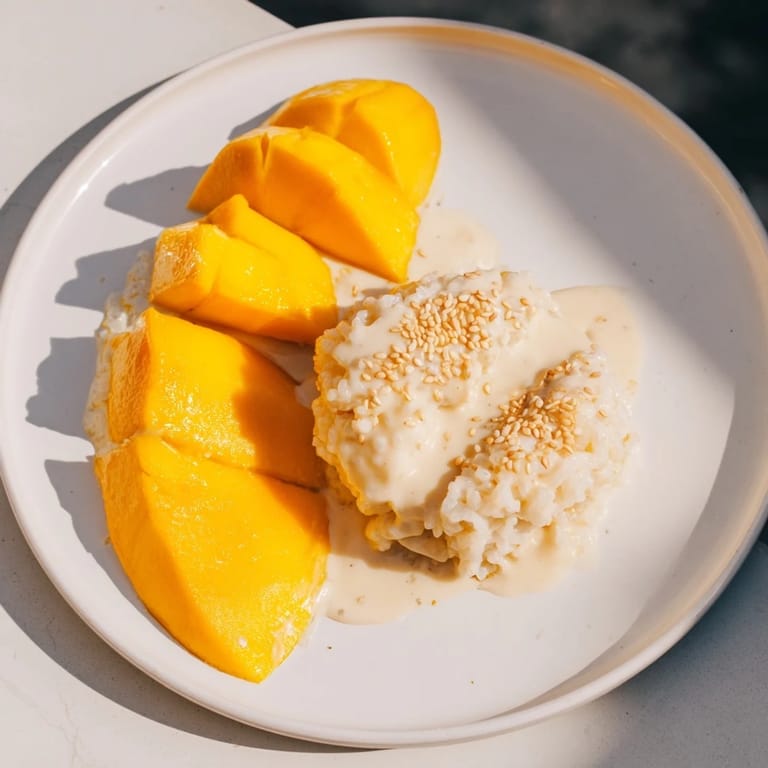
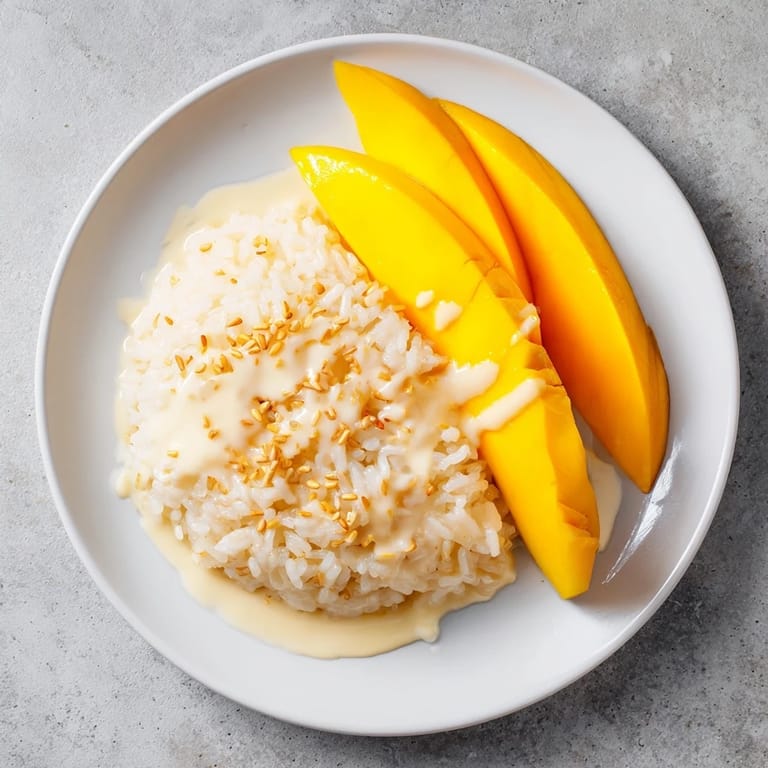
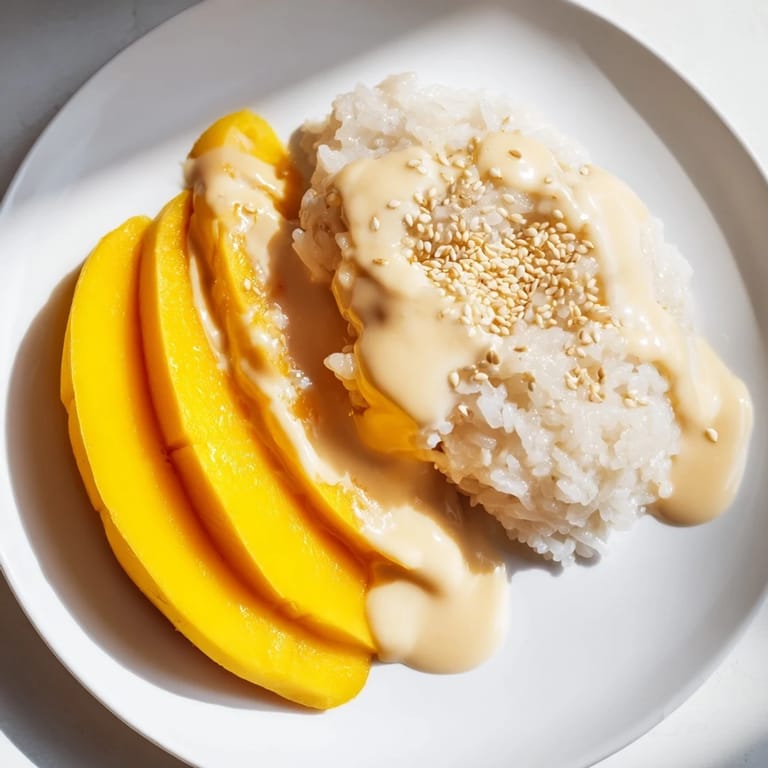
- Place a warm mound of sticky rice on each plate, lean the mango slices against it like flower petals, and drizzle with the remaining coconut sauce. If you have coconut cream and sesame seeds, add them now—they catch the light and make everything look intentional.
 Save
Save Years later, I realized this dish became a language between me and the people I cook for—something I make when words feel insufficient. There's honesty in this dessert, and maybe that's why it travels so far from its home.
The Secret to Perfect Sticky Rice
The quality of your rice genuinely matters here—not all glutinous rice is created equal. Some brands steam up stickier and more delicate than others, and part of learning this dish is figuring out which rice speaks to you. When you find the one that turns silky and absorbs coconut sauce perfectly, stick with it. Your steamer setup also affects the outcome; if you don't have a proper bamboo steamer, a metal basket lined with cheesecloth works just fine—the key is that steam reaches the rice evenly from all sides.
Choosing Mangoes Like You Mean It
This is where most people stumble, honestly. A mango's readiness isn't about color—some ripe mangoes look almost green, while others are blazing orange. The real test is smell and give. Hold it near your nose; a ripe mango smells sweet and almost perfumed. Press it gently with your thumb; it should yield slightly to pressure without being mushy. If you buy mangoes a day or two before you plan to use them, they'll continue ripening on your counter. If you're shopping the morning you'll cook, pick the ones that smell strongest and feel closest to that perfect give.
Variations Worth Trying
Once you've made this classic version a few times, you'll start seeing possibilities. Some Thai cooks steep the coconut sauce with a single pandan leaf for fifteen minutes before adding it to the rice—the aroma becomes almost floral and transportive. Others replace half the granulated sugar with palm sugar, which adds a deeper, almost caramel-like note. You can toast your own mung beans or sesame seeds if you want the garnish to taste more recent and alive. The bones of this dish are strong enough to carry these small variations without losing itself.
- Try steeping a pandan leaf in the coconut sauce for a haunting floral depth.
- Substitute half the sugar with palm sugar for a honeyed, complex sweetness.
- Toast your own sesame seeds or mung beans fresh the morning you cook—they taste infinitely better than pre-toasted.
 Save
Save This dessert doesn't need to be complicated to be profound. Make it exactly as written first, taste what it's supposed to be, and then start playing.
Recipe Q&A
- → What type of rice is used for sticky rice?
Glutinous or sweet rice is preferred for its sticky texture after soaking and steaming, ideal for absorbing coconut milk.
- → How is the coconut sauce prepared?
Coconut milk is gently heated with sugar and a pinch of salt until sugar dissolves, creating a creamy, sweet sauce that coats the rice.
- → Can the mango be substituted?
While ripe mango is traditional, other sweet tropical fruits can offer a different yet complementary flavor profile.
- → Why soak the rice before cooking?
Soaking softens the grains and shortens steaming time, ensuring the rice cooks evenly and achieves the right sticky texture.
- → How should leftovers be stored?
It’s best to consume fresh as refrigeration may harden the rice; if necessary, store components separately to maintain texture.
- → What optional garnishes enhance this dish?
Coconut cream adds richness, while toasted sesame seeds or mung beans provide a subtle crunch and nutty aroma.