 Save
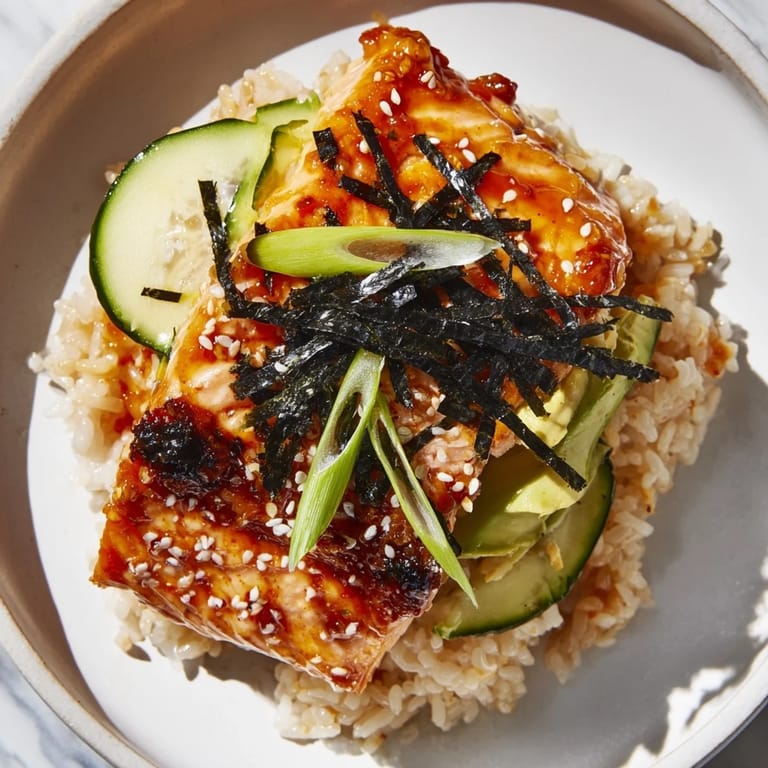
Save The first time I made this bowl, I was standing in my kitchen on a quiet Tuesday evening, orange zest still clinging to my fingertips from fresh fruit I'd just squeezed. I'd been watching cooking videos and got completely mesmerized by the way people assembled these glossy, Instagram-worthy rice bowls with such ease. That night, I decided to stop just watching and actually make something that looked like that—but with my own spin. The gochujang paste sat on my counter like an unopened promise, and I thought, why not combine it with citrus? The result was this sticky, spicy-sweet salmon that made my tiny kitchen smell like a restaurant I'd never been to but suddenly wanted to visit again.
I made this for my friend Maya on a Friday night when she was stressed about work, and watching her close her eyes while she took that first bite told me everything. She said the sweetness of the orange balanced the heat perfectly, and suddenly we were both leaning over our bowls like we were kids again, not thinking about anything except how good it tasted. That's when I knew this recipe had crossed from 'something I like making' to 'something that actually brings people together.'
Ingredients
- Salmon fillets (about 150 g each): Look for ones with a vibrant color and firm texture—the quality of your fish makes all the difference, so don't skip on this part.
- Gochujang paste: This Korean staple brings umami depth and a gentle heat that feels sophisticated rather than aggressive; keep it in the back of your fridge once opened.
- Fresh orange juice: Freshly squeezed tastes completely different from bottled—it adds brightness that makes the whole glaze sing.
- Soy sauce: The saltiness here balances the sweetness of the honey and orange, so don't double it or you'll oversalt everything.
- Honey: Just a tablespoon creates the sticky, caramelized finish that makes this feel special.
- Rice vinegar: This adds a subtle tang that prevents the glaze from being one-note sweet.
- Toasted sesame oil: Use the good stuff—it has a nutty warmth that regular oil can't replicate.
- Fresh ginger and garlic: Minced fine, these become invisible but essential flavor builders throughout the glaze.
- Short-grain rice: It's stickier and holds the sauce better than long-grain varieties.
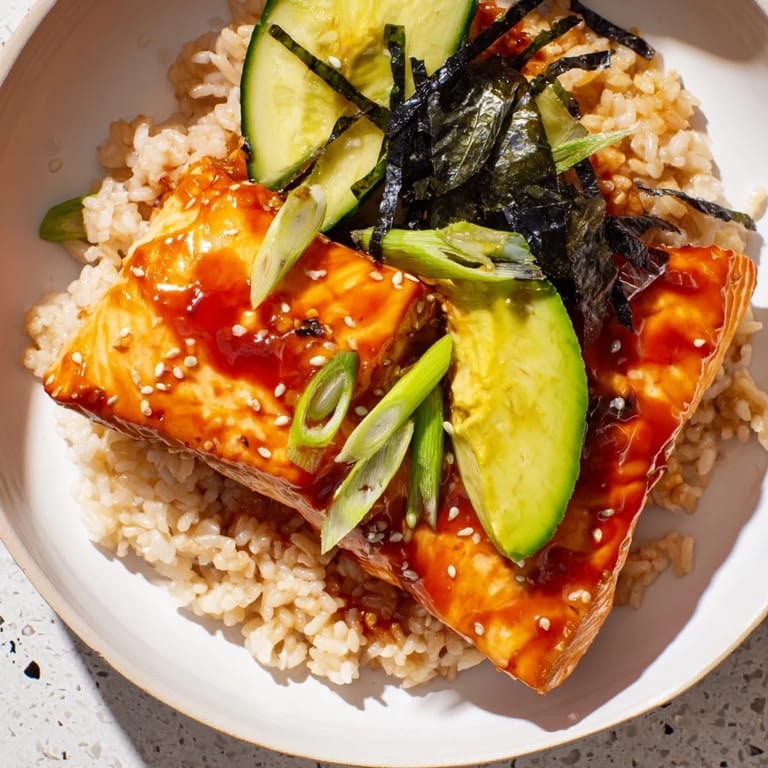
- Cucumber, avocado, nori, sesame seeds, and scallions: These toppings give you texture contrast and freshness that cuts through the richness of the salmon.
Tired of Takeout? 🥡
Get 10 meals you can make faster than delivery arrives. Seriously.
One email. No spam. Unsubscribe anytime.
Instructions
- Set your oven and prep your station:
- Heat to 400°F and line a baking tray with parchment paper while you gather your ingredients. This is where the magic happens—a clean workspace means you're not scrambling mid-cook.
- Season and position your salmon:
- Pat the salmon dry first, then sprinkle salt and pepper on both sides, letting it sit for just a minute so the seasoning sticks. Place skin-side down on your prepared tray.
- Mix the glaze with intention:
- Whisk gochujang, orange juice, soy sauce, honey, rice vinegar, sesame oil, ginger, and garlic together until the paste dissolves and becomes glossy. Taste it—it should make your mouth water.
- Brush and bake:
- Use about half the glaze on the salmon now, brushing it on gently so it coats evenly. Slide it into the oven for 12 to 14 minutes, and don't peek obsessively—the salmon will tell you when it's done by flaking easily.
- Prepare while it cooks:
- Get your rice warm, slice your cucumber thin, tear your nori into strips, and prep your avocado. Having everything ready makes assembly feel effortless.
- Optional broil for sticky finish:
- Once the salmon is cooked through, brush the remaining glaze on top and slip it under the broiler for 1 to 2 minutes—watch it closely so the edges get slightly caramelized but the salmon stays tender inside.
- Assemble with care:
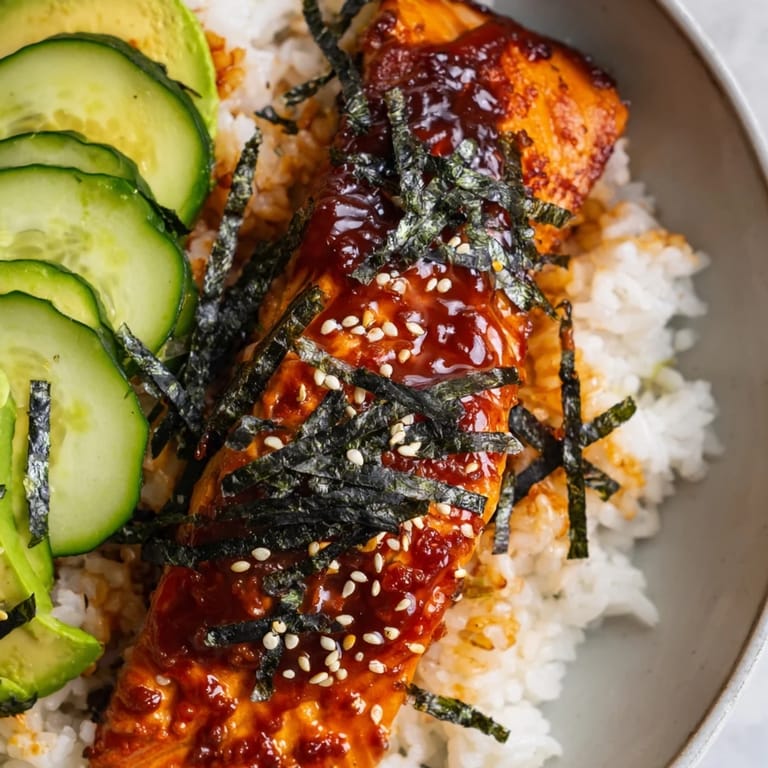
- Divide warm rice between two bowls, top each with a salmon fillet, then arrange your cucumber, avocado, nori, sesame seeds, and scallions around it like you're plating at a restaurant. Serve right away while everything is still warm.
 Save
Save There's something about sitting down with a bowl like this that makes everything feel slower and better. The warm rice, the cool crunchy toppings, the salmon that's still steaming—it all comes together in a way that feels both comforting and exciting at the same time.
Why This Glaze Works So Well
Gochujang on its own can be a bit one-dimensional, but the moment you add citrus and honey, it transforms into something with actual personality. The orange juice cuts through the heaviness of the paste while the honey keeps the sweetness grounded, and then the soy sauce and vinegar tie everything together so nothing feels out of balance. I learned this the hard way—my first attempt was way too spicy and kind of muddy—but once I found the right proportions, it became this glaze I crave.
Building Your Perfect Bowl
The beauty of this format is that it's endlessly customizable without losing its soul. I've added shredded carrots on nights when I wanted more crunch, pickled ginger when I wanted to lean into Korean flavors, and even a poached egg once when I felt like getting wild. The rice is your foundation, the salmon is your star, and everything else is just you playing around with textures and flavors until it feels right to you.
What to Serve Alongside
This bowl doesn't need much company—it's pretty complete on its own—but if you're cooking for guests, a simple side of steamed edamame or a crisp green salad cuts through the richness beautifully. A cold glass of Sauvignon Blanc sits perfectly next to this, the acidity echoing the citrus in the glaze and the crispness playing against the warm rice.
- Make extra glaze and keep it in a small jar in your fridge for drizzling over roasted vegetables or tofu throughout the week.
- If you're cooking for someone who doesn't eat fish, swap the salmon for extra-firm tofu pressed and pan-fried until it's golden—the glaze works just as well.
- Prep all your toppings the night before so the actual cooking part feels almost meditative rather than stressful.
 Save
Save This bowl has become my go-to when I want to feel like I've done something special in the kitchen without actually spending hours there. It's the kind of meal that tastes impressive but never feels like a burden to make.