 Save
Save Last spring, my neighbor stopped by unannounced with a bottle of wine, and I had exactly twenty minutes to pull together something that looked intentional rather than last-minute panic. I'd just picked up a bunch of those jewel-toned radishes from the farmers market, and something clicked—instead of fussing over a cooked dish, I simply arranged everything I had into one beautiful board with a quick herb dip. She told me it was the most refreshing thing she'd eaten all season, and honestly, I've been making it ever since for every casual gathering.
I made this for my sister's baby shower last May, arranged on my grandmother's old wooden board, and watched people gravitate toward it all afternoon—especially the quiet moment when my mom took a radish, dipped it, and smiled without saying anything. That's when I realized this dish does something special: it gives people permission to eat slowly and actually taste things, rather than just fueling up.
Ingredients
- Breakfast radishes: These pink and white ones are sweeter and less peppery than their larger cousins, making them genuinely crave-worthy raw.
- Sugar snap peas: Leave them whole or halved lengthwise so they're sturdy enough to dip without breaking apart in your hands.
- Fresh peas: If using fresh, blanch them quickly in salted water until just tender, then shock in ice water to keep that bright green color that makes the board pop.
- Baby carrots: Buy the ones that still have a slight earthy smell; they taste sweeter and more alive than the pre-peeled supermarket versions.
- Cherry tomatoes: Halve them to show off their jeweled insides and make them easier to grab.
- Cucumber: Slice on a slight bias so each piece feels more intentional and catches the light differently.
- Greek yogurt: Full-fat tastes creamier and more luxurious, but I've used 2% when that's what I had and it's still delicious.
- Mayonnaise: Adds richness and helps the dip cling to vegetables; don't skip it even if it feels redundant with the yogurt.
- Fresh lemon juice: This is non-negotiable—bottled tastes tinny and flattens all the herb flavors.
- Chives, parsley, and dill: Chop them by hand rather than with a food processor so the pieces stay vibrant and don't bruise into dark specks.
- Garlic: One small clove is enough; I once used a large one and it overpowered everything in a way I couldn't undo.
Tired of Takeout? 🥡
Get 10 meals you can make faster than delivery arrives. Seriously.
One email. No spam. Unsubscribe anytime.
Instructions
- Wash and prepare your vegetables:
- Run everything under cool water and pat completely dry with a clean kitchen towel—wet vegetables won't hold the dip and will make the board look sloppy. Trim radishes and peas, halve the tomatoes and radishes, peel the carrots, slice the cucumber, and if you're using fresh peas, blanch them for two minutes in salted boiling water, then plunge them into ice water.
- Make the herb dip:
- Whisk together the Greek yogurt, mayonnaise, and lemon juice in a bowl until smooth and creamy. Fold in the chives, parsley, dill, minced garlic, salt, and pepper with a rubber spatula, stirring gently so the herbs stay visible throughout rather than getting beaten into submission.
- Taste and adjust:
- Dip a carrot into the mixture and really taste it—sometimes you need a touch more salt, sometimes a squeeze more lemon. Trust your palate here; this is where the dip becomes yours rather than just following directions.
- Arrange on your board:
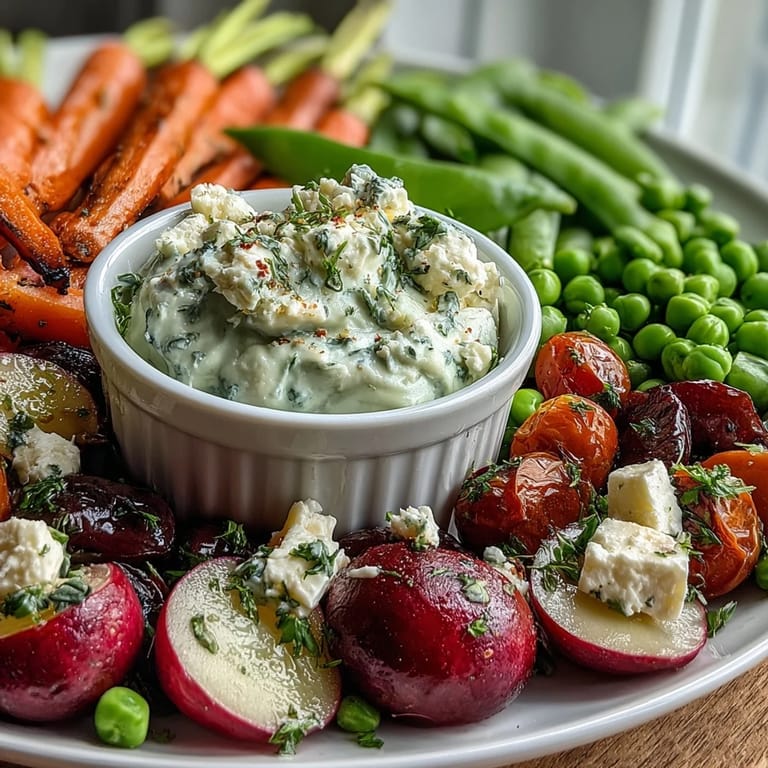
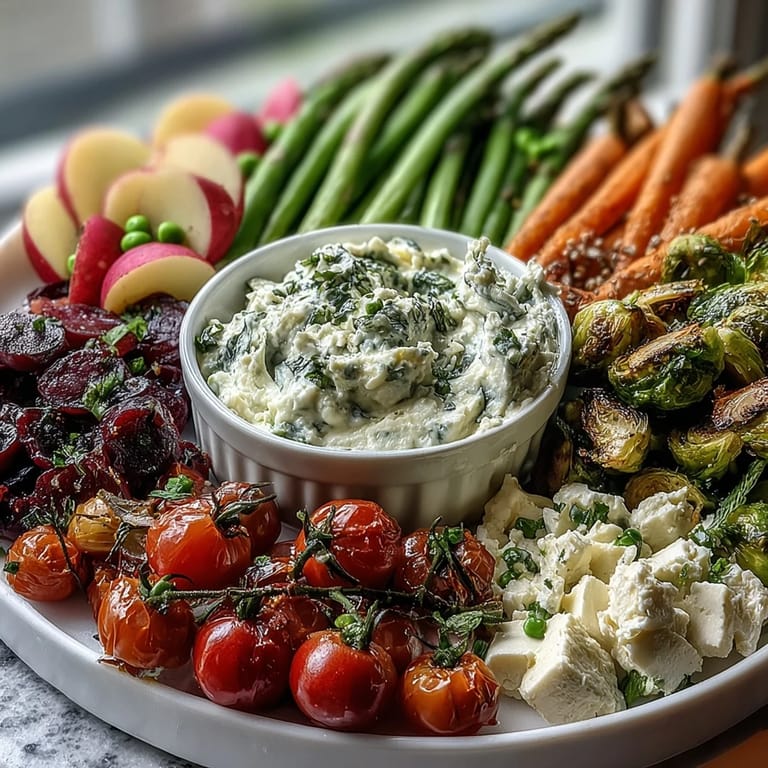
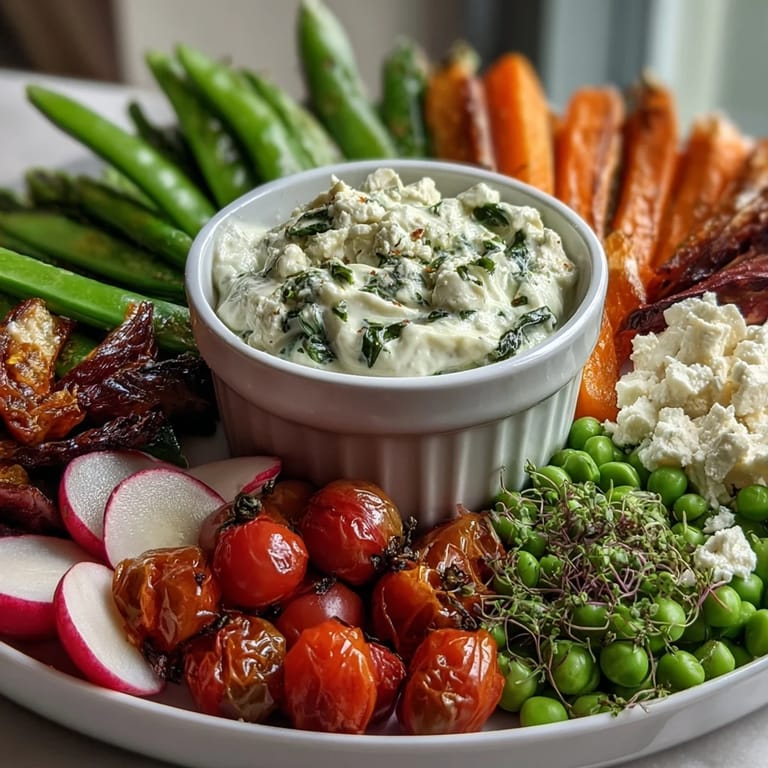
- Start by placing the dip bowl off to one side, then build clusters of each vegetable around it like you're creating a landscape. Radishes in one arc, peas in another, carrots in a neat pile—there's something satisfying about grouping by color and shape, and it makes people's eyes move around the whole board instead of just grabbing from one spot.
- Finish and serve:
- If using microgreens and feta, scatter them across the board in pockets between the vegetables—this adds height and visual surprise. Serve immediately, or cover loosely with plastic wrap and refrigerate until you're ready.
 Save
Save My daughter once asked why this board felt different from other appetizers, and I didn't have a fancy answer—just that it celebrates vegetables for being vegetables, without hiding them under sauce or transforming them into something they're not. There's honesty in that simplicity that people respond to without even knowing why.
How to Build a Board That Actually Looks Good
Start with odd numbers of each vegetable—three piles of carrots somehow looks better than two or four—and avoid arranging everything in straight lines, which feels sterile and formal. Leave a little white space on the board itself; it's tempting to fill every inch, but breathing room makes the colors sing louder. The dip should sit slightly off-center rather than dead in the middle, almost like it's a supporting actor rather than the lead role.
Flavor Combinations That Work
The herb dip is just creamy and herbaceous enough to let the vegetables taste like themselves, but rich enough that each bite feels intentional rather than virtuous. The lemon juice cuts through the dairy so nothing feels heavy, and the dill adds an unexpected whisper of sophistication that makes people pause and wonder what you did. If you want more depth, a tiny pinch of red pepper flakes in the dip adds heat without overwhelming the delicate spring flavors.
Serving Ideas and Timing
This board shines as the opening act at a gathering, served while everyone's still chatting and feeling civilized rather than frantically hungry. It works equally well as a light lunch alongside cheese and bread, or as a healthy snack board you keep in the fridge and pick at over a few hours. You can also double the dip recipe if you're feeding more than six people, or set out two boards at opposite ends of a table so people don't all converge on one spot.
- Make the vegetable prep your weekend project if you're hosting Friday; just store everything in separate containers and build the board an hour before guests arrive.
- If you don't have a wooden board, a large platter, cake stand, or even a clean marble countertop works beautifully.
- Keep the dip cool by setting the small bowl on ice if your gathering is outdoors or in a warm kitchen.
 Save
Save This board has become my favorite way to feed people because it asks nothing of them except to slow down and enjoy the moment. There's something almost meditative about a table full of people quietly dipping vegetables and talking, all because you arranged fresh things on a board and made a simple sauce.
Recipe Q&A
- → Can I use frozen peas in the board?
Yes, shelled frozen peas work well if blanched briefly to retain sweetness and texture.
- → What herbs are best for the dip?
Fresh chives, parsley, and dill combine to create a bright, flavorful herb dip.
- → Is there a dairy-free alternative for the dip?
Using plant-based yogurt instead of Greek yogurt offers a creamy, dairy-free option.
- → How long can the dip be stored?
The herb dip can be made ahead and refrigerated for up to two days to enhance flavors.
- → What garnishes complement the board?
Microgreens and crumbled feta add freshness and a touch of creaminess when sprinkled over the platter.
- → Can I add other vegetables to the board?
Seasonal vegetables like asparagus tips or sliced bell peppers make excellent additions.