 Save
Save Last summer, the air hung heavy with the scent of ripe tomatoes, and I remember standing by the stove as the basil leaves released their peppery aroma each time I tore them. The sound of pasta tumbling into boiling water was oddly satisfying, a brief pause before the meal unfolded. It's that kind of simplicity that drew me to Caprese Pasta with Burrata: fresh, vibrant, and full of flavor without any fuss. The creamy burrata melting over warm pasta felt almost decadent, somehow transforming an ordinary weeknight into something special. Cooking this dish always reminds me how a few ingredients can create something luscious and unexpected.
I once made this Caprese Pasta for a friend's impromptu patio dinner, and the laughter at the table was nearly as warm as the pasta itself. We were busy gossiping while I tore open the burrata, and someone accidentally ate a basil leaf meant for garnish—no harm done, just another moment to smile about. The simple act of serving this with everyone reaching out for seconds made it feel less like dinner and more like a celebration.
Ingredients
- Pasta: Short, sturdy shapes like fusilli or penne hold the sauce beautifully; always salt your water generously for flavor.
- Cherry Tomatoes: Halved tomatoes are key—they soften quickly and become sweet; I love picking the ripest ones for maximum flavor.
- Extra-Virgin Olive Oil: A bold, grassy oil gives the sauce a subtle richness; use the best you have.
- Garlic: Sliced thin for gentle, aromatic heat; don't let it burn, or it turns bitter.
- Fresh Basil: Tear the leaves just before using to release their aroma; the fresher, the better.
- Burrata Cheese: The creamy center is non-negotiable—tear it with your hands just before serving.
- Parmesan Cheese (optional): Adds extra savory depth if you want it; grate just before tossing.
- Freshly Ground Black Pepper: A generous grind at the end wakes up the dish.
- Flaky Sea Salt: Always sprinkle over the top for crunch and flavor balance.
- Salt, for pasta water: Don't skimp; it's your first layer of seasoning.
Tired of Takeout? 🥡
Get 10 meals you can make faster than delivery arrives. Seriously.
One email. No spam. Unsubscribe anytime.
Instructions
- Cook the Pasta:
- Fill your biggest pot with water and bring it to a full, rolling boil—the hiss of steam lets you know it's ready. Add a shower of salt, then tumble in the pasta, cooking until it's just al dente; use a colander to drain, but keep some starchy water aside.
- Sauté Garlic and Tomatoes:
- Warm olive oil in a skillet, then toss in garlic slices and let the aroma float up for about a minute without browning. Tip in the cherry tomatoes and shake the pan; their skins will start bursting, releasing juice and color while you season with salt and pepper.
- Combine Pasta and Sauce:
- Drop the drained pasta into the skillet, gently tossing to coat and letting the sauce cling. Pour in reserved pasta water a splash at a time, stirring until you see a glossy sheen hug each piece.
- Add Cheese and Herbs:
- Turn off the heat and sprinkle in half of the basil leaves along with Parmesan if using. Stir gently so everything mingles and the basil fragrance fills the air.
- Plate and Burrata:
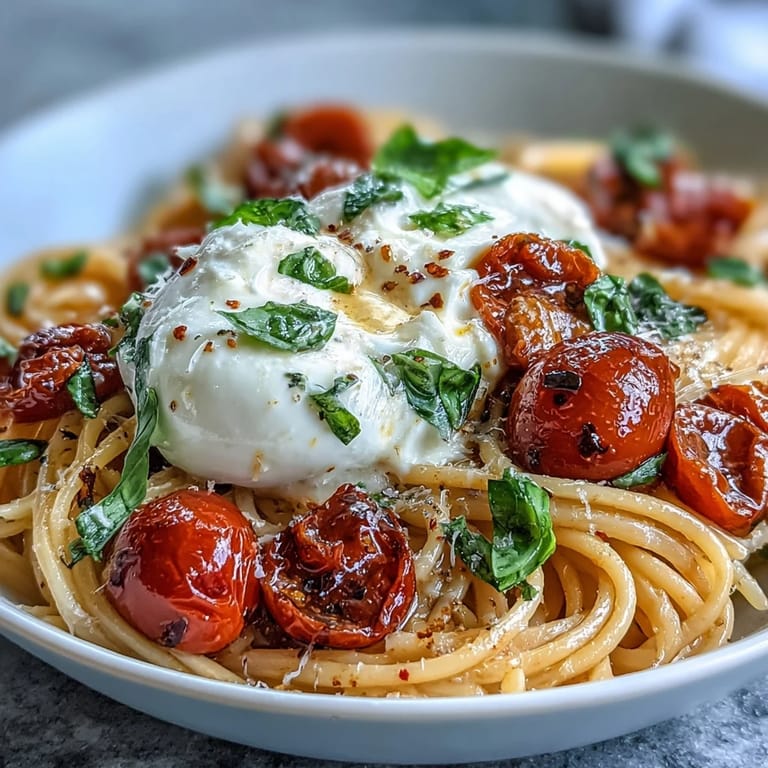
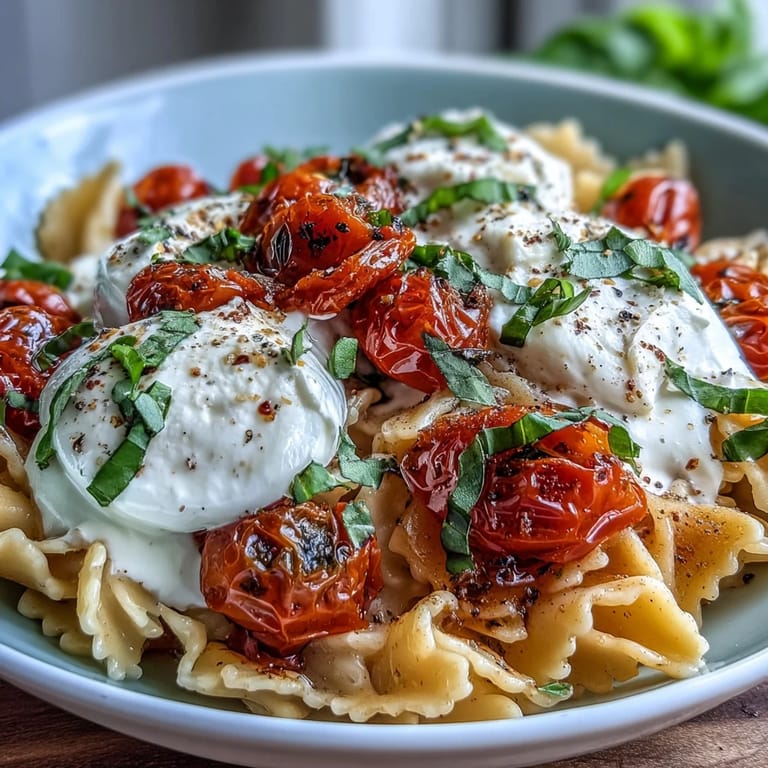
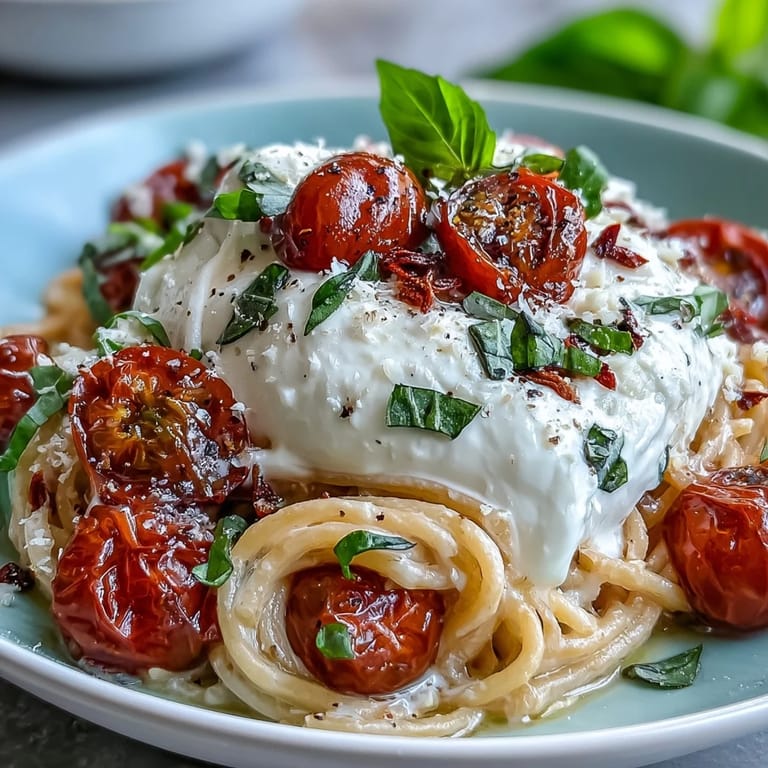
- Twirl each portion onto plates, then tear apart the burrata balls and nestle them on top; their creamy centers ooze out as they hit the warm pasta. Finish with more basil leaves, a drizzle of olive oil, and generous pinches of flaky sea salt and black pepper.
 Save
Save There was an afternoon when a friend came over exhausted from work, and we made this together in the kitchen, barely talking except to share a smile as the burrata pooled across the pasta. That quiet moment, plates warm and hands still dusted with basil, felt somehow restorative—the meal was more than just a recipe, it was a gentle reset.
How to Get the Creamiest Burrata Experience
Burrata is at its best when slightly chilled but not cold—I make sure to take it from the fridge just before plating so the center stays luscious and silky. Tearing it rather than slicing allows its cream to mingle with the pasta, creating a subtle sauce that feels luxurious.
Simple Ingredient Swaps
When burrata is out of reach, small mozzarella balls work beautifully, though the texture is less creamy. If you're feeling bold, adding a pinch of chili flakes to the garlic as it sautés lends a gentle warmth, and sometimes I swap in arugula for extra peppery greens when basil is scarce.
Serving and Storage Hints
This dish tastes best fresh—the creamy burrata won't behave once it's cold, and reheating ruins its softness. If you happen to have leftovers, keep the pasta and cheese separate and only combine right before serving.
- Don't toss burrata with hot pasta, just lay it on top.
- Use the reserved pasta water sparingly for silkiness.
- Serve quickly while the flavors shine.
 Save
Save Caprese Pasta with Burrata is the kind of meal I wish every evening could be: easy, fresh, and full of little surprises in each bite. Share it with friends, or keep it for yourself as a reward for making it through the day.
Recipe Q&A
- → What type of pasta works best?
Short shapes such as fusilli, penne, or farfalle are ideal for catching the sauce and toppings.
- → Can I use mozzarella instead of burrata?
Yes, mozzarella balls can be substituted if burrata is unavailable for a similar creamy texture.
- → How do I select the best tomatoes?
Choose ripe, sweet cherry tomatoes for vibrant flavor and a juicy, burst texture when sautéed.
- → Is this suitable for vegetarians?
Yes, using vegetarian cheese ensures the dish is friendly for vegetarians. Check cheese labels for rennet.
- → What wine pairs well with this meal?
A chilled Pinot Grigio or rosé complements the creamy cheese and fresh tomatoes beautifully.
- → Can I add extra flavor?
Chili flakes, added when sautéing garlic, provide a subtle heat. Adjust seasoning to taste preferences.