 Save
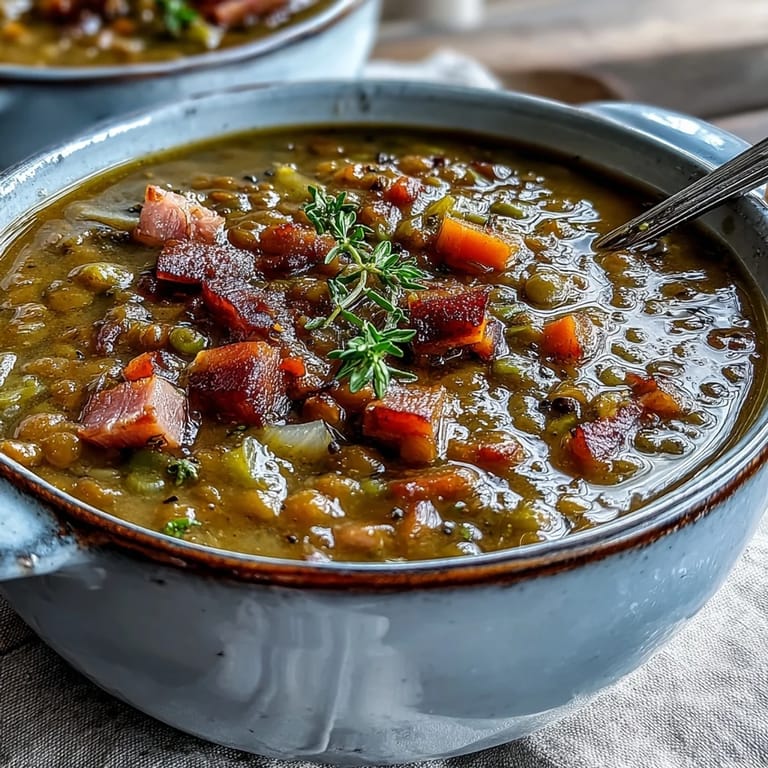
Save My neighbor knocked on my door one February afternoon with a ham bone wrapped in foil, leftover from her holiday dinner. She mentioned her mother used to make split pea soup every winter, and suddenly I was standing in my kitchen wondering if I could capture that same magic. What started as a favor turned into one of those soups that fills your house with such a welcoming smell that people start appearing in your kitchen asking when dinner is ready.
The first time I made this for my family, my daughter walked in from school, dropped her backpack, and asked what smelled like home. That question stuck with me more than any compliment about the taste. Now whenever I simmer this soup, I think about how the simplest ingredients can create moments people actually remember.
Ingredients
- Ham bone or diced cooked ham (1 meaty bone or 2 cups): This is where the whole soup gets its personality—the bone releases collagen and deep savory notes that broth alone can't touch, so don't skip it even if you have to ask the butcher for one.
- Dried split peas (1 pound, rinsed and sorted): They break down into the soup as it cooks, creating natural creaminess without cream, and rinsing them removes any grit hiding in there.
- Onion, carrots, and celery (1 large onion diced, 2 carrots peeled and diced, 2 celery stalks diced): These three are your flavor foundation—the onion sweetens, the carrots add depth, and the celery ties everything together with subtle earthiness.
- Garlic (2 cloves minced): One minute of cooking with garlic shifts the entire character of the soup from plain to craveable.
- Bay leaf: Drop it in whole and fish it out later—it whispers herbal notes throughout without taking over.
- Broth and water (8 cups low-sodium chicken or vegetable broth, 2 cups water): The water dilutes the saltiness of the broth so you can taste everything equally, and it gives you room to season at the end.
- Dried thyme (1 teaspoon): Dried thyme works better here than fresh because it holds up through the long simmer and distributes evenly.
- Black pepper and salt (½ teaspoon pepper, salt to taste): Always grind fresh pepper right before serving so it tastes bright instead of dusty.
Tired of Takeout? 🥡
Get 10 meals you can make faster than delivery arrives. Seriously.
One email. No spam. Unsubscribe anytime.
Instructions
- Start your flavor base:
- Heat a splash of oil in your pot over medium heat and add the onion, carrots, and celery together—you'll hear them sizzle and soften after about 5 to 6 minutes, which is exactly when the kitchen starts smelling like something good is happening. Stir them around so nothing sticks or browns too much.
- Wake up the garlic:
- Stir in your minced garlic and let it cook for just 1 minute—any longer and it can turn bitter, but this brief moment releases its aroma into everything you're about to add. You'll smell it immediately and know you're on the right track.
- Bring it all together:
- Add the split peas, ham bone or diced ham, bay leaf, thyme, broth, and water all at once and stir so the peas don't stick to the bottom. The mixture will look loose and watery right now, but trust the process.
- Simmer low and covered:
- Bring everything to a boil, then turn the heat way down and cover the pot—this lets the peas soften gently over about 1 hour while you can walk away and do something else. Stir occasionally so nothing settles too much, maybe every 20 minutes.
- Thicken it up:
- Remove the lid and keep simmering for another 20 to 30 minutes—this is when the split peas really start breaking apart and thickening the soup into something creamy and substantial. Watch for when the peas are completely tender and the liquid becomes more of a rich sauce than a broth.
- Rescue the ham:
- Fish out the bay leaf and ham bone, then pick any meat off the bone, chop it up, and return it to the pot—this step feels satisfying because suddenly there's more texture and substance. If you used diced ham instead, just skip this part.
- Season and finish:
- Taste it and add salt and pepper carefully—remember the broth was already low-sodium so you have room to season generously. If you want it creamier, you can mash some of the peas with a fork right in the pot, or use an immersion blender for a smoother texture.
- Serve with warmth:
- Ladle it into bowls while it's hot and consider a crusty piece of bread on the side or fresh herbs scattered on top if you're feeling fancy.
 Save
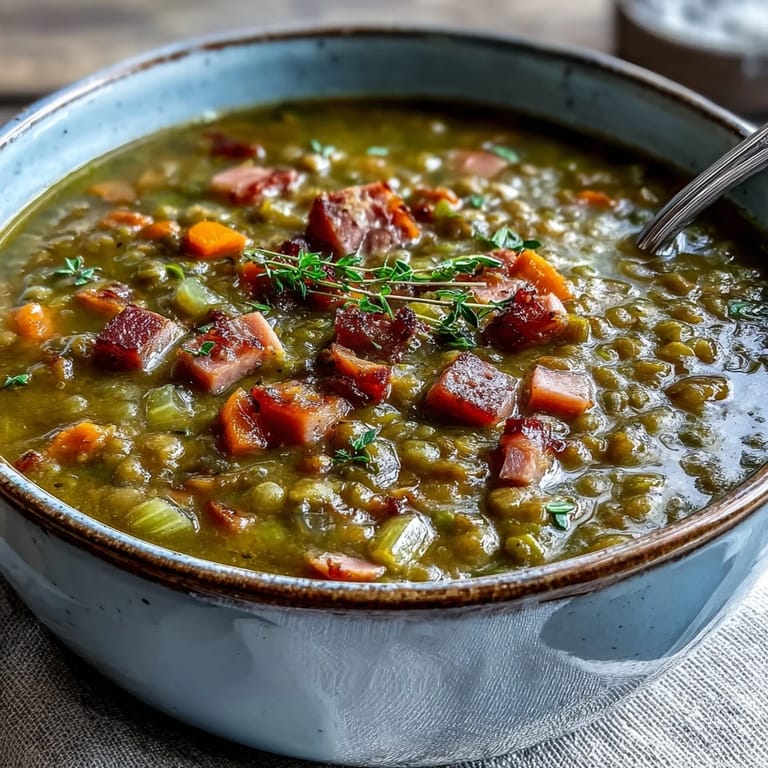
Save My mother-in-law asked for this recipe after tasting a bowl, and when she made it at her house, she called me to say her teenage son actually turned down pizza for seconds. That's when I realized this soup wasn't just comfort food—it's the kind of thing that makes people feel taken care of, without any fuss or pretension.
Why This Soup Gets Better Over Time
The flavors marry and deepen as the soup sits in the refrigerator, so if you have time, make it a day ahead and reheat it gently. The peas continue to soften slightly and everything tastes more blended together, like the soup has finally settled into itself and decided exactly who it wants to be.
Stretching a Single Pot Into Multiple Meals
This recipe yields 6 generous servings, but I always make it when I know I want leftovers because it freezes beautifully for up to 3 months and thaws into the same comforting bowl you fell in love with. I freeze mine in containers that hold about 2 servings, so on nights when cooking feels impossible, I can have this ready in the time it takes to defrost and warm.
Making It Your Own
The base of this soup is flexible enough that you can add diced potatoes or parsnips for extra heartiness, or leave out the ham entirely and use smoked paprika to build a vegetarian version that still tastes deep and complex. Every change you make teaches you something new about how these simple ingredients work together.
- Potatoes or parsnips should go in during the first simmer so they have time to soften alongside the peas.
- For a vegetarian version, smoked paprika adds the savory depth you'd miss from the ham bone, so use it generously.
- Frozen split peas work in a pinch, though they cook faster and you might need to reduce your simmering time by 15 minutes.
 Save
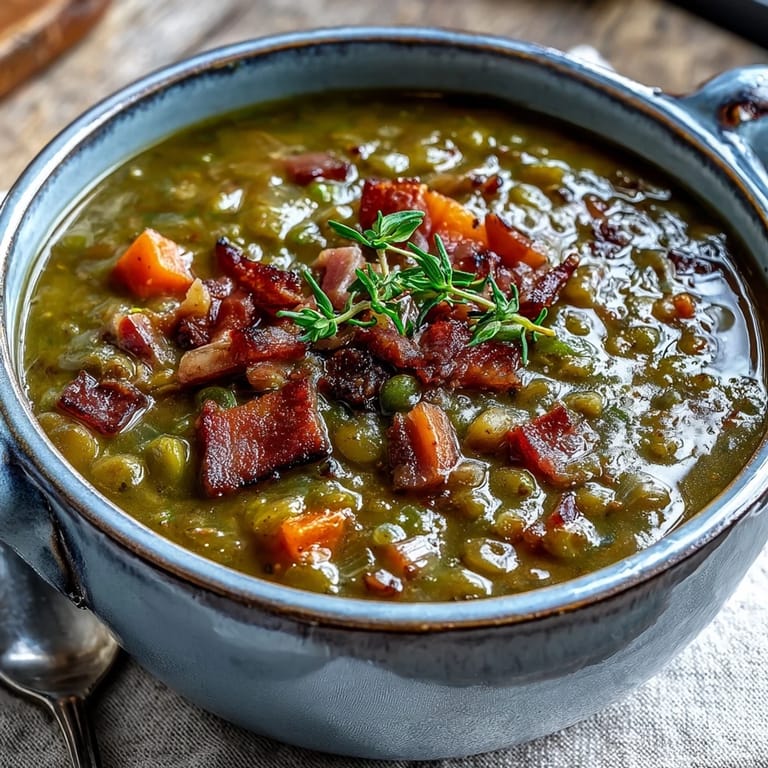
Save This soup taught me that the most memorable food isn't always complicated—sometimes it's just the right ingredients treated with patience and respect. Every bowl reminds me why simple comfort food will never go out of style.
Recipe Q&A
- → Do split peas need to be soaked before cooking?
No, split peas do not require soaking. Unlike dried beans, split peas cook relatively quickly and will soften within 1-1.5 hours of simmering. Just rinse them well and remove any debris or stones before adding to your pot.
- → Can I make this soup without a ham bone?
Absolutely. Use 2 cups of diced cooked ham instead. The soup will still have plenty of savory flavor. For extra depth, add a splash of smoked paprika or a piece of bacon during cooking.
- → How long will leftovers keep in the refrigerator?
Leftovers store well for up to 4 days in an airtight container in the refrigerator. The soup tends to thicken further as it sits, so you may want to add a splash of broth or water when reheating.
- → Can I freeze this soup?
Yes, this soup freezes excellently for up to 3 months. Cool completely before transferring to freezer-safe containers. Thaw overnight in the refrigerator and reheat gently on the stovetop.
- → How do I make this soup vegetarian?
Simply omit the ham bone and use vegetable broth instead of chicken broth. Add 1-2 teaspoons of smoked paprika to replicate the smoky depth that ham typically provides.