 Save
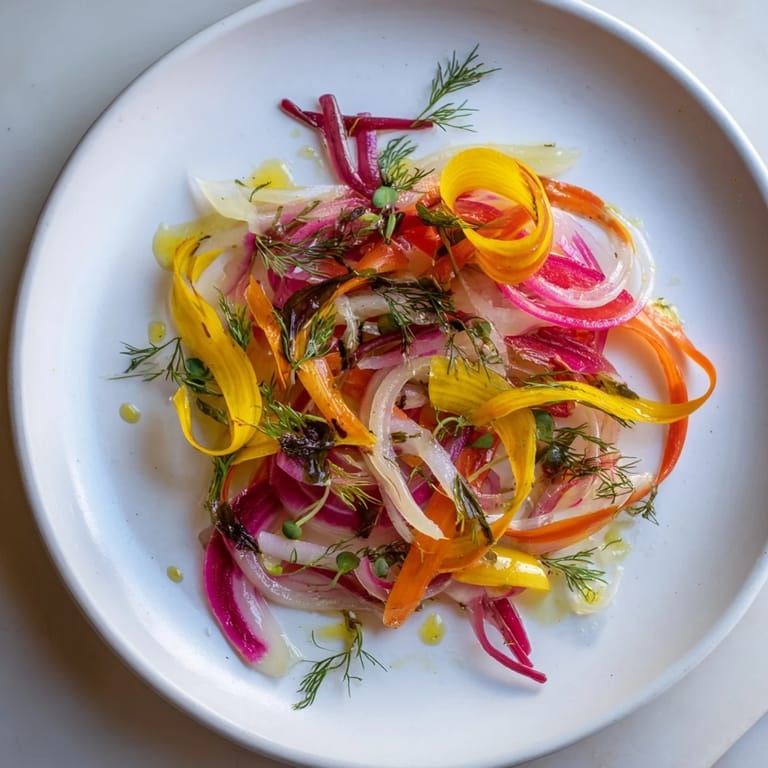
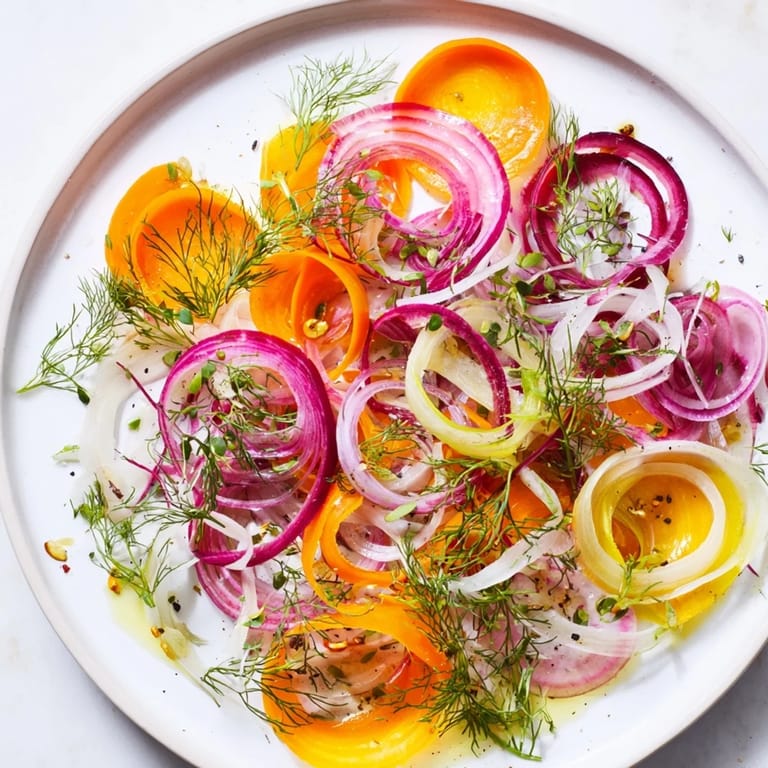
Save I discovered this salad by accident, standing in my kitchen on a Tuesday evening watching my mandoline catch the late afternoon light. The blade was gleaming, and I had a pile of vegetables that needed using—fennel, rainbow carrots, a golden beet—so I started shaving them thin, thinner, almost translucent. As the ribbons fell onto the cutting board, I realized they looked like they were spinning, frozen mid-motion. That visual became an obsession, and I've been arranging them this way ever since.
I served this for the first time at a dinner party where someone said they weren't really a salad person, and they came back three times for more. Watching them carefully arrange a fresh plate the third time, taking their time with the presentation on their own plate, reminded me that food becomes meaningful when it feels like you're holding something both beautiful and nourishing.
Ingredients
- Fennel bulb: Slice it very thin and you'll taste anise notes that brighten without overwhelming—the key is using one medium bulb so the flavor stays subtle and elegant.
- Rainbow carrots: Hunt for ones in different colors; they're not just prettier, the red and purple varieties taste slightly sweeter and earthier than orange ones.
- Golden beet: It's milder and doesn't bleed color all over the plate like red beets do, keeping your presentation clean.
- Red onion: Half a small one gives you bite without drowning out the other flavors; ice water mellows the sharp edge.
- Fresh dill and chervil: Dill brings brightness, chervil adds delicacy—if you can't find chervil, fresh parsley works just fine.
- Microgreens: These scatter like confetti and add peppery texture; they're the finishing touch that makes it feel intentional.
- Extra-virgin olive oil: Don't skip the quality here—this simple dressing lives or dies by the oil you choose.
- Lemon juice, honey, and Dijon mustard: Together they create a dressing that's balanced and bright, each ingredient pulling its weight.
Tired of Takeout? 🥡
Get 10 meals you can make faster than delivery arrives. Seriously.
One email. No spam. Unsubscribe anytime.
Instructions
- Slice your vegetables into ribbons:
- Use a mandoline if you have one, but a sharp vegetable peeler works beautifully too. The goal is wispy, almost translucent ribbons that catch light. Go slowly and keep your fingertips tucked—I learned that lesson quickly.
- Chill and crisp them:
- Drop the ribbons into a bowl of ice water for 5 to 10 minutes; you'll feel them curl and tighten as they chill, which is exactly what you want. Pat them dry gently with a clean towel.
- Build your dressing:
- Whisk olive oil with lemon juice, honey, and mustard in a small bowl until it's emulsified and glossy. Taste it and adjust salt and pepper—this dressing should feel balanced, not too sharp.
- Arrange the spiral:
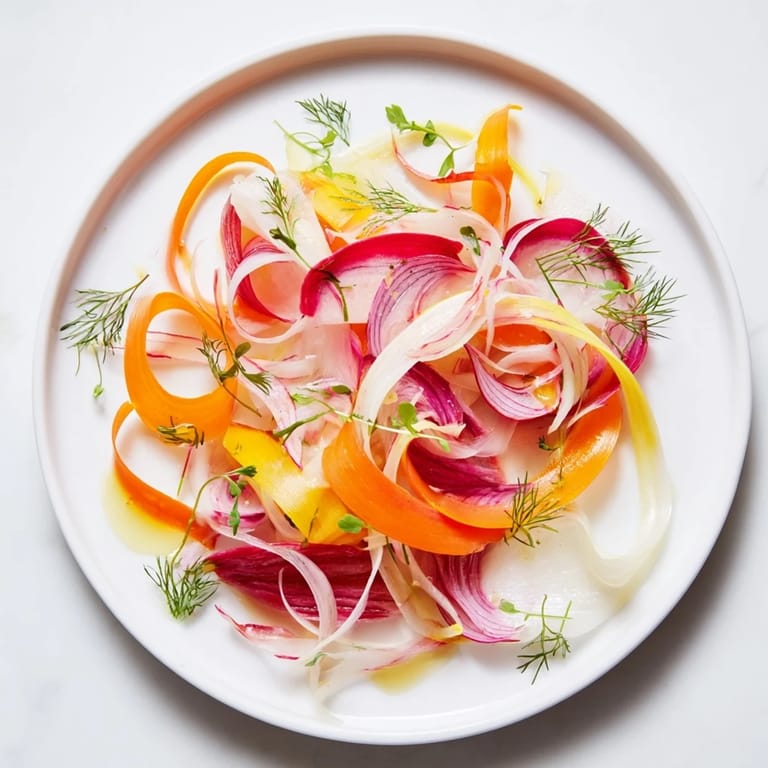
- Start at the center of a large plate and build outward in a circular pattern, letting the ribbons overlap and extend past the edge for that blurred, spinning effect. Don't overthink it; some chaos makes it feel alive.
- Layer your herbs:
- Scatter dill, chervil, and microgreens across the top, with a little extra concentration at the outer edges to enhance that wispy feeling. This is where the salad transforms from impressive to magical.
- Finish and serve:
- Drizzle the dressing over the top just before serving, so everything stays crisp and holds its shape. Serve immediately while the vegetables still have that snappy texture.
 Save
Save There's a moment when you step back from the plate and see the whole thing come together—all those ribbons spiraling outward, herbs catching the light, that sense of motion frozen in time—and you realize you've created something that feels too beautiful to eat. Then someone picks up their fork, takes a bite, and smiles, and suddenly it's perfect because it tasted as good as it looked.
Choosing Your Vegetables
The vegetables you choose make all the difference in both taste and presentation. Rainbow carrots come in deep purples, oranges, and pale yellows, and each one brings its own subtle sweetness to the plate. A golden beet won't stain everything pink, which means your white plate stays pristine and your herbs keep their color. If you can't find exactly what the recipe calls for, swap in thinly shaved radishes, cucumber, or even a watermelon radish for different color variations—just keep the ribbons thin and delicate so they have that same featherweight quality.
The Dressing That Ties Everything Together
This dressing is deceptively simple, but the balance between acid, sweetness, and mustard is what makes the raw vegetables taste like something special. The lemon juice adds brightness without overpowering, the honey rounds out the sharpness, and the mustard emulsifies everything while adding a subtle backbone. I've learned through trial and error that the ratio matters—too much acid and the vegetables start to wilt, too little honey and the dressing tastes thin and one-dimensional. Trust the measurements, taste as you go, and adjust just a touch of salt and pepper at the very end.
Why This Works as a Show-Stopper
People eat with their eyes first, and this salad understands that completely. The spinning arrangement catches attention, but the flavors hold it—fresh herbs, sweet vegetables, a bright dressing that feels both delicate and satisfying. It works as an elegant appetizer before a main course, a beautiful side at a dinner party, or even a light lunch when you add a soft cheese or some grilled chicken.
- Serve on a white or neutral plate so the colors of the vegetables pop.
- Make sure your mandoline or peeler is sharp; dull blades tear the delicate vegetables instead of slicing cleanly.
- If you're making this ahead, keep the vegetables, herbs, and dressing separate and assemble just before serving.
 Save
Save This salad taught me that sometimes the most elegant dishes come from paying attention to the small details—the sound of a mandoline blade, the feel of ice-cold water crisping vegetables, the way light hits translucent ribbons arranged just right. It's a recipe that rewards care without demanding complexity.
Recipe Q&A
- → How do you achieve thin, wispy vegetable ribbons?
Use a mandoline slicer or a sharp vegetable peeler to shave vegetables into translucent, delicate ribbons that offer a light texture.
- → Why soak the shaved vegetables in ice water?
Soaking in ice water helps the ribbons crisp up and curl, adding an appealing texture and visual interest to the salad.
- → What herbs work best for this salad?
Fresh dill, chervil or parsley, and microgreens bring bright, aromatic notes that complement the vegetable sweetness and add complexity.
- → What dressing complements the shaved vegetables?
A simple vinaigrette made with extra-virgin olive oil, lemon juice, honey, Dijon mustard, salt, and pepper enhances flavors without overpowering the freshness.
- → Can I add other vegetables for different textures?
Yes, thinly shaved radishes or cucumber can add crunch and variety, enhancing both texture and flavor profile.