 Save
Save The first time I really understood tteokbokki wasn't from a cookbook—it was watching my neighbor's hands move with the kind of ease that only comes from making something a hundred times. She'd grip the wooden spoon, eyes half-closed, listening to the sauce bubble and watching for that exact moment when the rice cakes transformed from firm to impossibly chewy. That afternoon, standing in her tiny kitchen while she narrated each decision like we were in on a secret together, I realized this wasn't just street food. It was a conversation between heat, texture, and fearless flavor.
I made this for friends during a rainy evening when nobody wanted to go out, and something shifted in the room once we started eating. People were quiet, focused, occasionally fanning their mouths and laughing about the heat while reaching for more. There's something about sharing spicy food that breaks down distance—you're all in it together, cheeks flushed, passing water glasses, bonding over the beautiful sting.
Ingredients
- Rice cakes (tteok): The foundation of everything—you want cylindrical ones, plump and eager to absorb sauce. If they're refrigerated or hard, soaking them softens them without turning them mushy.
- Gochujang and gochugaru: These aren't interchangeable, and understanding the difference matters. Gochujang is fermented and thick, almost sweet; gochugaru adds heat and texture. Together they build layers.
- Soy sauce: A measured hand here prevents oversalting—start with what the recipe says, taste as you go.
- Honey or corn syrup: This gentles the heat and rounds out the sharpness, making the sauce feel complete rather than one-dimensional.
- Garlic: Fresh and minced, it wakes up everything it touches.
- Dried kombu and anchovies: These build a broth with character. Removing them after infusing keeps the liquid clear and lets the sauce shine.
- Sesame oil: Just a teaspoon, toasted, because its flavor is concentrated and bold.
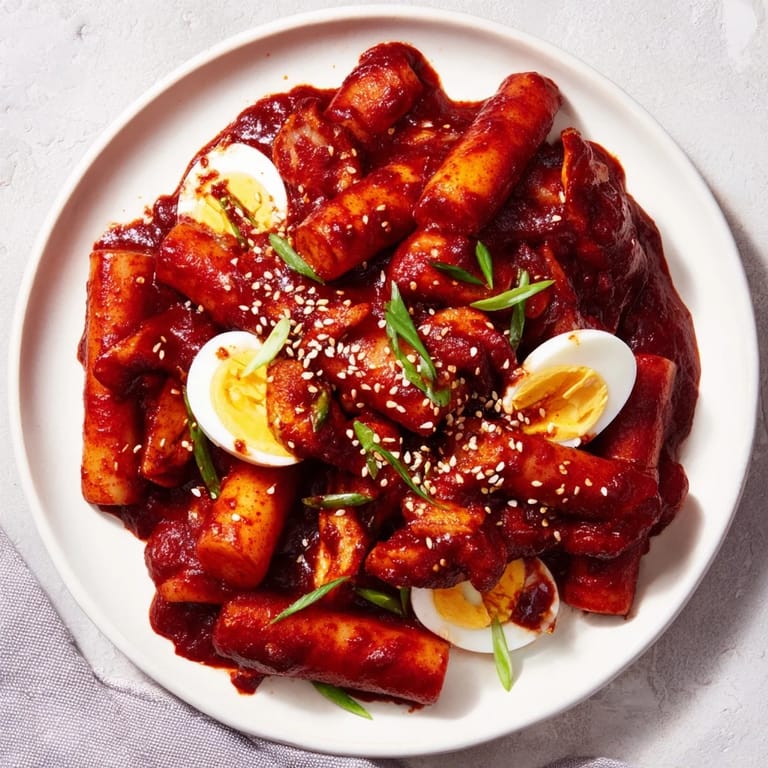
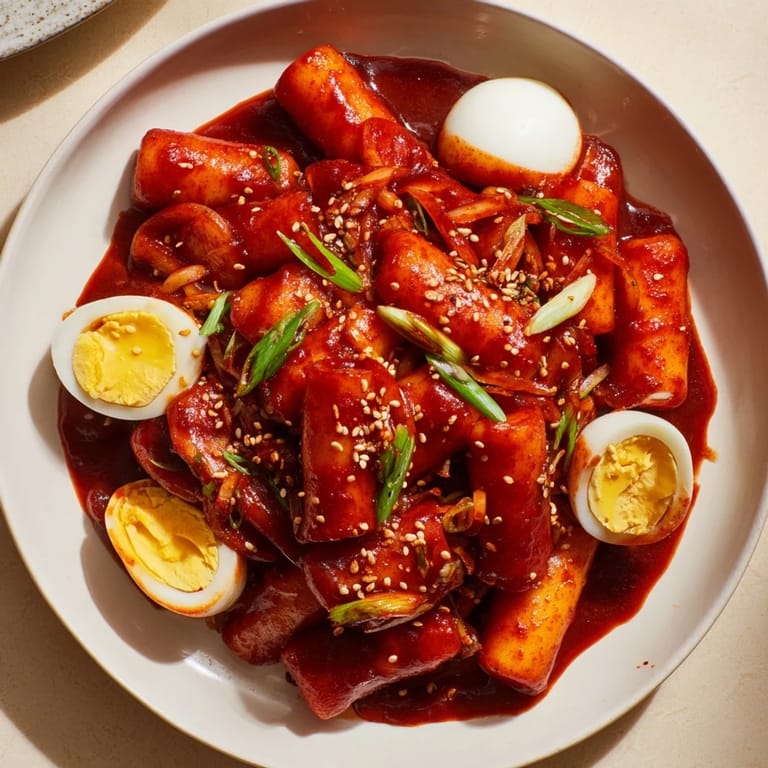
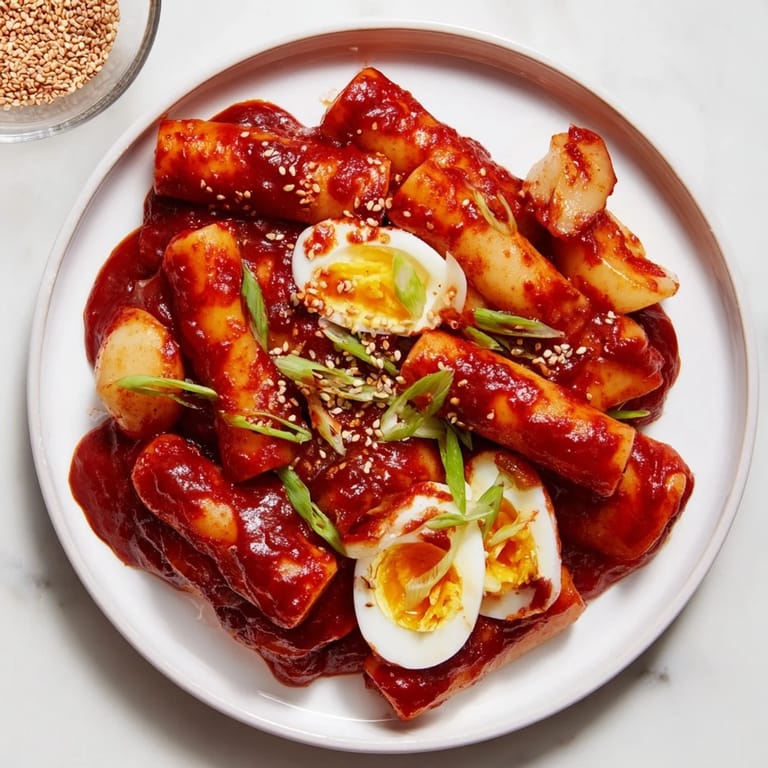
- Boiled eggs: Creamy centers that soften into the sauce, adding richness without heaviness.
- Green onion and sesame seeds: Final touches that feel small until you taste their brightness against all that red heat.
Tired of Takeout? 🥡
Get 10 meals you can make faster than delivery arrives. Seriously.
One email. No spam. Unsubscribe anytime.
Instructions
- Soak your rice cakes:
- Warm water for 10 minutes loosens them up, especially if they've been sitting cold. This small step means they'll cook evenly and stay tender, not split or fall apart.
- Build your broth:
- Water, kombu, and anchovies simmering together for 10 minutes create umami depth that no shortcut delivers. The aroma alone tells you something real is happening.
- Boil the eggs:
- Eight to nine minutes gives you that jammy, barely-set yolk that bleeds into everything around it. Cool them quickly so they don't overcook—the residual heat matters.
- Make the sauce:
- Stir gochujang, gochugaru, soy sauce, sugar, honey, garlic, and sesame oil into your strained broth until the paste dissolves completely. No lumps, no shortcuts—smooth is what you want.
- Marry the elements:
- Rice cakes, onion, and fish cake (if you're using it) go in now, over medium heat. Stir occasionally and watch the sauce thicken, feel it deepen in color, sense when it's ready—usually 10 to 12 minutes. This is where patience pays off.
- Finish with heat:
- The boiled eggs join for a final 2 to 3 minutes, just long enough to warm through and let them know what they're about to experience.
- Garnish and serve:
- Green onion and sesame seeds scattered across the top add brightness and texture to every bite.
 Save
Save There's a moment, right around the halfway point of cooking, when the aroma shifts from sharp to rich. My partner walked past the stove that evening and just stood there, inhaling, and that's when I knew this dish had already done its job—before the first bite, it had already made us want to stay.
The Magic of the Spice Balance
The reason tteokbokki hits differently than other spicy dishes is the interplay between fermented heat and raw heat, between sweetness and punch. Gochujang brings a warming, almost caramel-like complexity, while gochugaru adds immediate fire. The honey and sugar aren't there to mask the spice—they're there to amplify it, to make your palate want more even as it's burning. This tension between comfort and heat is what keeps you reaching for the next bite.
Building Flavor Through the Broth
Most people think the sauce is everything, but the broth underneath is where this dish finds its soul. Kombu and anchovies aren't fishy when treated with respect—they're umami carriers that disappear into the background, making everything taste fuller and rounder. If you're vegetarian, you can skip them and the dish remains beautiful, but know that you're choosing a cleaner, more direct spice experience instead of a layered one. Both are valid; they're just different conversations.
Texture as Character
Chewy rice cakes, creamy egg yolks, tender onion—tteokbokki is a texture story as much as a flavor story. The rice cakes should bend and give but never be mushy, the eggs should be soft enough to break with the back of your spoon, and the onion should have surrendered completely to the sauce. Get these right and the dish feels luxurious despite its humble origins.
- Add cabbage or carrots if you want more substance and a contrast to the softness of the rice cakes.
- Ramen noodles stirred in during the last few minutes make this a full meal and soak up extra sauce like they were born to do it.
- Fish cake isn't necessary, but its slight fishiness and firm bite add complexity worth trying at least once.
 Save
Save This dish is best shared, best eaten hot, and best enjoyed with people who don't mind a little mess and a lot of joy. Make it once and you'll find yourself making it again.
Recipe Q&A
- → What gives the sauce its spicy and sweet flavor?
The sauce combines gochujang, gochugaru, soy sauce, sugar, and honey to create a balanced spicy-sweet profile.
- → How do I achieve chewy rice cakes?
Soak the rice cakes in warm water if firm, then simmer them in the sauce until soft but chewy, usually 10–12 minutes.
- → Can I make a vegetarian version?
Yes, omit anchovies and fish cake, and use vegetable broth to maintain depth of flavor.
- → How are the eggs prepared for this dish?
Boil large eggs for 8–9 minutes, cool, peel, and add them to simmer briefly before serving.
- → What garnishes complement this dish?
Sliced green onions and toasted sesame seeds add freshness and nutty aroma as finishing touches.