 Save
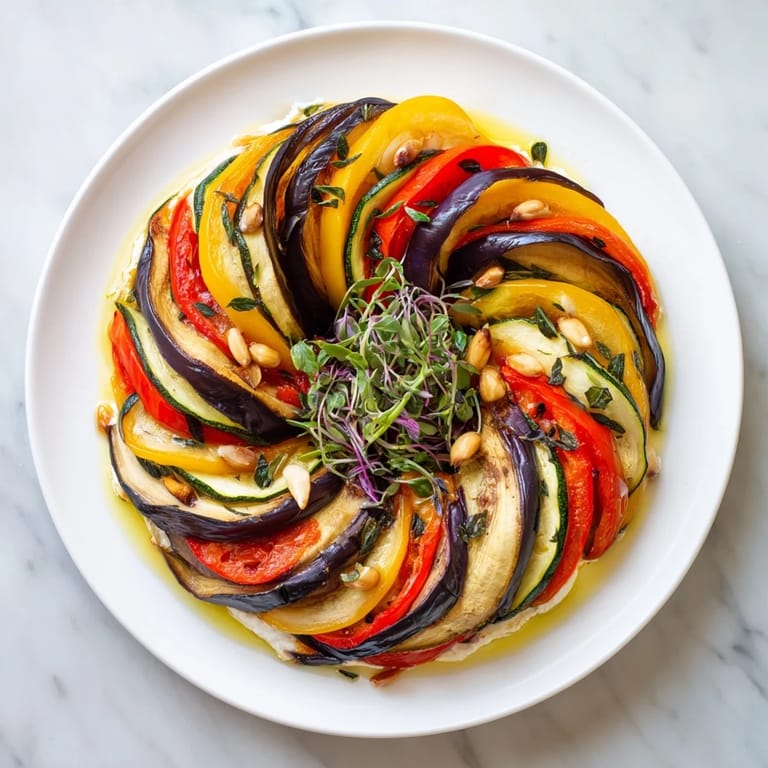
Save I'll never forget the first time I attempted a spiral arrangement at a dinner party—it felt like I was painting with vegetables. There was something magical about watching those ribbons of eggplant, zucchini, and bell pepper come together in one continuous, graceful dance across the plate. It was supposed to be simple, but that first attempt taught me patience and the power of presentation. Now, whenever I make this Snail Shell Spiral, I'm transported back to that moment of discovery, where I realized that food could be both art and nourishment in one breathtaking bite.
I remember serving this at a small gathering last spring, when everyone arrived skeptical about a vegetable-forward appetizer. But as they took their first bite, something shifted. The roasted vegetables had this subtle sweetness, the goat cheese was smooth and grounding, and the herbs—especially that fresh basil—made it feel like spring itself was on the plate. One guest actually put down her wine glass and asked me to explain every layer. That's when I knew this dish had become more than just food; it had become a conversation starter.
Ingredients
- Small eggplant: Sliced lengthwise into thin ribbons, eggplant becomes silky and sweet when roasted. I've learned that smaller eggplants have fewer seeds and a more delicate flavor—they're worth seeking out.
- Medium zucchini: Choose one that's firm to the touch and not too large, as bigger ones can be watery. Thinly sliced lengthwise, it adds a mild, tender layer to your spiral.
- Red bell pepper: Slice it thinly so it wilts gently during roasting. The sweetness becomes concentrated, creating beautiful depth against the green and yellow vegetables.
- Yellow squash: This one's often overlooked, but it adds brightness and a subtle sweetness that makes the whole spiral sing.
- Small carrot: Peeled and sliced lengthwise, it brings earthy sweetness and a slight bite of texture.
- Goat cheese, softened: Room temperature is crucial here—it spreads smoothly and creates that creamy base that holds everything together. Let it sit out for 15 minutes before you start.
- Crème fraîche: This adds richness and a subtle tang that prevents the cheese from feeling heavy. It's the secret to making the mixture silky without being dense.
- Fresh basil and thyme: These aren't just garnish—they're woven throughout the cheese, giving you little pockets of herbal brightness with every bite. Fresh herbs make all the difference; dried ones will taste muted here.
- Olive oil: A good quality oil matters because you're using it for both cooking and its flavor. It's the bridge between all these elements.
- Pine nuts, lightly toasted: Toasting them yourself brings out their buttery, slightly sweet character. Store-bought toasted nuts lose their charm quickly, so this small step is worth it.
Tired of Takeout? 🥡
Get 10 meals you can make faster than delivery arrives. Seriously.
One email. No spam. Unsubscribe anytime.
Instructions
- Set Your Stage:
- Preheat your oven to 200°C (400°F) and line a baking tray with parchment paper. This temperature is your sweet spot—hot enough to soften the vegetables and bring out their natural sugars, but gentle enough that they won't brown and lose their fresh character.
- Prepare Your Vegetables:
- Brush each slice lightly with olive oil, then season with a pinch of sea salt and a crack of black pepper. I usually do this directly on the tray so I can see exactly how much oil each slice gets. You want them glistening, not drenched.
- Roast Until Pliable:
- Spread them in a single layer and roast for 10 to 12 minutes. You're looking for that magical moment when they're soft enough to bend without cracking, but still holding their shape and color. Set them aside to cool slightly—this makes them much easier to arrange.
- Make Your Cheese Base:
- In a small bowl, combine softened goat cheese, crème fraîche, finely chopped basil, and thyme. Stir until completely smooth and creamy. Taste it as you go—you might want a pinch more salt or an extra whisper of herbs. This mixture should taste delicious on its own because it's the flavor foundation of everything else.
- Spiral from the Center Out:
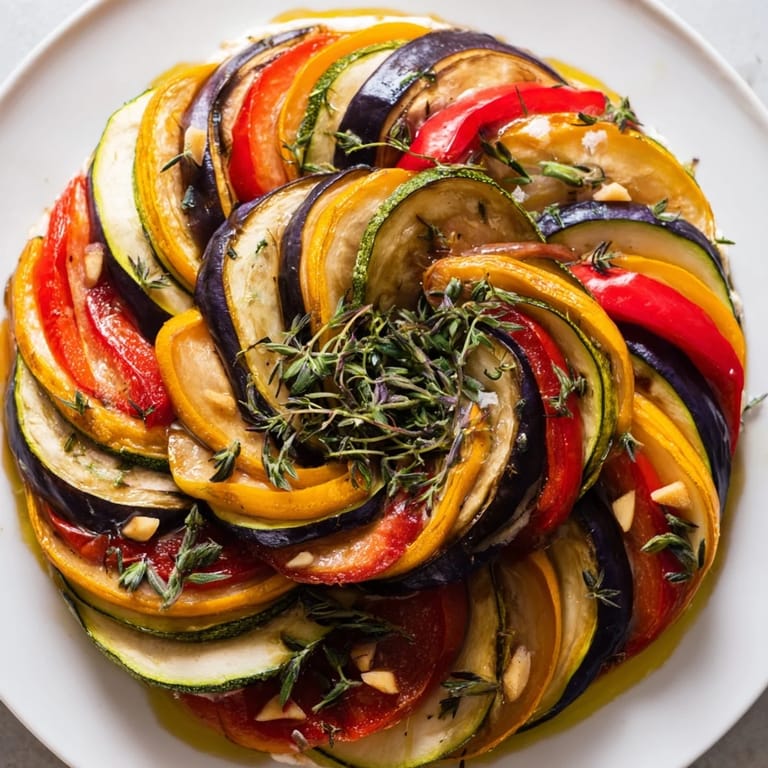
- On your serving plate, start at the very center and spread a thin, continuous line of your cheese mixture, spiraling outward in a gentle curve. Think of it like you're drawing with a pencil, not painting with a brush. This base holds everything together and creates little pockets of herbal creaminess throughout.
- Arrange Your Vegetables:
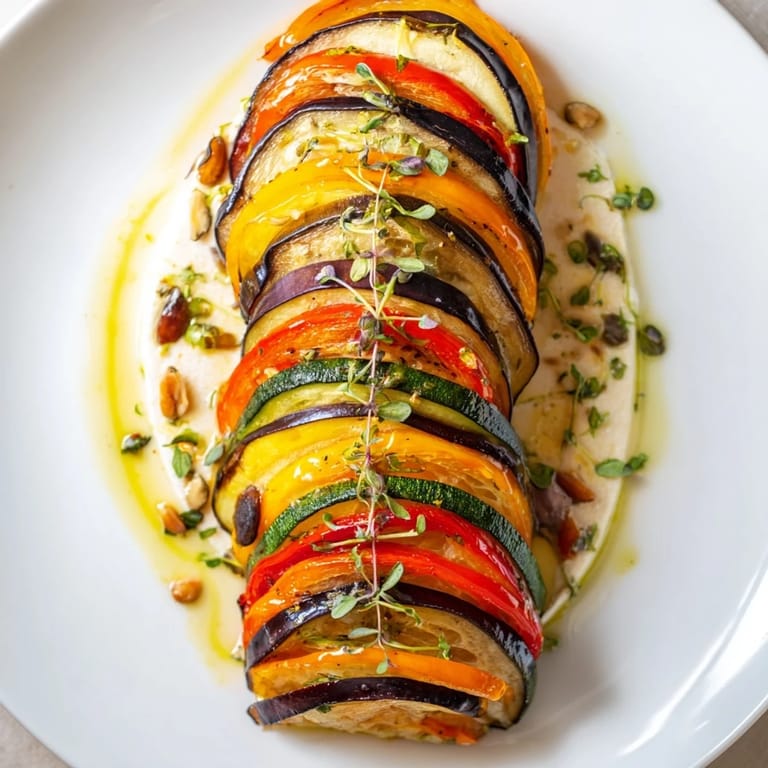
- Beginning at that center point, layer your roasted vegetable slices, overlapping them slightly as you follow your cheese spiral outward. Alternate your colors deliberately—eggplant, then zucchini, then red pepper, then yellow squash, then carrot—so the eye travels around the spiral with rhythm and surprise. It's like you're conducting a vegetable symphony, and each color is an instrument.
- The Final Flourish:
- Scatter your toasted pine nuts across the spiral, letting them fall where they may. If you have microgreens, add a small handful for that fresh, peppery contrast. Serve at room temperature, which lets all the flavors speak clearly without the distraction of heat.
 Save
Save There was a quiet moment last summer when my daughter, who usually ignores anything green on her plate, came back for a second helping of this spiral. She said it didn't taste like vegetables; it tasted like art that happened to be delicious. That's the moment this dish stopped being about technique for me and became about creating something that bridges the practical and the beautiful.
Why This Spiral Came to Be
The spiral shape isn't arbitrary—it's been used in cooking and nature for centuries because it draws the eye and the fork in a natural, satisfying direction. When I started working with layered vegetables, I realized that a straight line felt static, but a spiral feels alive. It invites you to trace it with your eyes before you taste it, which means you're already engaged before the flavors even reach your palate. Contemporary European cuisine has taught us that plating is part of the meal, and this spiral is proof that sometimes the presentation is just as important as what you're tasting.
Variations That Keep It Interesting
Once you master the basic spiral, it becomes a canvas for your own creativity. I've added paper-thin slices of roasted beets for an earthier note and deeper color, and it changed everything—the sweetness of the beets against the herbs in the cheese created this unexpected complexity. Sweet potatoes work beautifully too, adding a warm, slightly nutty tone. For a vegan version, use a good quality plant-based cheese spread instead of the goat cheese and crème fraîche combination, though I'll be honest—the goat cheese brings a tang that's harder to replicate, so if dairy isn't an issue, it's worth using the real thing.
Serving This Like You Mean It
Serve this spiral with crusty bread or good crackers on the side, because your guests will want something to extend the experience. The vegetables are the star, but bread becomes the co-star, letting people create little bites with their own balance of cheese to vegetable to herb. I've also served it alongside a simple green salad dressed with lemon vinaigrette, which adds freshness and keeps the meal light. This is an appetizer that can easily become a light lunch if you add a little more substance around it, or it can be the first course of a larger meal where it sets a beautiful, sophisticated tone.
- Always use room temperature vegetables and cheese for the smoothest, most elegant presentation.
- If you're making this ahead, assemble it just before guests arrive—the longer it sits at room temperature, the more the cheese softens and loses definition.
- Don't be afraid to adjust the herb quantities based on what you have and love; this recipe is forgiving enough to accommodate your preferences.
 Save
Save This spiral has become my quiet signature when I want to say something without words—that I've taken time, noticed detail, and considered the people I'm feeding. Every time you make it, you'll find small ways to make it your own, and that's exactly as it should be.
Recipe Q&A
- → What vegetables are used in the snail shell spiral?
Thinly sliced eggplant, zucchini, red bell pepper, yellow squash, and carrot are used to create the colorful layers.
- → How do you prepare the vegetables for this dish?
The vegetable slices are lightly brushed with olive oil, seasoned with salt and pepper, then roasted until pliable but not browned.
- → What is the cheese mixture made of?
A blend of softened goat cheese, crème fraîche, fresh basil, and thyme is mixed until smooth to serve as a flavorful base.
- → Can this dish be served warm?
It's best enjoyed at room temperature, allowing the flavors of the roasted vegetables and creamy cheese to harmonize.
- → Are there suggested garnishes for additional texture or flavor?
Toasted pine nuts add crunch, and microgreens can be added for a fresh, decorative touch.
- → Is this dish suitable for vegans?
For a vegan version, substitute the goat cheese and crème fraîche with plant-based cheese alternatives.