 Save
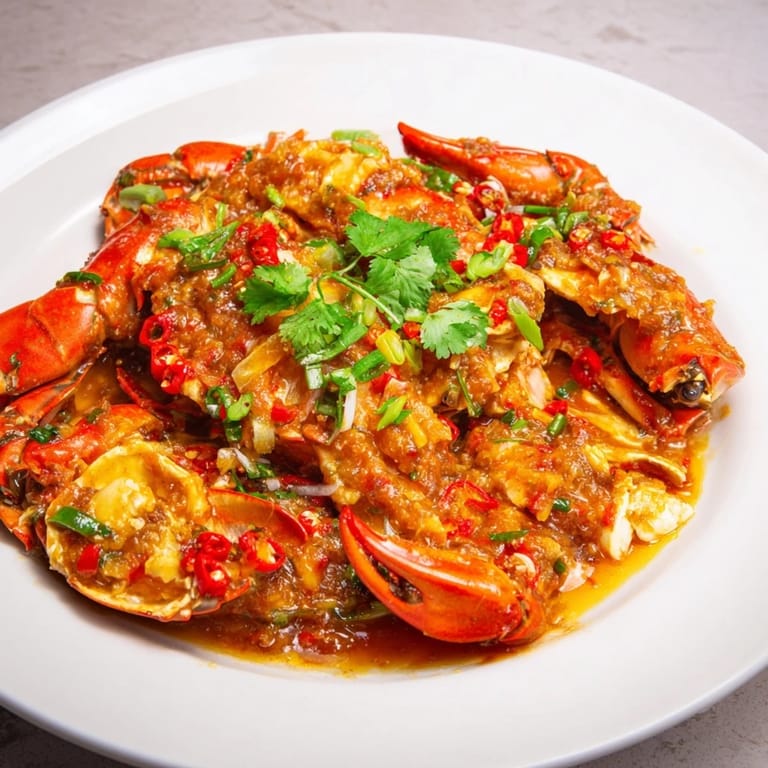
Save My first encounter with chili crab happened on a humid evening at a bustling hawker stall in Singapore, watching a cook's hands move with practiced speed through clouds of steam and spice. The dish arrived at our table crackling with energy—bright red sauce clinging to cracked shell, a single drizzle of egg swirled through the center like gold leaf. I immediately understood why locals fought over the last piece, why conversations stopped mid-sentence when forks dipped into that tangy, fiery sauce. Years later, I still chase that same feeling every time I make it at home.
I remember cooking this for my partner on our first anniversary, surrounded by newspaper spread across the table like we were at a hawker center ourselves. We made a complete mess, laughed at how the sauce splattered on my shirt, and realized halfway through that we'd forgotten to buy mantou buns. We ended up tearing apart a leftover croissant and dipping it in that glorious sauce—not traditional, but somehow perfect in that moment.
Ingredients
- Live mud crabs: Buy them from a reputable fishmonger on the day you cook, never ahead of time—live crabs mean sweet, tender meat that transforms the dish from good to unforgettable.
- Tomato ketchup: This might seem odd to Western cooks, but it's the secret backbone that makes Singaporean chili crab distinctly different from Thai or Malaysian versions, providing body and sweetness without being cloying.
- Chili sauce: Sambal oelek gives the most authentic heat and depth, though Sriracha works fine if that's what your pantry holds.
- Fresh ginger and chilies: Don't skip or substitute with powder—the fresh aromatics create that distinctive fragrant bite that makes people ask for the recipe immediately.
- Fish sauce: Just a teaspoon transforms the sauce from pleasant to profound, anchoring all the sweet and spicy elements with umami depth.
- Cornstarch slurry: This thickens the sauce to coat the crab rather than swimming in liquid—it's the difference between a dish and a soup.
Tired of Takeout? 🥡
Get 10 meals you can make faster than delivery arrives. Seriously.
One email. No spam. Unsubscribe anytime.
Instructions
- Build Your Flavor Base:
- Heat oil in your wok until it shimmers, then let the onion soften gently—this takes patience, but it's where sweetness begins. Once garlic and ginger hit that hot oil, your kitchen will smell like a Singapore street market, and you'll know you're on the right track.
- Toast the Crab Pieces:
- Add the crab to your aromatic mixture and let it sit for a moment before stirring—this develops flavor on the shell. You'll see the color shift from dark to rusty red, a sign the crab is beginning to cook and absorb the spices.
- Create the Sauce:
- Pour in all your liquid ingredients at once and stir well, making sure the ketchup dissolves completely into the stock. The sauce should smell simultaneously tangy, spicy, and sweet—trust your nose more than any timer.
- Simmer Until Tender:
- Reduce heat and let the crab simmer uncovered for 10-12 minutes, turning pieces occasionally so every part gets bathed in sauce. Test one leg—the meat should pull away cleanly from the shell when you tug it gently.
- Thicken and Finish:
- Stir in the cornstarch mixture slowly, watching the sauce coat a spoon instead of running off it. Pour beaten eggs in a thin stream while stirring gently—they'll break into silky ribbons and add richness that makes the sauce unforgettable.
 Save
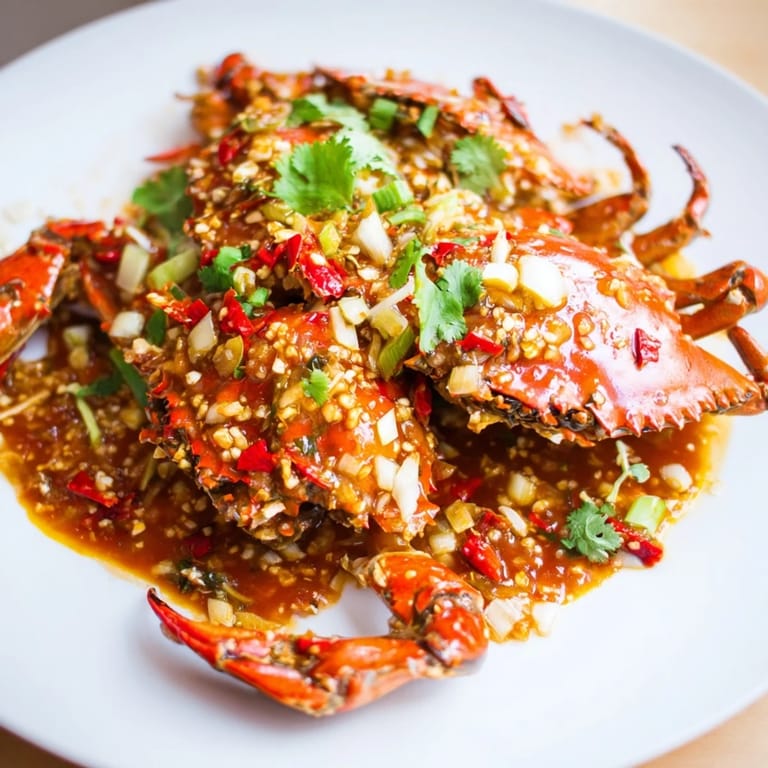
Save There's a moment near the end of cooking when someone in the kitchen catches the smell—that particular blend of chili, tomato, and fresh ginger—and you see their eyes light up with anticipation. That's when you know this isn't just dinner; it's becoming a memory.
Choosing Your Crab
Mud crabs are traditional for good reason—their meat is sweeter and firmer than blue swimmer crabs, and they hold up beautifully in the sauce without falling apart. If mud crab isn't available, Dungeness crab works wonderfully, though the flavor profile shifts slightly toward a more delicate sweetness. Ask your fishmonger for live crabs that are lively and responsive; a sluggish crab means it's been sitting too long and the meat quality suffers noticeably.
Heat Level Strategy
The two types of chilies here serve different purposes—red chilies provide moderate, lingering warmth while bird's eye chilies deliver sharp, immediate heat that hits the back of your throat. If you enjoy the Scoville scale challenge, add extra birds eye chilies or leave them unseeded for maximum fire, but remember that the dish is meant to be complex, not punishing. The sauce should make you reach for rice or bread between bites, not gasp for water.
Serving Suggestions and Pairings
Steamed mantou buns are the classic choice—their fluffy, slightly sweet texture soaks up sauce in a way that carbs should. Plain white rice works equally well if buns aren't available, though something simple is essential because the crab itself is the star. Cold beer or lightly sweet tea cuts through the heat and richness perfectly, letting you appreciate each component without your palate becoming overwhelmed.
- Have plenty of napkins ready—this dish is delightfully messy, and pretending otherwise is dishonest.
- Lime wedges aren't optional; their brightness lifts the sauce and adds a final bright note that makes you want another bite.
- Set the table informally and encourage people to get their hands dirty—the best meals are often the messiest ones.
 Save
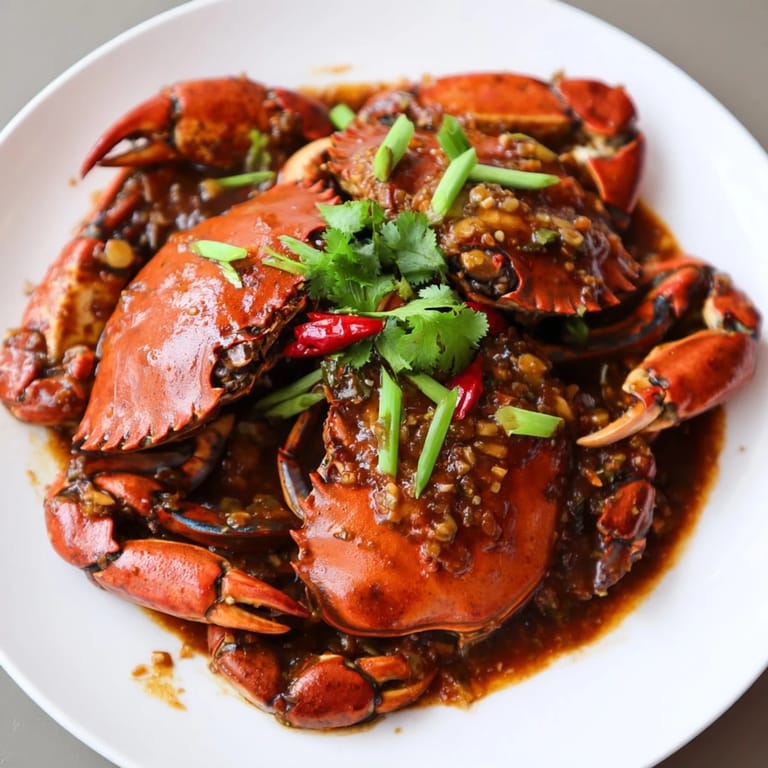
Save This dish teaches you that cooking isn't always about precision—it's about honoring the ingredient and letting its natural beauty shine through bold flavors. Every time you make it, you'll discover something new to love.
Recipe Q&A
- → What type of crab is best for this dish?
Fresh whole mud crabs work well, but blue swimmer or Dungeness crab are good alternatives depending on availability.
- → How do I adjust the heat level?
Modify the amount of birds eye chilies to control spiciness, adding more for extra heat or reducing for milder flavors.
- → Can I prepare the sauce base ahead of time?
Yes, the sautéed aromatics and spice mixture can be prepared in advance to save time when cooking.
- → What side dishes complement this crab preparation?
Steamed mantou buns or plain rice are traditional accompaniments that help balance the bold sauce.
- → How does the egg enhance the sauce?
Gradually incorporated beaten eggs form silky ribbons, adding richness and a smooth texture to the sauce.