 Save
Save There's something magical about the moment when crispy roasted chickpeas hit a bed of fluffy grains and suddenly your lunch feels less like meal prep and more like an actual celebration. I discovered this bowl on a Tuesday when I had half a can of chickpeas lingering in my fridge, a jar of peanut butter that needed rescuing, and absolutely zero desire to order takeout again. What started as kitchen improvisation became the recipe I make when I need to feel genuinely nourished, not just fed.
I made this for my friend Marcus on a random Friday, and he went absolutely quiet for a moment after the first bite—that pause where you know something just worked. He asked for the recipe immediately, which meant I finally had to actually write down what I'd been doing intuitively. Now whenever he texts about being hungry, I know exactly what he's hinting at.
Ingredients
- Chickpeas (2 cans, drained and rinsed): The foundation of everything here, and trust me, rinsing them matters because it washes away the starchy liquid that stops them from crisping properly.
- Olive oil (1 tbsp): Just enough to coat without making them greasy, which I learned after one unfortunate batch where I got enthusiastic with the bottle.
- Smoked paprika, cumin, garlic powder, salt, and black pepper: This spice blend is what transforms plain chickpeas into something you'll sneak bites of while cooking.
- Brown rice or quinoa (2 cups cooked): The sturdy base that holds everything together, though honestly any grain works if you want to experiment.
- Shredded red cabbage (1 cup): It stays crisp, adds a slight peppery bite, and looks gorgeous on the plate.
- Julienned carrots (1 cup): Sweet, crunchy, and they add a natural brightness that plays beautifully against the creamy sauce.
- Sliced cucumber (1 cup): The cooling element that keeps everything balanced, especially if you get heavy-handed with the sriracha.
- Cherry tomatoes (1 cup, halved): Summer in every bite, and the acidity cuts through the richness of the peanut sauce perfectly.
- Edamame (1/2 cup, cooked and shelled): Extra protein that sneaks in there without announcing itself.
- Fresh cilantro (1/4 cup, chopped): The finishing touch that somehow makes everything taste fresher than it should.
- Creamy peanut butter (1/3 cup): The soul of the sauce, so use one you'd actually eat straight from the jar.
- Soy sauce or tamari (2 tbsp): The savory anchor that keeps the sauce from being too sweet or one-dimensional.
- Maple syrup or honey (1 tbsp): Just enough to round out the sauce's edges without turning it into dessert.
- Rice vinegar (1 tbsp): A touch of acid that brings everything into focus and makes you want another bite.
- Sriracha or chili sauce (1 tsp, optional): For when you want your mouth to remember it's alive, though the bowl is lovely without it too.
- Garlic, minced (1 clove): Fresh and bright, never skip this because jarred just doesn't have the same punch.
- Warm water (2-4 tbsp): The bridge between thick and pourable, so add it slowly and taste as you go.
- Roasted peanuts (2 tbsp, roughly chopped): For texture and that extra hit of nutty flavor in every bite.
- Lime wedges: The secret weapon that somehow makes everything taste like it cost more money.
- Sesame seeds (1 tbsp, optional): They add a subtle nuttiness and a little visual interest on top.
Tired of Takeout? 🥡
Get 10 meals you can make faster than delivery arrives. Seriously.
One email. No spam. Unsubscribe anytime.
Instructions
- Heat your oven and prep:
- Preheat to 425°F and line a baking sheet with parchment paper, which saves you from the scrubbing that nobody enjoys later. This is the moment to get your mise en place ready because once those chickpeas start roasting, you'll want to stay focused.
- Season and roast the chickpeas:
- Toss your drained chickpeas with olive oil, smoked paprika, cumin, garlic powder, salt, and pepper until they're evenly coated, then spread them on the baking sheet. Roast for 20-25 minutes, shaking the pan halfway through, and listen for that satisfying crackle that tells you they're getting crispy—you'll smell them before they're done, which is always a good sign.
- Make the peanut sauce while waiting:
- Whisk together peanut butter, soy sauce, maple syrup, rice vinegar, sriracha if you're using it, and minced garlic with 2 tablespoons of warm water. Keep whisking and add more water a tablespoon at a time until you reach that perfect pouring consistency that coats the back of a spoon.
- Prepare your vegetables and grains:
- If your rice or quinoa isn't already cooked, get that going according to package instructions. While grains cook, arrange your vegetables on a cutting board—the shredding, slicing, and chopping is almost meditative if you let it be.
- Build your bowls:
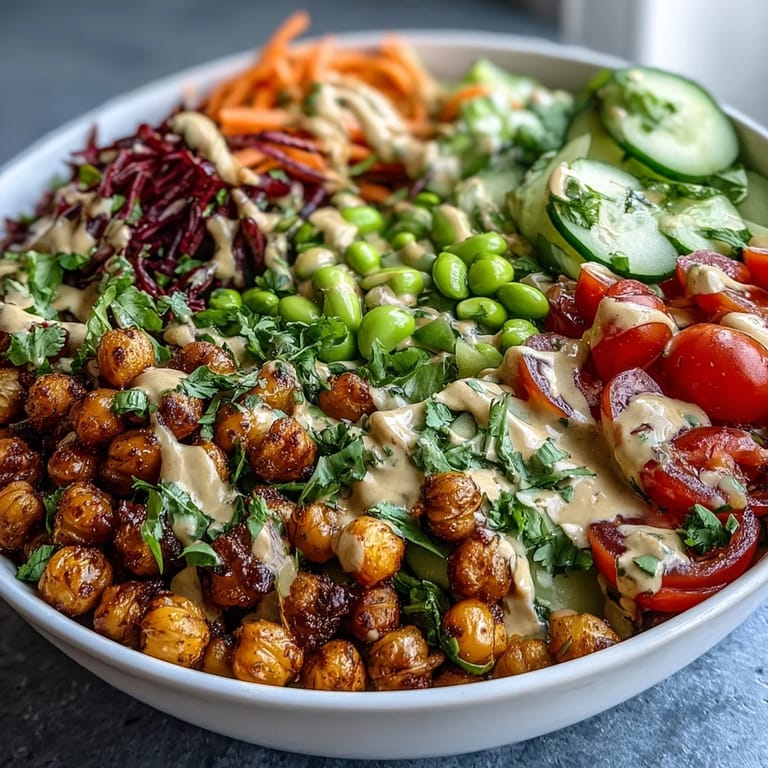
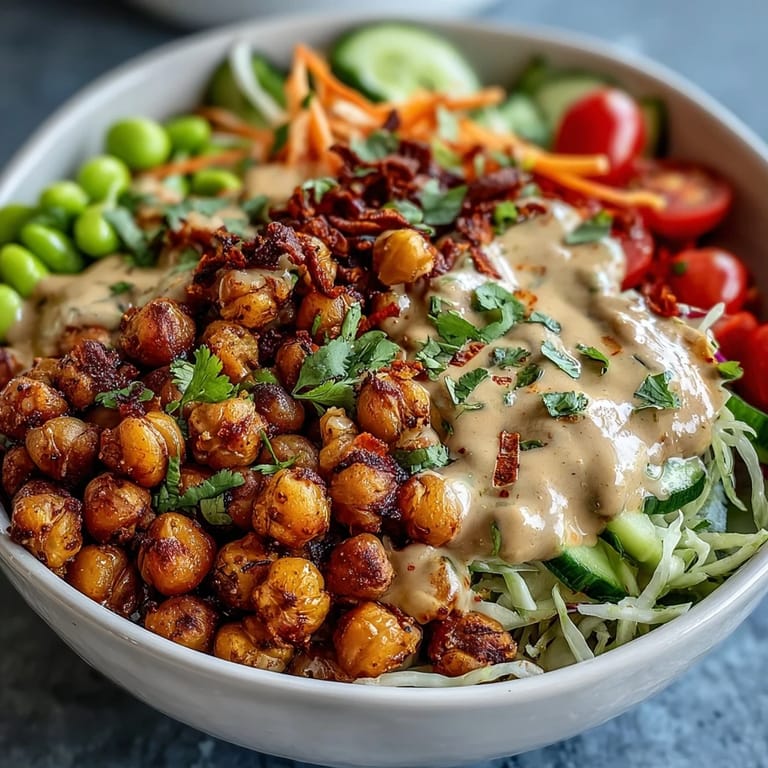
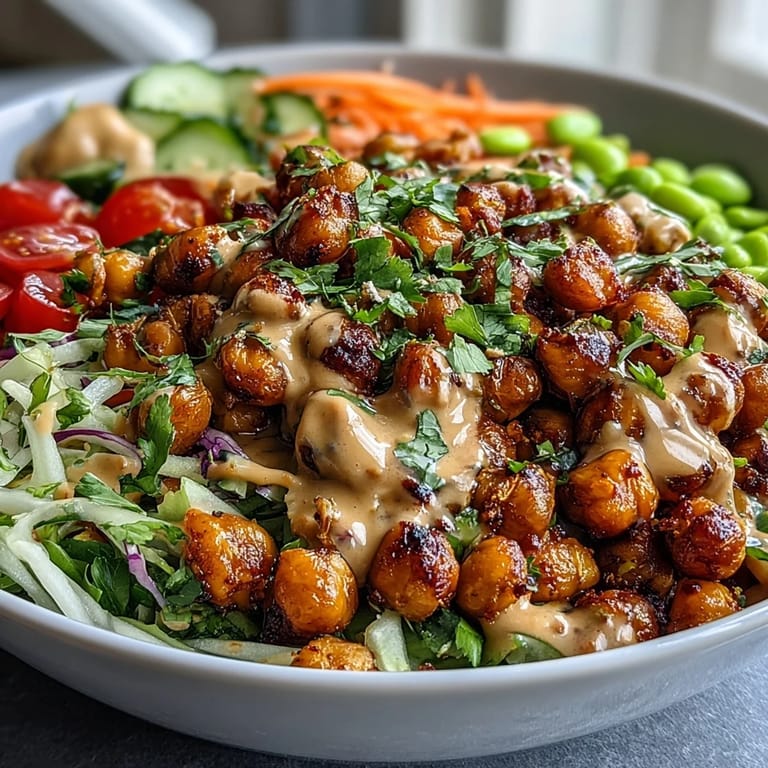
- Divide your cooked grain among four bowls, then arrange your roasted chickpeas and fresh vegetables on top in whatever pattern makes you happy. There's no wrong way to layer this, though I usually do chickpeas first so they stay on top and stay crispy.
- Finish and serve:
- Drizzle each bowl generously with peanut sauce, scatter chopped roasted peanuts and sesame seeds across the top, and serve with lime wedges so people can squeeze them over themselves. The lime is not optional—it's what transforms this from good to something people will actually remember.
 Save
Save My mom tried this bowl recently and spent ten minutes quietly eating before asking where I learned to cook like this. It's funny how something so simple—grains, vegetables, a good sauce—can feel like a little act of care, especially when you're sharing it with someone you love.
Making the Peanut Sauce Your Own
The peanut sauce is forgiving in a way that makes it dangerous to creativity, which is exactly why I keep experimenting with it. I've added a splash of coconut milk on mornings when I wanted something more luxurious, a tiny bit of sesame oil when I wanted earthier vibes, and once even a spoonful of miso just to see what would happen. The core recipe is solid enough to stand on its own, but loose enough that your kitchen intuition actually matters here.
Building Bowls for Different Moods
Some days I load mine with extra greens and skip half the grains because I'm craving something lighter. Other times I add an extra handful of edamame or roasted peanuts because I need the protein hit for a particular kind of afternoon. This bowl adapts to whatever you're feeling—it's flexible in a way that makes it actually useful for real life, not just Instagram aesthetics.
Storage and Make-Ahead Magic
You can prepare almost everything ahead of time, which makes this perfect for people who like having options in the refrigerator. The sauce keeps for about four days if you store it in a glass container, the roasted chickpeas stay crispy for two days if you keep them in an airtight container away from moisture, and most of the vegetables will happily sit prepared for a couple of days as long as the cucumber is dressed just before eating.
- Keep the roasted chickpeas separate from the sauce until you're ready to eat so they maintain their crispness.
- Layer your greens on the bottom of containers if you're meal prepping so they don't get soggy from the vegetables above them.
- The lime wedge should always be added fresh and squeezed right before eating—no shortcuts on this one.
 Save
Save This bowl has become my default answer when someone asks what I want to eat, which probably says everything about how completely it works. It's nourishing without being precious, satisfying without being heavy, and somehow tastes better than the sum of its simple parts.
Recipe Q&A
- → Can I make this bowl ahead of time?
Yes, this bowl meal-preps beautifully. Store components separately in airtight containers—the roasted chickpeas, vegetables, grains, and sauce keep well for 4-5 days. Assemble when ready to eat for best texture.
- → How do I store leftover roasted chickpeas?
Keep roasted chickpeas in a sealed container at room temperature for up to 3 days. They'll lose some crispness in the fridge but can be quickly reheated at 400°F for 5 minutes to restore crunch.
- → What can I substitute for peanut butter?
Almond butter, cashew butter, or sunflower seed butter work well as substitutes. Tahini creates a lighter, more savory version. Adjust sweetness accordingly as alternatives may have different flavor profiles.
- → Is this bowl gluten-free?
Yes, when made with tamari instead of soy sauce. Ensure all ingredients, especially packaged items, are certified gluten-free. Quinoa is naturally gluten-free, making it an excellent grain choice.
- → How can I add more protein?
Increase protein by adding grilled tofu, tempeh, or hard-boiled eggs. Hemp seeds, pumpkin seeds, or additional edamame also boost protein content while maintaining the vegetarian profile.
- → Can I use canned vegetables instead of fresh?
Fresh vegetables provide the best crunch, but you can substitute with thawed frozen vegetables for convenience. Canned vegetables may become too soft; if using, pat them thoroughly dry before assembling.