 Save
Save I was flipping through a design magazine at a café when a photograph stopped me cold—a single, audacious stripe of color on a white plate, so clean and deliberate it almost looked like an art installation. That's when it hit me that vegetables didn't have to be timid. They could be bold, architectural, unapologetic. I spent the next afternoon playing with purées, layering beets and carrots like I was painting a canvas, and something clicked. This isn't just food; it's a conversation between your eyes and your palate, and honestly, I haven't looked at appetizers the same way since.
I made this for my sister's dinner party on a Thursday night when I was honestly too nervous to cook anything elaborate. The moment those stripes hit the board, people actually paused mid-conversation. Someone asked if I'd been trained as a chef. I laughed and told them the truth—I'd just stopped thinking about food as something that had to be complicated to be impressive.
Ingredients
- Beets (2 medium, peeled and diced): The anchor of everything—earthiness with swagger. I learned the hard way to peel them before roasting because post-roast peeling is a staining nightmare that no amount of lemon juice can fix.
- Carrots (3 large, peeled and sliced): They become almost impossibly smooth when you steam them until they're genuinely tender, which takes longer than you think but is worth the patience.
- Fresh ginger (1 tsp grated): Don't skip this or use ground ginger; the fresh stuff gives the carrot purée a brightness that feels almost alive.
- Olive oil (1 tbsp for beets): Just enough to help the beets caramelize at the edges without turning them greasy.
- Unsalted butter or olive oil (1 tbsp for carrots): This creates the luxurious texture that makes people wonder if you added cream.
- Avocado (1 ripe one): The timing here matters—too early and it oxidizes, too late and it's brown inside. Use it the moment it yields to gentle pressure.
- Greek yogurt or coconut yogurt (2 tbsp): This isn't filler; it gives the avocado something to cling to and prevents that sudden deflation that happens with straight-up mashed avocado.
- Lime juice (1 tsp): Sharper than lemon, which cuts through the richness in just the right way.
- Microgreens, edible flowers, crushed pistachios, flaky sea salt: These transform the stripe from pretty to precious, so don't treat them as afterthoughts.
Tired of Takeout? 🥡
Get 10 meals you can make faster than delivery arrives. Seriously.
One email. No spam. Unsubscribe anytime.
Instructions
- Ready your workspace and get the beets in the oven:
- Preheat to 400°F, toss your diced beets with olive oil and sea salt, spread them on a baking tray in a single layer, and let them roast for 30 to 35 minutes until they're completely fork-tender and the edges are starting to caramelize. You'll smell that sweet, mineral earthiness filling your kitchen—that's your signal they're almost done.
- Cook the carrots while the beets roast:
- Steam or boil your sliced carrots until they collapse when you press them with a fork, usually 15 to 20 minutes, then drain them and let them cool just enough that you can handle them without burning yourself. If you rush this step, your purée will be grainy instead of silky.
- Blend the beet purée until it's perfectly smooth:
- Put the cooled roasted beets and lemon juice into a blender or food processor and blend until there's absolutely no texture left, adding a splash of water only if the mixture gets stuck. The color should be deep, almost jewel-like.
- Create the carrot and ginger purée with warmth in mind:
- Blend the cooked carrots with your grated fresh ginger, butter, and salt until the mixture becomes this silky, almost cloud-like purée. The ginger should be subtle but present, like a secret ingredient nobody can quite identify.
- Make the avocado cream with intention:
- In a small bowl, mash the ripe avocado with the yogurt, lime juice, and salt, stirring gently until it reaches that silky, spreadable consistency. Transfer it immediately to a piping bag or squeeze bottle so you have control when it's time to plate.
- Build your stripe with confidence on a clean board:
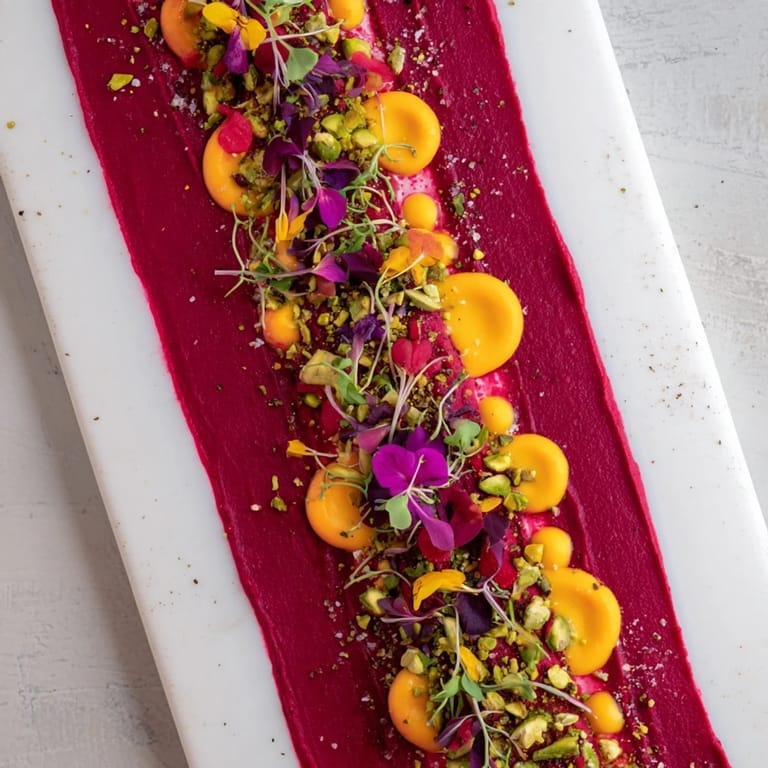
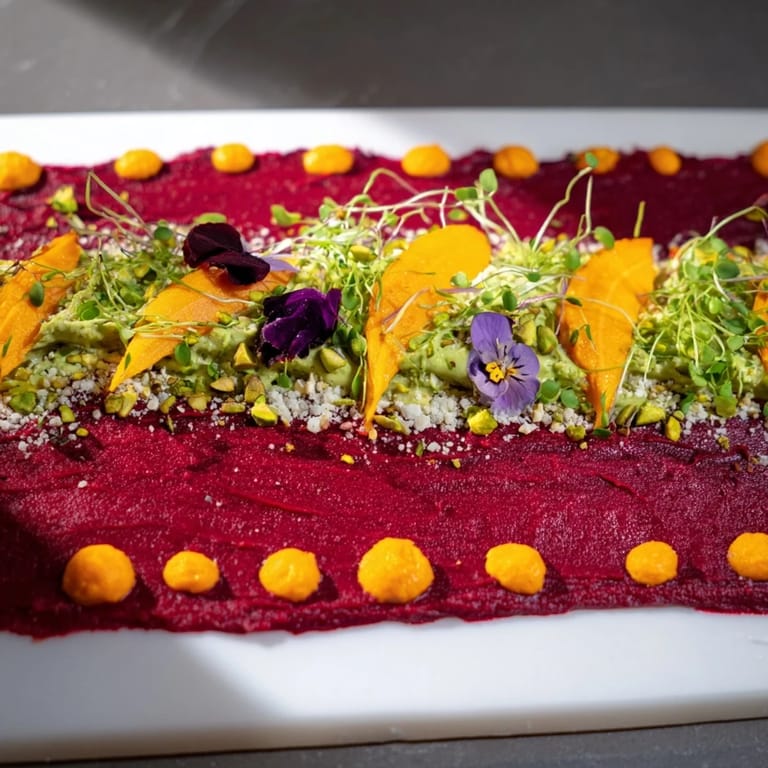
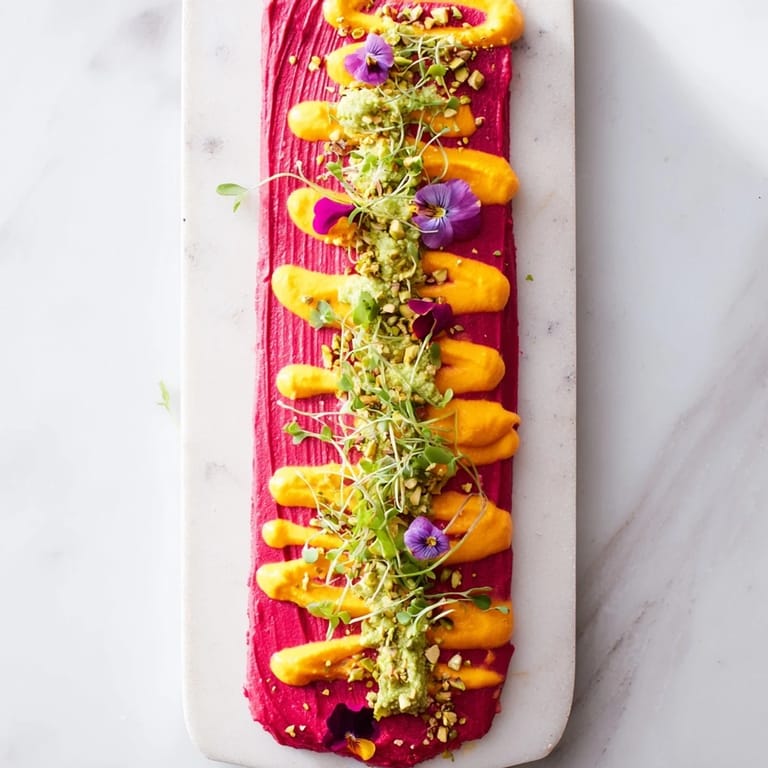
- Use an offset spatula or the back of a large spoon to spread a thick, generous stripe of beet purée down the center of your serving board, making it about 3 inches wide and as long as you want it. Don't second-guess yourself—the imperfect edges are part of the drama.
- Layer and arrange the carrot and avocado in artistic strokes:
- Pipe or spread the carrot purée in lines or dots along the beet stripe, then do the same with the avocado cream, layering them so there's color variation and visual rhythm. This is where you get to play.
- Finish with garnish that feels intentional:
- Scatter microgreens, edible flowers, crushed pistachios, and flaky sea salt across the stripe in a way that looks effortless but isn't random. Each element should catch light and add texture.
- Serve it while everything is still at its best:
- Bring the board directly to the table and encourage people to scoop from the stripe with a spoon or small plate, mixing the purées together as they go.
 Save
Save My most unexpected moment with this dish happened when a guest—someone I barely knew—took a bite and just sat there quietly for a moment. They weren't being dramatic; they said it tasted the way they felt in that exact moment, which was peaceful and alive at the same time. Food that makes people feel something isn't about how technically perfect you are; it's about caring enough to try.
The Modernist Approach to Simplicity
There's something liberating about modernist plating once you understand it's not about being pretentious—it's about respect. You're saying: these ingredients are so good, so vibrant in color, so interesting in flavor, that they don't need a sauce-soaked pile or a complicated story. The blank board is quiet confidence. The stripe is a choice. The garnish isn't decoration; it's part of the taste.
Building Flavor Across the Stripe
One night I realized that eating this dish is almost musical—you start with earthy beet, move through the bright spice of carrot and ginger, and finish with the cool, creamy richness of avocado. It's a progression you control, not something the chef forces on you. That's when I stopped thinking of it as a fancy appetizer and started seeing it as a way to actually listen to what food is saying.
Variations and Your Own Creativity
The beauty of this concept is that it's not locked into these three purées—it's a framework that invites experimentation. I've made versions with sweet potato and pea, with squash and beet, with roasted cauliflower and mushroom, and every single one felt like discovering something new in my own kitchen. The technique doesn't change; only your ingredients and your mood do.
- Try adding roasted chickpeas or pickled red onions to the top for extra texture and a subtle tang that brings everything together.
- Pair it with a crisp white wine like Sauvignon Blanc or a light rosé that won't overpower the delicate purées.
- Serve immediately after plating so the stripe stays bold and the garnish stays fresh.
 Save
Save This dish is a reminder that cooking doesn't have to be loud or complicated to be beautiful. Sometimes the best moments happen on a blank board with three colors and a quiet intention to do something well.
Recipe Q&A
- → How do I achieve smooth vegetable purées?
Roast or steam vegetables until very tender, then blend until completely smooth. Adding a splash of water or juice helps achieve a creamy consistency.
- → What garnishes complement this dish?
Microgreens, edible flowers, crushed pistachios, and a sprinkle of flaky sea salt add freshness, crunch, and subtle saltiness enhancing both flavor and presentation.
- → Can I substitute dairy in the avocado cream?
Yes, plant-based yogurts like coconut yogurt work well to keep the cream silky while maintaining a fresh taste.
- → What plating tools are recommended?
Use a wide offset spatula or the back of a spoon to spread a uniform stripe, and a piping bag or squeeze bottle for precise layering of purées and cream.
- → How long does preparation take?
Roasting and cooking take around 45 minutes, with total prep and assembly requiring about 1 hour 15 minutes.