 Save
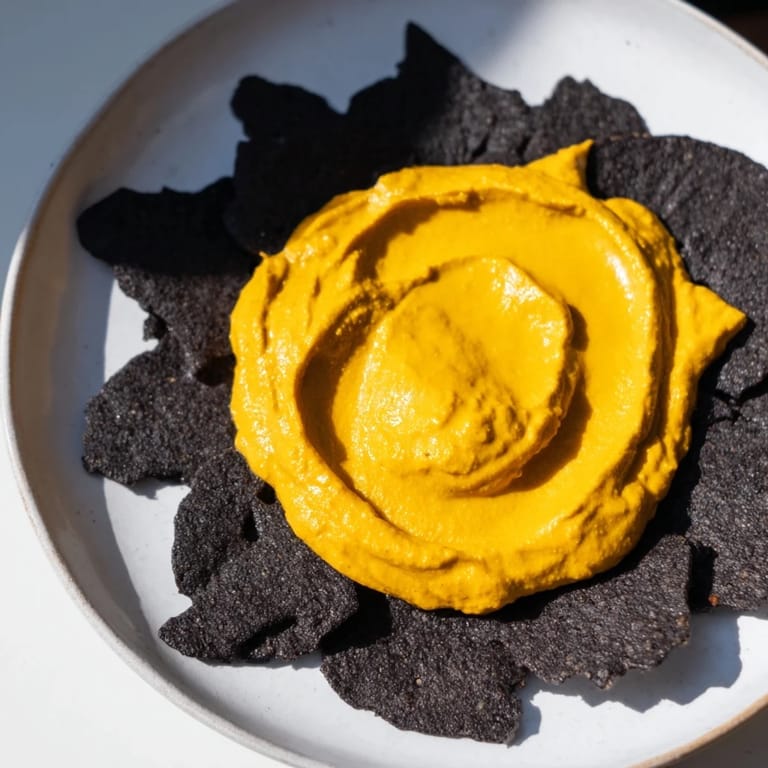
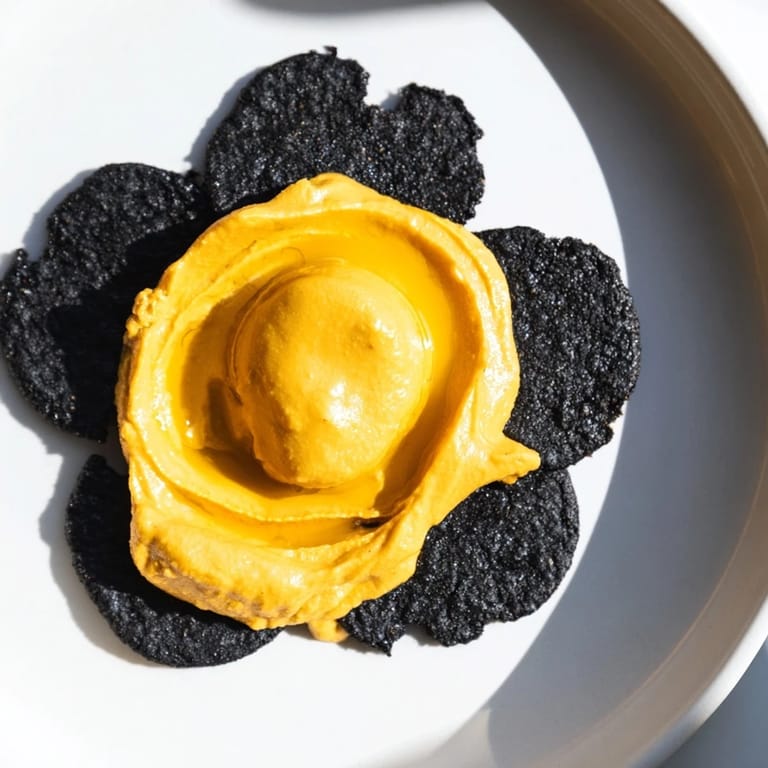
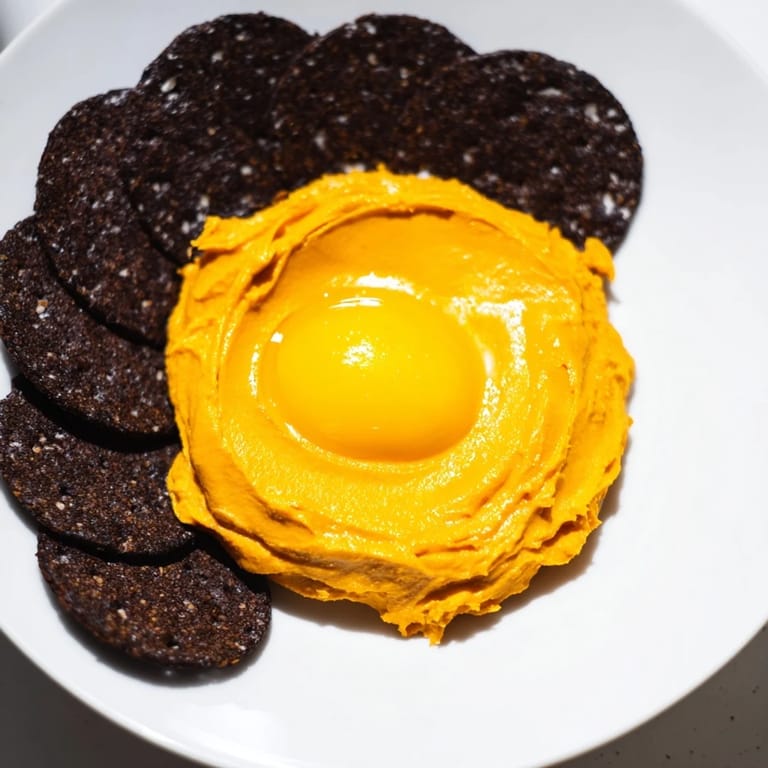
Save I was experimenting with Nordic design principles in the kitchen one winter evening, struck by the stark beauty of midnight skies in northern climates. The idea of creating something that evoked that visual drama—deep black against glowing gold—became an obsession. This appetizer emerged from that moment: jet-black charcoal crackers radiating outward from a creamy, golden roasted carrot dip that genuinely glows on the plate. It's become my go-to when I want to impress without fussing, and it tastes as sophisticated as it looks.
I served this at a small dinner party last spring, and what struck me most was watching people's reactions—there was this collective gasp when I set it down, followed by genuine curiosity about what I'd actually made. Someone asked if the black was real, and the conversation that followed about food as art felt more meaningful than typical dinner chatter. That moment reminded me why I cook: not just to feed people, but to create little moments of wonder.
Ingredients
- All-purpose flour: The foundation of your crackers—it provides structure without competing with the dramatic charcoal color.
- Activated charcoal powder (food-grade): This is non-negotiable for both the jet-black hue and subtle earthy undertone; don't confuse it with regular charcoal.
- Olive oil: Adds richness to both dough and roasted vegetables; a good quality oil matters here.
- Sea salt: Use fine salt in the dough so it distributes evenly, coarse salt can create gritty pockets.
- Carrots: Choose large, bright orange ones; they roast deeper and sweeter than smaller varieties.
- Greek yogurt: The creamy base that transforms roasted carrots into a luxurious dip while keeping it grounded.
- Turmeric and smoked paprika: These warm spices deepen the carrot flavor and create that golden hue that contrasts beautifully with the black crackers.
- Tahini: Adds nutty depth and silky texture; it's the secret that makes people wonder what they're tasting.
- Lemon juice: The brightness that lifts everything and prevents the dip from feeling heavy.
- Honey or maple syrup: A whisper of sweetness to balance the earthiness, entirely optional but worth it.
Tired of Takeout? 🥡
Get 10 meals you can make faster than delivery arrives. Seriously.
One email. No spam. Unsubscribe anytime.
Instructions
- Prepare your workspace and oven:
- Heat your oven to 400°F (200°C). Having everything ready before you start means you won't scramble later.
- Roast the carrots until they're nearly caramelized:
- Toss chopped carrots with olive oil, salt, turmeric, smoked paprika, and cumin, then spread on a baking sheet. Roast for 25–30 minutes, stirring halfway through if you can remember—you're looking for tender flesh with edges that have taken on color and sweetness. They should smell intensely aromatic and feel soft when pierced.
- Mix and knead your cracker dough:
- While carrots roast, whisk together flour, charcoal powder, and salt in a bowl. Add olive oil and water, stirring until a shaggy dough forms, then knead gently for a minute or two until it comes together smoothly. The dough will be stiff but pliable, and yes, your hands will turn dark gray—completely harmless.
- Roll the dough thin and cut:
- Place dough between two sheets of parchment paper and roll as thin as you can manage, about 1/16 inch if you're feeling ambitious. Remove the top sheet and cut into rectangles, squares, or rounds—whatever shape feels right. Irregular shapes actually look more elegant than perfectly uniform ones.
- Bake the crackers until they're completely crisp:
- Transfer crackers (still on parchment) to a baking sheet and bake for 10–12 minutes until they snap cleanly when broken. They'll continue crisping as they cool, so don't overbake. You want dark and crispy, not charred and bitter.
- Blend the dip until it's silky smooth:
- Once carrots have cooled slightly, add them to a food processor along with Greek yogurt, lemon juice, tahini, minced garlic, honey if using, and black pepper. Blend until completely smooth and creamy, scraping down the sides as needed. Taste and adjust seasoning—more lemon for brightness, more salt if it feels flat, more turmeric if you want deeper color.
- Arrange on a plate like a midnight landscape:
- Spoon the dip into the center of your serving board or plate, forming a thick, glowing golden circle. Arrange the black crackers in a ring around the dip, overlapping slightly. Step back and admire your work—this is the moment it all comes together.
 Save
Save A friend who's usually skeptical about vegetable-forward appetizers came back for seconds and thirds, then asked for the recipe. When I explained the components and how simple they actually were, something shifted in the room—it became less about impressing and more about sharing something genuine. That's when I realized this dish isn't about complexity; it's about intention.
Make It Your Own
This recipe thrives on small adjustments. If you want heat, add a pinch of cayenne pepper to the dip or sprinkle it on top. Fresh herbs like cilantro, dill, or mint scattered over the surface add brightness and visual interest. Some people swear by a drizzle of good olive oil over the finished dip, and they're not wrong. The beauty of this dish is that it welcomes creativity while staying true to its striking aesthetic.
Timing and Storage
The crackers are actually forgiving—bake them a full day ahead and store them in an airtight container, where they'll stay crisp. The dip can be made several hours before serving and kept covered in the refrigerator; just give it a quick stir before plating if it's been sitting. This means you can assemble the whole thing minutes before guests arrive, which is the kind of peace of mind every host deserves.
Pairing and Serving
Serve this with a crisp white wine—Sauvignon Blanc works beautifully, as do lighter sparkling wines. The acidity cuts through the richness of the dip while echoing the brightness of the lemon. For a non-alcoholic option, sparkling water with fresh herbs feels equally elegant. This is the kind of appetizer that works for casual gatherings and formal dinners alike; the presentation does most of the work.
- Make the crackers completely thin and uniform so they bake evenly and snap cleanly.
- Roast your carrots until they're deeply tender and slightly caramelized for maximum sweetness.
- Taste the dip before serving and don't be shy about adjusting the lemon juice and salt—they're your best friends here.
 Save
Save This dish reminds me that the most memorable meals aren't always the most complicated ones. Sometimes they're the ones that make people pause and smile before they even taste them. Make this when you want to feel a little more intentional in the kitchen.
Recipe Q&A
- → What gives the crackers their dark color?
Activated charcoal powder is added to the dough, creating the crackers' signature jet-black color and subtle smoky notes.
- → How are the carrots prepared for the dip?
Carrots are peeled, chopped, and roasted with turmeric, smoked paprika, and cumin until tender and caramelized to enhance their natural sweetness.
- → Can the dip be made vegan?
Yes, by substituting the Greek yogurt with a plant-based alternative and replacing honey with maple syrup, the dip is suitable for vegan diets.
- → What texture should the crackers have after baking?
The crackers should be crisp and thin, providing a delightful crunch that contrasts the smoothness of the dip.
- → How should this dish be served for best presentation?
Spoon the creamy dip into the center of a serving board, forming a bright, thick circle, then arrange the charcoal crackers around it to evoke the image of the midnight sun.