 Save
Save The first time I made laksa, I stood in my kitchen completely overwhelmed by the ingredient list, convinced it would be impossibly complicated. But then I opened a container of laksa paste and the smell hit me—something between incense and a spice market—and suddenly it all made sense. That one aromatic paste became the shortcut that transformed humble vegetables and tofu into something that tasted like I'd been cooking it for hours. Now when I make it on chilly evenings, my whole apartment fills with this incredible warmth, and I remember why this soup became my go-to comfort dish.
I made this for a friend who'd just moved to the city, and watching her face light up when she took that first spoonful told me everything—this was comfort food that traveled well across cultures. She asked for the recipe before she'd even finished the bowl, which is always the highest compliment in my kitchen.
Ingredients
- Vegetable oil: Just enough to coat the pot; it carries the heat and helps release the flavors from onions and aromatics.
- Onion, garlic, ginger, and lemongrass: This aromatic quartet is your foundation—don't skip or rush them, as sautéing them properly is what makes the soup smell incredible.
- Laksa paste: This is the soul of the dish; buy it from an Asian market if possible, or make your own if you're feeling adventurous.
- Coconut milk: Use full-fat for richness, and stir it in gently to avoid breaking the broth.
- Vegetable broth: A quality broth makes a noticeable difference; homemade is ideal, but good store-bought works fine.
- Soy sauce and sugar: These balance the spice and richness, so taste as you go and adjust to your preference.
- Rice noodles: Thick noodles hold the broth beautifully, but vermicelli works if that's what you have.
- Firm tofu: The texture matters here; silken tofu will fall apart, so stick with firm or extra-firm.
- Fresh vegetables: Bean sprouts, carrots, bell pepper, and snow peas add crunch and color, but use whatever vegetables you love.
- Spring onions and cilantro: These finish the dish with freshness and a gentle onion note that ties everything together.
- Lime: Absolutely essential; the acidity wakes up all the other flavors right at the end.
Tired of Takeout? 🥡
Get 10 meals you can make faster than delivery arrives. Seriously.
One email. No spam. Unsubscribe anytime.
Instructions
- Build your flavor base:
- Heat oil in a large pot and add the onion, garlic, ginger, and lemongrass. You'll know it's ready when the kitchen starts smelling like a Southeast Asian restaurant and the onions are soft and golden. Let this cook for 3 to 4 minutes without rushing—this step is where your soup gets its soul.
- Add the laksa paste:
- Stir it in and let it cook for about 2 minutes, stirring constantly so it doesn't stick or burn. The paste will darken slightly and become even more fragrant, which means you're on the right track.
- Pour in the liquids:
- Add coconut milk first, then vegetable broth, stirring gently as you go. The broth should be a beautiful golden color, and you'll see wisps of cream swirling through it.
- Season and simmer:
- Add soy sauce, sugar, and a pinch of salt, then let everything bubble gently for about 10 minutes. This resting time lets all the flavors get to know each other and creates something cohesive instead of just a collection of tastes.
- Prepare the noodles:
- While the broth simmers, soak or cook your rice noodles according to the package instructions and drain them well. Set aside somewhere warm if you can—cold noodles in hot broth is never ideal.
- Fry the tofu:
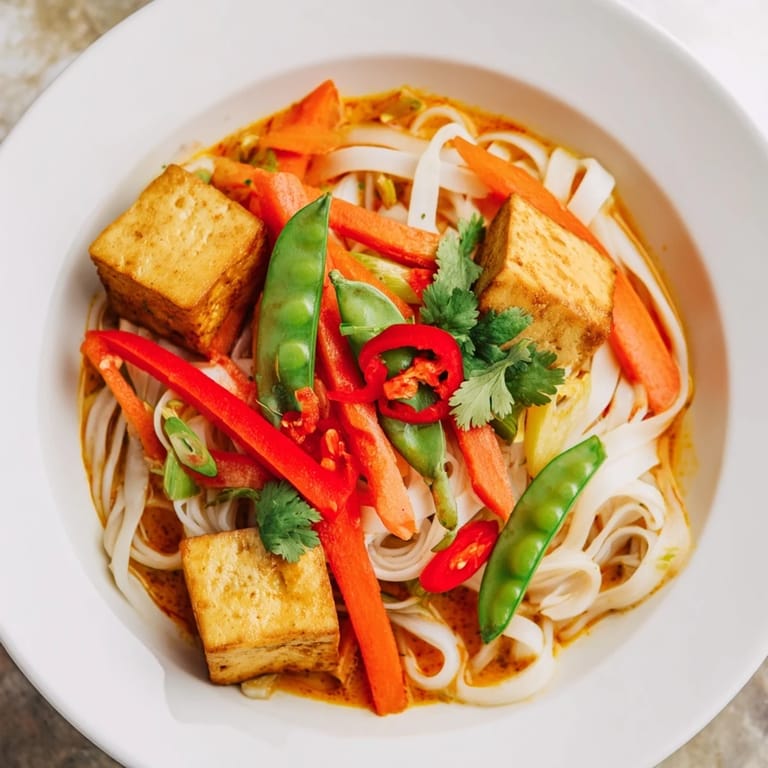
- Heat a nonstick skillet over medium-high heat and fry the tofu cubes until they're golden and slightly crispy on all sides. This takes maybe 5 to 7 minutes, and the golden exterior keeps them from dissolving into the broth.
- Add the vegetables:
- Toss carrots, bell pepper, and snow peas into the simmering broth and let them cook until just tender, about 3 to 4 minutes. You want them to keep some of their crunch and color.
- Bring it all together:
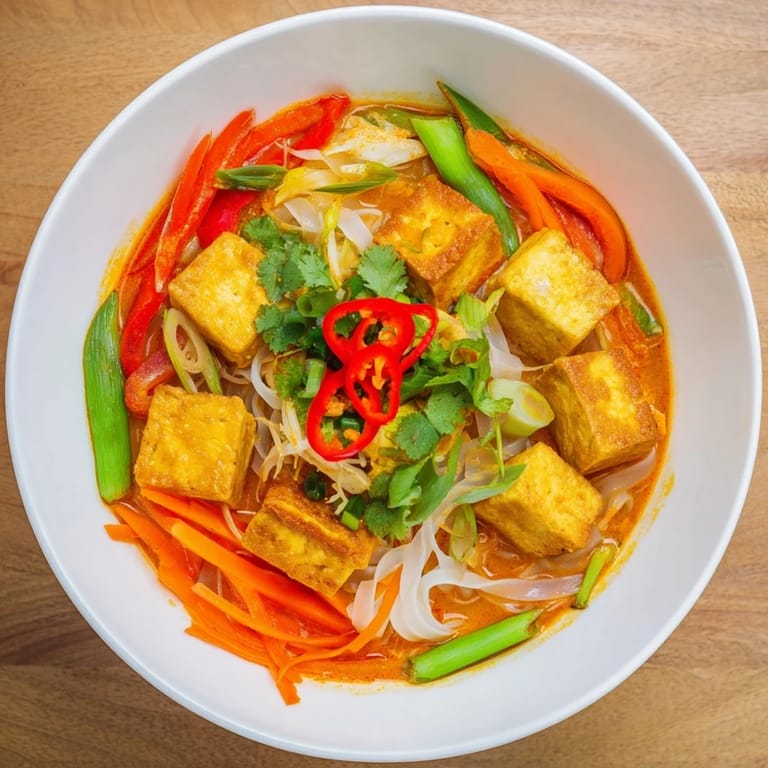
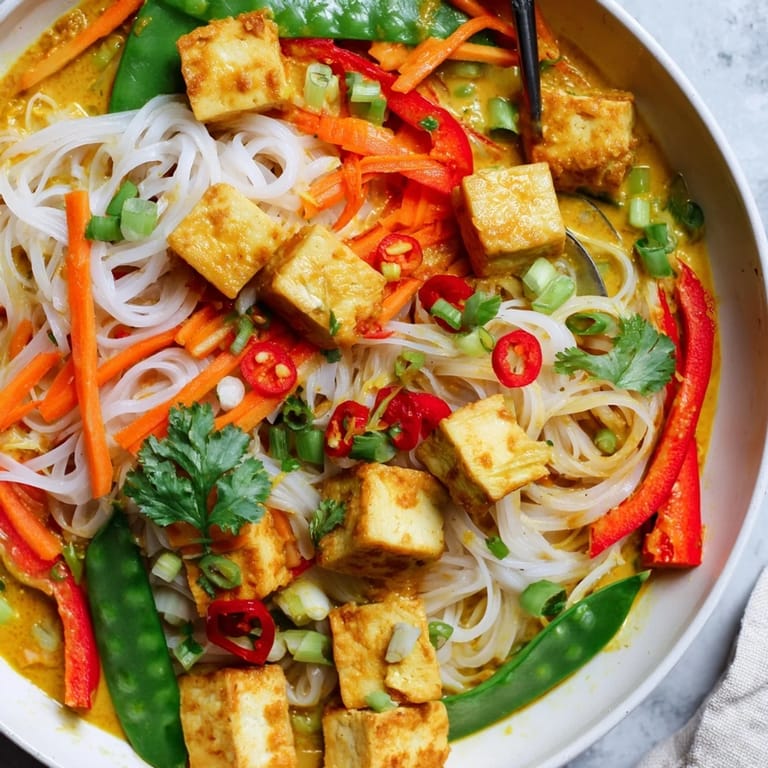
- Divide noodles among bowls, ladle the hot broth and vegetables over them, then top with fried tofu, bean sprouts, spring onions, cilantro, and chili slices. Serve with lime wedges on the side so everyone can add brightness to taste.
 Save
Save There's a particular moment in laksa that feels almost meditative—when you're standing at the stove, the steam rising from the pot, watching colors swirl through the broth, and knowing that in just a few minutes something genuinely nourishing will be on the table. That's when I usually light a candle and turn the music down a bit, because this soup deserves a moment of attention.
Making Laksa Your Own
While the recipe works beautifully as written, I've found that laksa is wonderfully forgiving once you understand the core technique. Some nights I add mushrooms when I have them, other times baby corn or bok choy if they're what's in my crisper drawer. The framework stays the same—fragrant broth, soft noodles, crispy tofu, fresh vegetables—but the details can shift based on what speaks to you or what you have on hand. I've also made it with hard-boiled eggs for non-vegetarians, and the richness of the yolk against the coconut curry is genuinely special.
Laksa Paste and Where to Find It
The quality of your laksa paste matters more than almost any other ingredient because it carries so much of the flavor profile. I buy mine from Asian markets because the selection is better and the paste is usually fresher, but good versions exist online too. If you want to go deeper, you can make your own paste from dried chilies, lemongrass, garlic, ginger, and spices, but honestly, a quality store-bought paste does 90 percent of the work and leaves you time to focus on everything else.
Timing and Make-Ahead Tips
This soup is fastest when everything happens at roughly the same time, which is why I usually prep all my vegetables before I touch the stove. The broth can be made a day or two ahead and reheated gently, but assemble the bowls fresh—boiling noodles in cold broth or waiting too long before serving means losing some of that vibrant texture and temperature contrast that makes laksa special. If you're cooking for guests, you can have everything prepped and ready, then just simmer the broth, cook the vegetables, and assemble while people settle in.
- Make the broth earlier in the day and store it in the fridge, then gently reheat before serving.
- Prep all vegetables the night before and keep them in sealed containers so morning assembly is quick.
- Toast the noodles in a dry pan for 30 seconds just before serving to give them a subtle nutty flavor.
 Save
Save Laksa is the kind of dish that feeds both body and soul, and once you've made it once, you'll find yourself returning to it again and again. There's something about the combination of warmth, spice, and comfort that never gets old.
Recipe Q&A
- → What type of noodles work best for this laksa?
Thick rice noodles or vermicelli are ideal, prepared soaked or cooked per package instructions to retain their texture within the broth.
- → Can I make this dish vegan-friendly?
Yes, ensure the laksa paste does not contain shrimp paste or fish sauce, and all other ingredients are plant-based to keep it vegan-friendly.
- → How is the broth prepared?
The broth is created by sautéing aromatics like onion, garlic, ginger, and lemongrass, then simmering with laksa paste, coconut milk, and vegetable broth for a rich curry flavor.
- → What garnishes enhance the flavor?
Fresh cilantro, lime wedges, spring onions, and optional red chili slices add brightness, freshness, and mild heat to the dish.
- → Can I add other vegetables to this dish?
Absolutely, ingredients like mushrooms, baby corn, or bok choy can be added to vary textures and flavors while maintaining balance.