 Save
Save I stumbled onto this recipe by accident one weeknight when I had leftover gochujang in my fridge and a craving for mac and cheese that felt less ordinary. My partner watched skeptically as I layered Korean flavors into a creamy pasta dish, but one bite changed everything. The sweet-spicy turkey crumbles melted into the sharp cheddar sauce like they were meant to be there all along. It sounds unlikely on paper, but it's become the kind of dish I find myself making when I want comfort food with a little personality.
I made this for a dinner party where someone joked that fusion cooking was just "throwing things together and hoping it works." When they took their first bite, I watched their expression shift from curiosity to genuine delight, and that moment made me realize that sometimes the best dishes come from taking chances. The conversation shifted to asking for the recipe instead of critiquing the concept, and that felt like winning.
Ingredients
- Elbow macaroni (300 g): The classic pasta shape that cradles the sauce perfectly, holding onto every creamy, spicy bit.
- Unsalted butter (2 tbsp): The foundation of your roux, letting you control the salt level instead of fighting pre-salted versions.
- All-purpose flour (2 tbsp): Creates the roux that thickens milk into silky sauce without lumps.
- Whole milk (500 ml): The base that makes everything creamy and luxurious, so don't skimp on quality here.
- Sharp cheddar cheese (150 g): The star ingredient that brings real cheese flavor, not that powdery substitute stuff.
- Mozzarella cheese (60 g): Adds stretchy creaminess and mellows the cheddar's intensity just right.
- Dijon mustard (1 tsp): A secret weapon that brightens the cheese and makes it taste sharper without using more cheese.
- Freshly ground black pepper (¼ tsp): Ground fresh tastes so much better than pre-ground, trust this one.
- Salt (½ tsp): Seasons the cheese sauce gently; you'll adjust later when you taste.
- Vegetable oil (1 tbsp): High heat friendly for browning the turkey properly.
- Ground turkey (400 g): Leaner than beef but more flavorful than chicken when cooked right.
- Garlic cloves (2), minced: Releases its best flavor when cooked with ginger in the hot turkey oil.
- Fresh ginger (1 tbsp), grated: Add warmth and prevents the sauce from feeling too heavy.
- Gochujang (2 tbsp): The soul of this dish, bringing fermented depth, heat, and umami that store-bought chili sauce can't touch.
- Soy sauce (1 tbsp): Amplifies the savory notes and makes the turkey taste more complex.
- Honey (1 tbsp): Balances the heat and salt with just enough sweetness to make you keep eating.
- Rice vinegar (1 tbsp): Cuts through richness and adds brightness that makes you notice each flavor.
- Toasted sesame oil (1 tsp): A little goes a long way here; it's the nutty finish that makes people ask what that flavor is.
- Scallions (3), thinly sliced: Fresh, sharp, and they add texture that the creamy sauce needs.
- Toasted sesame seeds (1 tsp, optional): A final garnish that adds nuttiness and visual appeal.
Tired of Takeout? 🥡
Get 10 meals you can make faster than delivery arrives. Seriously.
One email. No spam. Unsubscribe anytime.
Instructions
- Get the water boiling and pasta cooking:
- Fill a large pot with salted water and bring it to a rolling boil while you prep everything else. The salt is important—it should taste like the sea. Cook the macaroni according to package instructions until it's just tender but still has a slight bite, usually a minute or two before the box suggests, then drain and set aside without rinsing (the starch helps the sauce cling).
- Brown the turkey and build the flavor:
- Heat vegetable oil in a large skillet over medium-high heat until it shimmers, then add the ground turkey. Break it apart with a spoon as it cooks, listening for it to sizzle; you're looking for no pink remaining, about 5 minutes. Add the minced garlic and ginger and let them toast for a minute until the smell becomes irresistible, then stir in the gochujang, soy sauce, honey, rice vinegar, and sesame oil all at once.
- Simmer the turkey sauce until it glosses:
- Let the turkey mixture bubble gently for 2-3 minutes, stirring occasionally, until it looks shiny and slightly thickened. This is when the flavors merge and you'll know it's ready because the sauce coats the back of a spoon. Keep it warm on low heat.
- Create your roux foundation:
- In a separate saucepan, melt butter over medium heat, then add flour and whisk constantly for about 1 minute. You want it to smell a bit toasted but not brown, creating a paste that's the color of wet sand.
- Transform the roux into silky sauce:
- Slowly pour in the milk while whisking continuously to prevent lumps, then keep stirring for 3-4 minutes until the sauce thickens enough to coat a spoon. It should look like liquid velvet, not glue.
- Melt in the cheese and seasonings:
- Remove the saucepan from heat and add the cheddar, mozzarella, Dijon mustard, salt, and pepper. Stir until everything is smooth and the cheese has fully melted, tasting as you go to adjust seasoning.
- Marry the pasta with the sauce:
- Pour the cheese sauce over the drained macaroni and fold gently with a spoon until every piece is coated. If it feels too thick, stir in a splash of milk.
- Assemble and serve:
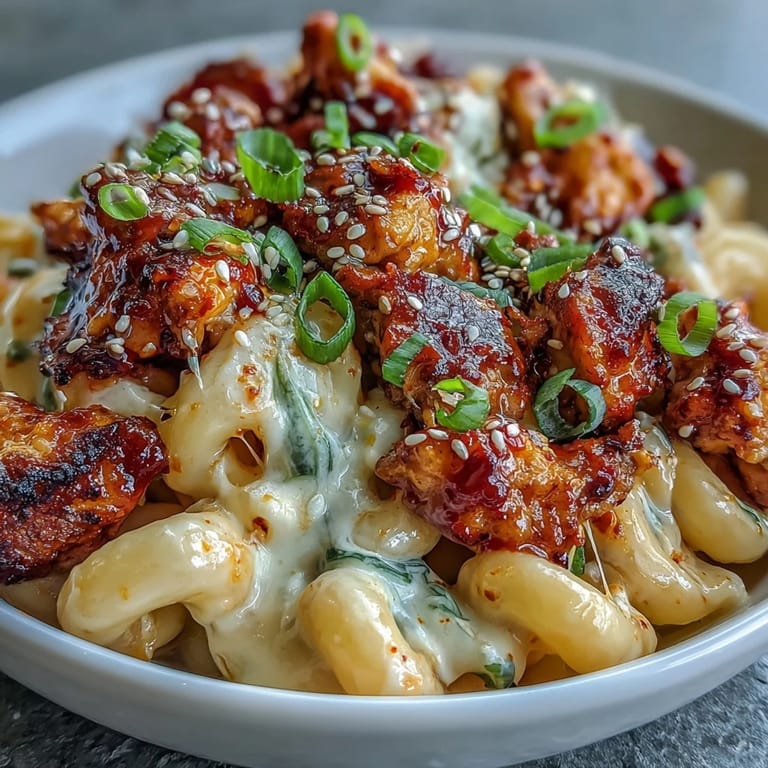
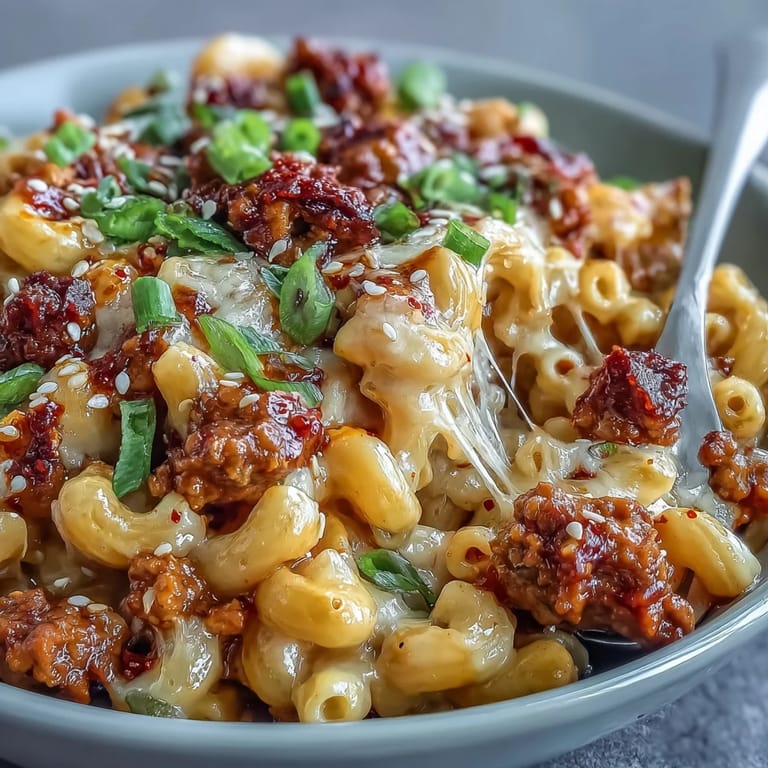
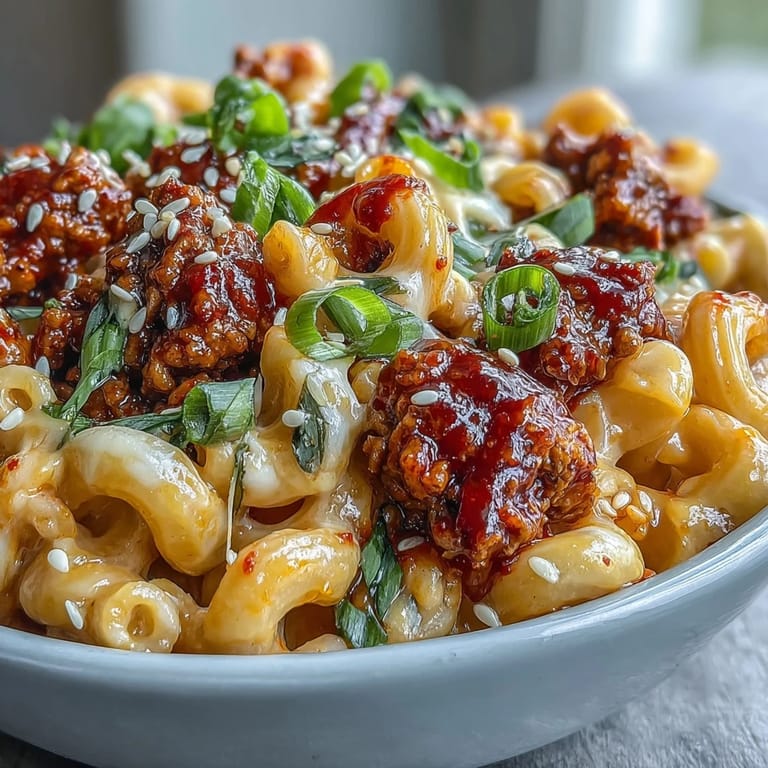
- Divide the creamy mac and cheese into bowls, then top each with a generous spoonful of the Korean turkey crumbles so they sit on top like a delicious crown. Scatter the sliced scallions and sesame seeds over everything.
 Save
Save There's something about serving this dish that makes people pause before eating, studying the bowl like they're trying to decode what they're looking at. Then that first bite happens and their eyes light up because their brain is experiencing something unexpected, and somehow it works. Those moments remind me why cooking matters—it's not just feeding people, it's giving them a small surprise that makes them smile.
The Secret Behind the Gochujang
Gochujang is fermented, which means it has layers of flavor that hot sauce simply cannot compete with, and cooking it into the turkey allows those layers to bloom instead of staying flat and one-dimensional. The first time I used it raw as a garnish, it tasted harsh and medicinal, but when I started cooking it with the turkey, everything changed. Now I treat it like an ingredient that needs time to show its true self, not just a spicy condiment to sprinkle on top.
Why Creamy Sauce Needs Both Cheeses
Sharp cheddar brings the actual cheese flavor and personality that makes you taste cheese, but mozzarella adds creaminess and prevents the sauce from feeling dense or heavy. Using only cheddar creates something almost grainy, and using only mozzarella tastes like eating warm milk. Together they create a sauce that's luxurious without being heavy, and that balance is what makes this dish feel sophisticated instead of just indulgent.
Making It Your Own
This recipe is forgiving enough to play with once you understand the core technique, whether that means swapping proteins or adjusting heat levels to match your preference. I've made it with ground chicken when turkey wasn't available, and it's still delicious because the Korean flavors carry the dish. The real magic lives in the technique of building the sauce and the balance of sweet, spicy, and savory in the turkey topping, not in being rigid about ingredients.
- If you love heat, add a pinch of gochugaru or a dash of sriracha to the turkey sauce for extra kick without thinning it out.
- Substitute ground beef or chicken for turkey depending on what you have, though the cooking time might shift slightly for beef.
- Make a gluten-free version by swapping the pasta and flour for gluten-free alternatives, and use tamari instead of regular soy sauce.
 Save
Save This dish proves that fusion cooking doesn't have to be precious or complicated to work—it just needs respect for both traditions and a willingness to taste as you build. Make it once and you'll understand why it's become my go-to when I want to feel like I'm cooking something special for people I care about.
Recipe Q&A
- → What makes this Korean-style?
The turkey crumbles are seasoned with gochujang (Korean chili paste), soy sauce, garlic, ginger, honey, rice vinegar, and sesame oil—classic Korean flavors that create a sweet-spicy-savory profile.
- → Can I make this gluten-free?
Yes. Substitute gluten-free pasta for the macaroni and use a gluten-free flour blend or cornstarch for the roux. Replace soy sauce with tamari to ensure the dish is completely gluten-free.
- → How spicy is this dish?
It has mild to medium heat from the gochujang. You can increase the spice level by adding gochugaru (Korean chili flakes) or extra gochujang to the turkey mixture.
- → Can I use other proteins?
Absolutely. Ground chicken, beef, or even pork work well with the Korean seasoning. Plant-based ground meat alternatives also make excellent substitutes.
- → How do I store leftovers?
Store the mac and cheese and turkey crumbles separately in airtight containers in the refrigerator for up to 3 days. Reheat gently, adding a splash of milk to the cheese sauce if needed.
- → What cheeses work best?
Sharp cheddar provides bold flavor, while mozzarella adds creaminess and excellent melt. You can also incorporate gruyère, fontina, or provolone for more depth.