 Save
Save The first time I made okonomiyaki, I was standing in a small Tokyo kitchen with my host mother, watching her flip the massive pancake with the confidence of someone who'd done it a thousand times. She caught my nervous expression and laughed, then handed me the spatula. What struck me most wasn't the technique—it was how casual she made it seem, like this savory, cabbage-loaded creation was just another weeknight dinner, nothing to fuss over. Years later, I find myself recreating that same ease in my own kitchen, and every time I smell the bonito flakes starting to dance from the heat, I'm right back there.
I remember bringing these to a potluck and watching people hesitate before their first bite, unsure what they were looking at. Then someone tasted it and the whole room shifted. A friend who considered himself a picky eater went back for seconds, and suddenly everyone wanted to know what they were eating. That's when I realized okonomiyaki has this quiet power to win people over without announcing itself.
Ingredients
- All-purpose flour: The foundation that gives the pancakes structure; I've learned that sifting it keeps the batter light rather than dense.
- Dashi stock: This is the secret that makes these taste authentically Japanese and savory instead of sweet, but good water works in a pinch.
- Eggs: They bind everything together and help create that tender crumb; fresh eggs make a noticeable difference.
- Shredded cabbage: Buy it pre-shredded if you want to save time, but hand-shredding gives you smaller pieces that cook more evenly.
- Green onions and carrot: The carrot adds a subtle sweetness that balances the umami; the green onions give you those little pops of freshness.
- Okonomiyaki sauce: It's sweet, tangy, and slightly smoky—if you can't find it, mix equal parts ketchup and Worcestershire, then add a touch of soy sauce.
- Japanese mayonnaise (Kewpie): Richer and creamier than regular mayo, with a slightly sweet edge that elevates everything; American mayo will work but tastes noticeably different.
- Bonito flakes: These curl and wave from the heat of the hot pancake, which is half the appeal and all the magic.
- Aonori: A grassy, umami-rich seaweed powder that you can find at any Asian market or online; it's worth seeking out.
- Oil for cooking: Keep the heat moderate so the outside doesn't burn before the inside cooks through.
Tired of Takeout? 🥡
Get 10 meals you can make faster than delivery arrives. Seriously.
One email. No spam. Unsubscribe anytime.
Instructions
- Mix your batter base:
- Whisk flour, dashi, eggs, salt, and baking powder until smooth—the batter should be thicker than pancake batter but thinner than cake batter, almost like thick soup. This is where you set up everything to come.
- Fold in the vegetables:
- Add the cabbage, green onions, carrot, and your protein of choice, stirring until it's all evenly distributed and nothing is clumpy. The mixture will look loose and a bit chaotic, but that's exactly right.
- Heat your pan:
- Get your nonstick skillet or griddle to medium heat with about half a tablespoon of oil, let it warm until a tiny drop of water sizzles on contact. You want it hot enough to create a golden crust but not so hot that the outside burns while the inside stays raw.
- Shape and cook:
- Scoop about a cup of batter onto the hot surface and gently press it into a thick disk roughly 6 inches wide using the back of your spatula—don't press too hard or you'll squeeze out all the air and make it dense. Let it sit undisturbed for 4 to 5 minutes until the bottom is deep golden brown.
- The flip:
- Slide your spatula underneath and flip it with a quick, confident motion (hesitation is the enemy here). Cook the other side for another 4 to 5 minutes until it's golden and the inside feels set when you gently press it.
- Repeat and stack:
- Transfer the finished pancake to a plate and repeat with the remaining batter, adding a little more oil to the pan as needed. You'll get about 4 large pancakes depending on your scoops.
- Top and serve:
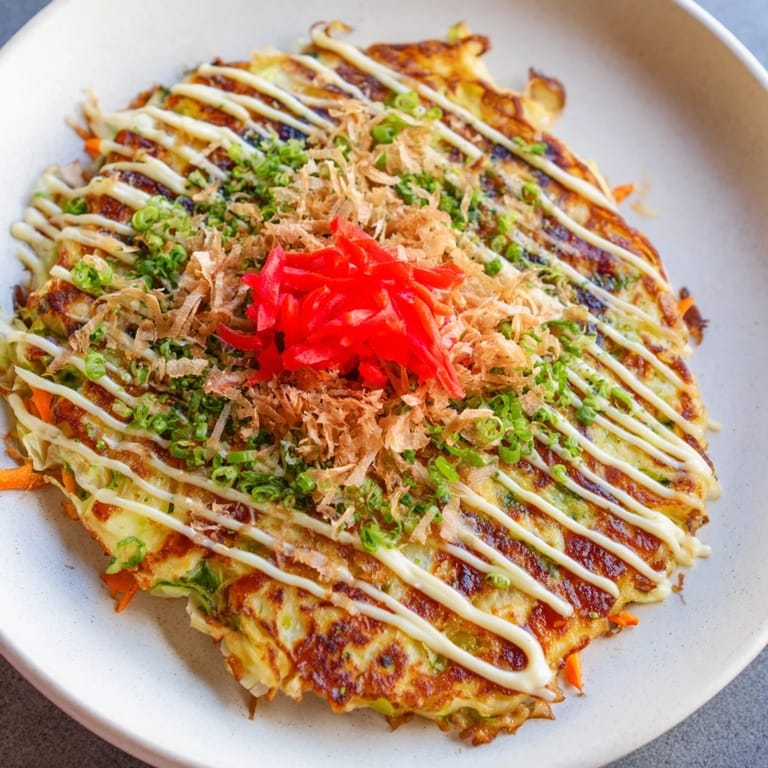
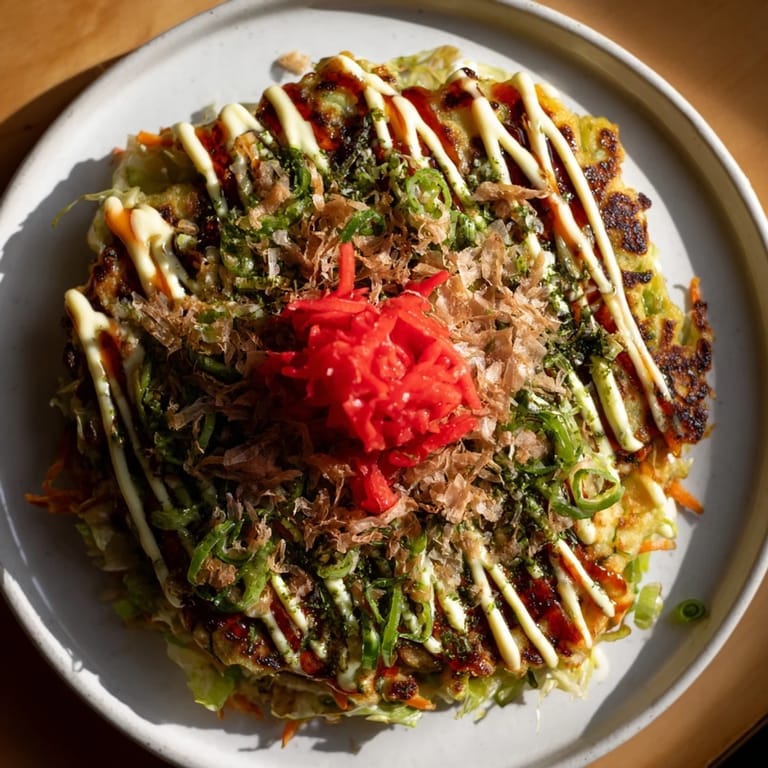
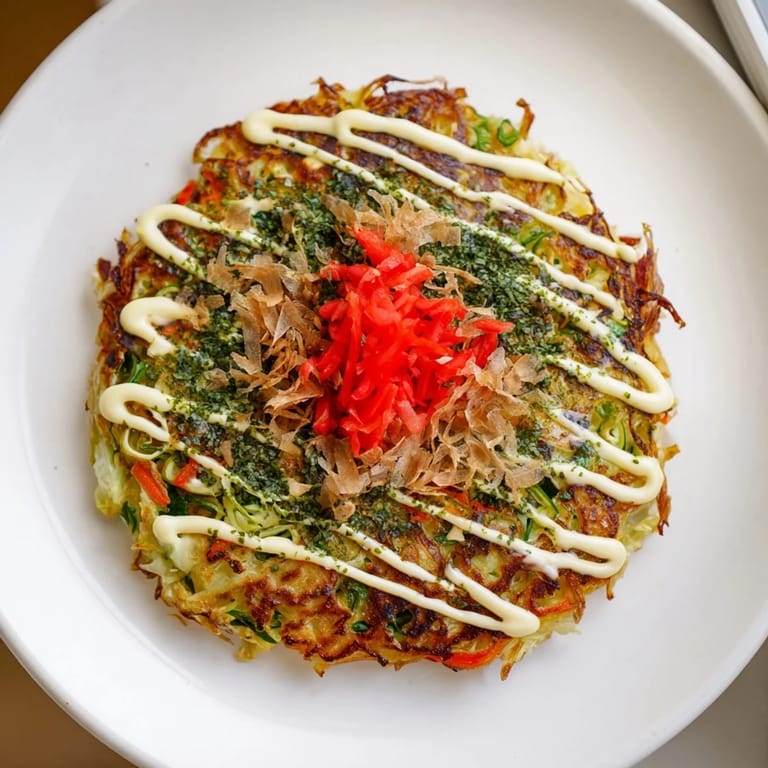
- While the pancakes are still hot, drizzle okonomiyaki sauce and mayo in generous zigzag patterns (a squeeze bottle makes this easier and more fun). Sprinkle bonito flakes, aonori, and pickled ginger on top while everything is steaming—this is when the bonito really comes alive.
 Save
Save What I love most is the moment when someone watches those bonito flakes move in the steam rising off a fresh pancake and goes quiet for a second. It's small, almost silly, but it's the kind of detail that turns a meal into a memory.
The Vegetarian & Dietary Routes
If fish isn't your thing, skip the bonito flakes and shrimp and go heavier on vegetables instead—add more shredded zucchini, mushrooms, or even corn. The sauce and mayo provide enough depth that you won't miss the umami hit, and honestly, a vegetarian version with extra greens tastes just as complete. I've also made versions with crispy tofu cubes instead of shrimp, and the texture contrast is just as satisfying.
Building Your Sauce Station
If you can't find okonomiyaki sauce at your local Asian market, making a quick substitute at home is easier than you'd think and tastes almost as good. Mix two parts ketchup with one part Worcestershire, a splash of soy sauce, and a tiny pinch of sugar, then taste and adjust. The key is that balance between sweet and tangy—it shouldn't taste like any single ingredient but like all of them working together. I keep a batch in the fridge for a week and use it on everything from fries to grilled vegetables.
Serving & Pairing Ideas
These are surprisingly versatile—serve them as a main course with a side salad, cut them into wedges for appetizers, or even eat them cold the next day straight from the fridge (yes, really). They pair beautifully with cold Japanese beer, crisp white wine, or iced green tea if you want something non-alcoholic. The sweetness of the sauce and the richness of the mayo need something to cut through them, so whatever you choose should feel light and refreshing.
- Make a quick pickled daikon radish slaw on the side for extra crunch and brightness.
- Offer small bowls of sriracha or chili oil on the table so people can adjust heat to their taste.
- These keep well in the fridge for 2 days and reheat beautifully in a low oven—perfect for meal prep.
 Save
Save Every time I make okonomiyaki, I'm reminded that some of the best meals come from the simplest idea: cabbage, eggs, and heat, finished with a little ceremony. It's food that tastes like someone cared.
Recipe Q&A
- → What gives the pancakes their savory flavor?
The combination of dashi stock in the batter, shredded cabbage, green onions, and toppings like okonomiyaki sauce and bonito flakes creates a layered savory taste.
- → Can I make this dish vegetarian?
Yes, simply omit shrimp, bacon, and bonito flakes, then increase the vegetable portions to maintain texture and flavor.
- → How do I achieve the crispy exterior on the pancakes?
Cooking the pancakes on medium heat with a bit of neutral oil and allowing time for each side to brown ensures a crispy outer layer.
- → What are common toppings for these pancakes?
Typical toppings include tangy okonomiyaki sauce, Japanese mayonnaise, smoky bonito flakes, dried seaweed flakes, and pickled ginger.
- → Can I substitute okonomiyaki sauce if unavailable?
Yes, a mix of Worcestershire sauce, ketchup, and a touch of soy sauce can mimic the tangy flavor of okonomiyaki sauce.