 Save
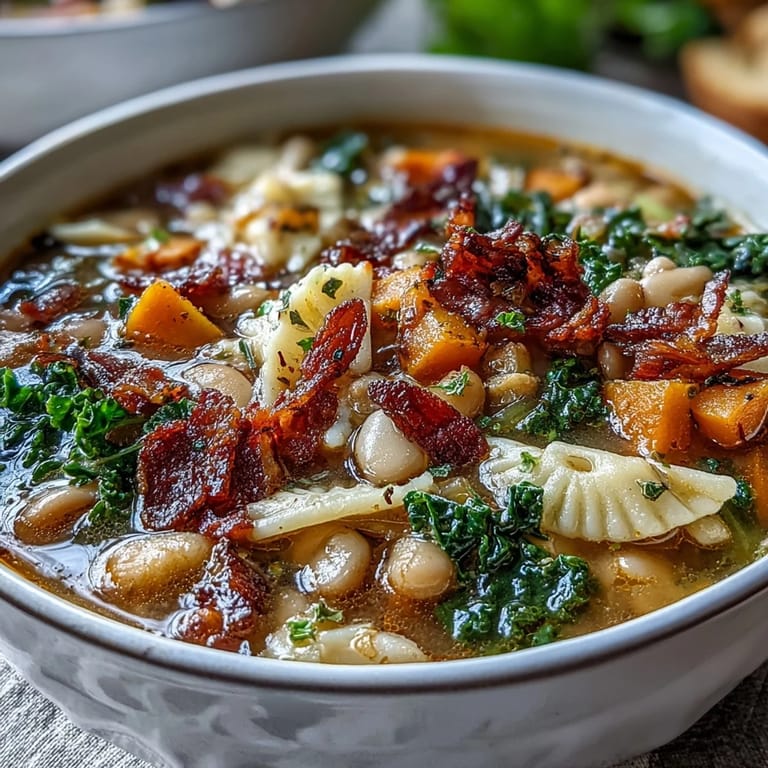
Save October afternoons in my kitchen always smell like caramelizing onions and roasted squash, and this fall minestrone became my answer to those chilly evenings when nothing else felt quite right. I discovered it by accident really, standing in front of an overflowing farmers market haul with pancetta in one hand and butternut squash in the other, wondering if they'd play nice together. Turns out they do, especially when kale and white beans join the conversation. This soup has a way of turning a quiet weeknight into something worth gathering around.
I made this for my sister on a Sunday afternoon when she called saying she needed comfort food and good company. We chopped vegetables side by side while the radio played, and by the time the soup was ready, the whole house smelled so warm and inviting that her mood shifted before she even sat down. That's when I realized this minestrone wasn't just a recipe anymore, it was my go-to dish for moments when people needed to feel taken care of.
Ingredients
- Pancetta, diced: This is your secret weapon for depth; the rendered fat becomes a golden base that makes everything taste richer without any cream needed.
- Olive oil: Use good quality here since it's not being cooked down too long and actually carries flavor.
- Yellow onion, diced: The backbone of the soup, and dicing rather than slicing means it breaks down into the broth beautifully.
- Carrots and celery: Your classic aromatics that soften into sweet undertones as they cook.
- Butternut squash, peeled and cubed: Cut the pieces smaller rather than larger so they soften evenly and become almost creamy when stirred.
- Garlic, minced: Add this after the other vegetables have softened or it can turn bitter and harsh.
- Kale, stems removed and chopped: The stems are tough, so don't skip removing them; the leaves wilt down to something silky in just minutes.
- Canned diced tomatoes with juice: Don't drain these, the juice carries acidity that balances the richness.
- White beans, drained and rinsed: Cannellini or Great Northern both work, and rinsing them removes excess starch so the broth stays clear.
- Ditalini or small pasta: Short shapes prevent broken pieces and they cook faster than long pasta, finishing right when the vegetables do.
- Chicken or vegetable broth: Quality matters here since there's nowhere for weak broth to hide.
- Fresh thyme and bay leaf: These are gentle herbs that whisper rather than shout, letting the vegetables shine.
- Black pepper and salt: Taste as you go near the end; the pancetta already carries salt.
- Fresh parsley and Parmesan cheese: These are your finishing touches that wake everything up right before serving.
Tired of Takeout? 🥡
Get 10 meals you can make faster than delivery arrives. Seriously.
One email. No spam. Unsubscribe anytime.
Instructions
- Render the pancetta and build your base:
- Heat the olive oil and add diced pancetta to the pot, letting it cook until the edges turn crispy and the fat renders out into liquid gold. You'll know it's ready when it smells savory and the pieces are lightly bronzed, about 5 minutes in.
- Soften your aromatic vegetables:
- Pull out the pancetta with a slotted spoon and leave all that beautiful fat behind, then add the onion, carrots, and celery to the pot. Let them sit and soften for about 5 minutes, stirring occasionally, until the onion turns translucent and everything starts to smell like soup.
- Wake up the pot with squash and garlic:
- Add the cubed butternut squash and minced garlic, stirring them in to coat with the fat and vegetables. Cook for just 2 minutes until you catch that warm, toasted garlic aroma.
- Build the broth and simmer:
- Pour in the tomatoes with their juice, add the drained beans, broth, thyme, and bay leaf, then season with salt and pepper. Bring everything to a simmer, then cover the pot and let it cook gently for 20 minutes until the squash is tender enough to break apart with a spoon.
- Add the greens and pasta:
- Stir in the chopped kale and ditalini pasta, then simmer uncovered for 8 to 10 minutes, stirring occasionally so the pasta doesn't stick. The kale will wilt down dramatically and the pasta will absorb the broth while staying just slightly firm.
- Finish and adjust:
- Remove the bay leaf, taste the soup carefully, and adjust salt and pepper as needed. Remember that the Parmesan you'll add at the table also carries salt.
- Serve with care:
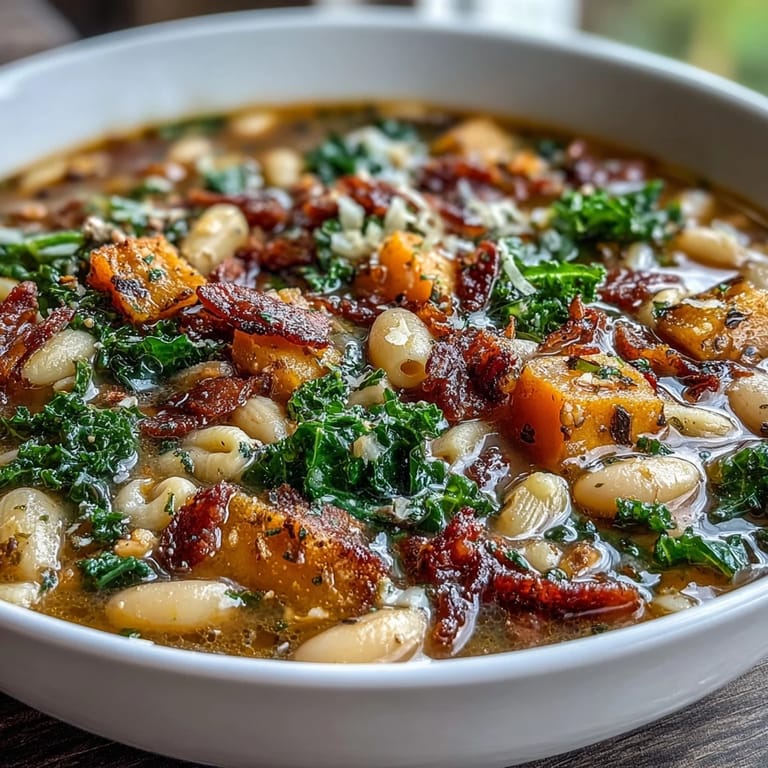
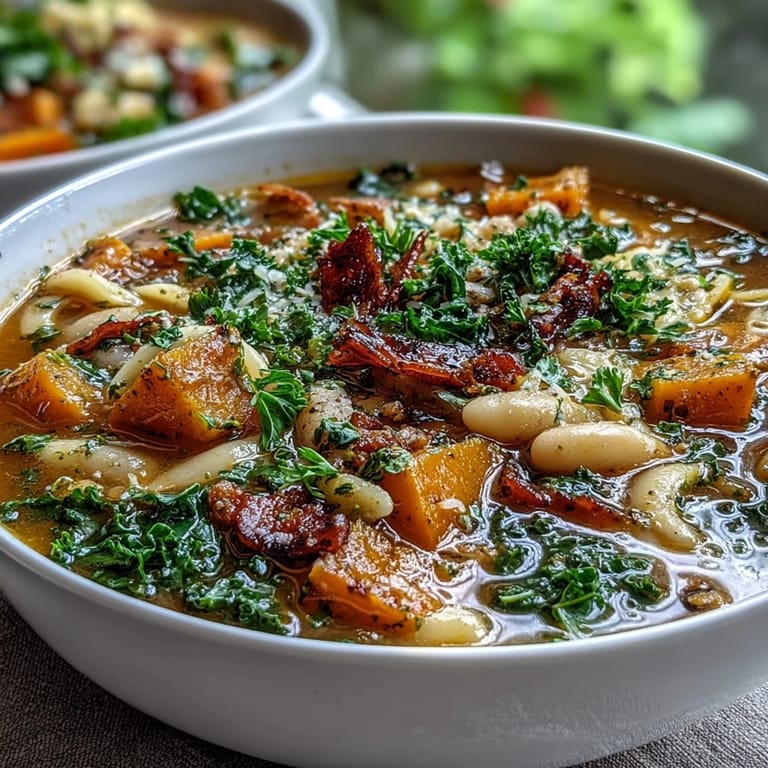
- Ladle the soup into bowls and top each one with reserved pancetta, a scatter of fresh parsley, and a generous handful of grated Parmesan cheese. The warm soup will make the cheese melt slightly into creamy little pockets.
 Save
Save There's a moment, right when the kale hits the hot broth and starts to wilt, where this minestrone stops being just ingredients and becomes something alive and nourishing. I've learned that soup is often more about presence than precision, and this one rewards a little attention and care without demanding perfection.
Why This Soup Works for Fall
Autumn is when you want soup that tastes like the season itself, and this minestrone delivers with the sweetness of roasted squash playing against the earthiness of kale and the salty depth of pancetta. There's something about the combination that feels both light enough for early fall and substantial enough for when the real cold arrives. The warm spices in the thyme and the way the beans soften into the broth make it feel like comfort without heaviness.
Making It Your Own
This recipe is genuinely flexible, which is part of why I keep returning to it. You can swap the kale for spinach or Swiss chard if that's what you have, use any small pasta shape you prefer, or add a handful of diced zucchini if summer vegetables are still lingering in your kitchen. The structure stays the same, and the soup always comes together with the same comforting logic.
Serving and Storage
Serve this soup hot with crusty bread alongside for soaking up every bit of broth, and a simple green salad to balance the heartiness. It stores beautifully in the refrigerator for up to 4 days, and the flavors actually deepen as the ingredients continue to get to know each other.
- Make it vegetarian by omitting the pancetta and using vegetable broth instead, then add a pinch of smoked paprika for that savory depth you'd otherwise get from the meat.
- For a gluten-free version, swap the ditalini for gluten-free pasta or skip it entirely and add extra white beans to keep the soup hearty and satisfying.
- Leftovers will thicken as the pasta continues to absorb liquid, so add a splash of broth or water when you reheat if you prefer a soupier consistency.
 Save
Save This minestrone is the kind of recipe that gets better every time you make it because you learn what you like and adjust accordingly. It's become my proof that the most comforting food doesn't need to be complicated, just thoughtfully built and served with intention.
Recipe Q&A
- → Can I make this minestrone vegetarian?
Yes, simply omit the pancetta and use vegetable broth instead of chicken broth. Add a pinch of smoked paprika to maintain some of the savory depth that the pancetta would provide.
- → What other vegetables work well in this soup?
You can substitute other autumn vegetables like acorn squash, sweet potatoes, or spinach. The soup is very flexible and works with whatever you have on hand.
- → How should I store leftovers?
Store in an airtight container in the refrigerator for up to 4 days. The pasta may absorb some liquid, so add a splash of broth or water when reheating.
- → Can I freeze this minestrone?
Yes, freeze for up to 3 months. For best results, slightly undercook the pasta as it will continue cooking when reheated. Consider freezing without pasta and adding fresh pasta when reheating.
- → What can I serve with this soup?
Crusty bread, garlic knots, or a simple green salad complement this minestrone perfectly. A light Pinot Noir or Chianti pairs beautifully with the Italian flavors.
- → Can I use dried beans instead of canned?
Absolutely. Cook about 1 cup dried white beans until tender, then drain and add in step 4. You may need to extend the simmering time slightly to ensure the beans are fully cooked.