 Save
Save There's something about a kitchen that smells like caramelizing onions that makes time disappear. I was testing recipes on a rainy Tuesday when I decided to slow-roast a mountain of onions in my Dutch oven, and what emerged hours later was liquid gold—deep, complex, and absolutely nothing like the watery onion soup I'd made years before. That moment taught me that patience in the kitchen isn't a luxury, it's the secret ingredient nobody talks about.
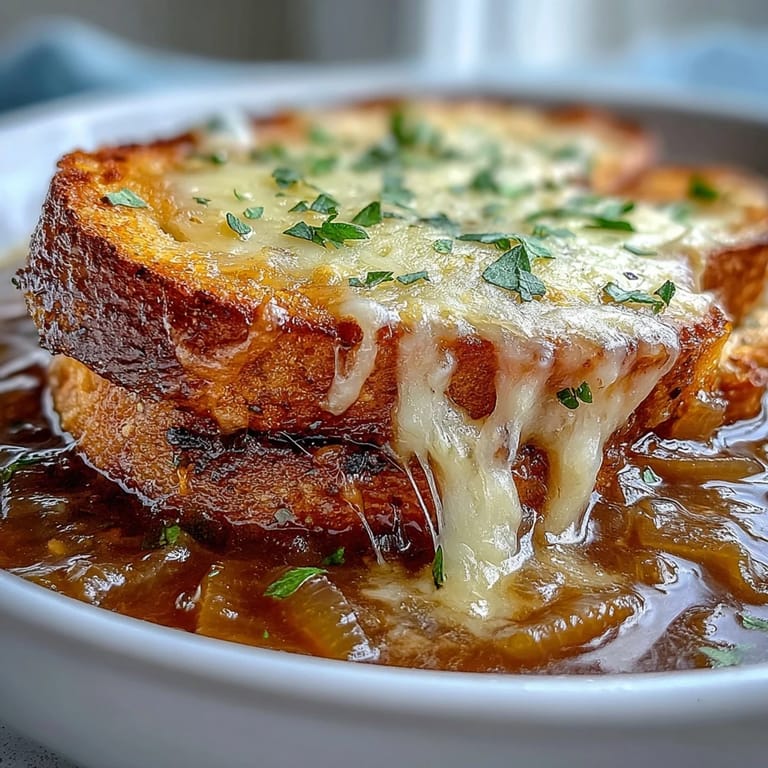
I made this for my neighbor one winter evening when she mentioned feeling under the weather, and watching her face light up when that melted cheese stretched on her spoon was worth every minute of stirring. She came back the next week asking if I could teach her, and now it's her go-to dish when she wants to feel like a real cook.
Ingredients
- 5 large yellow onions, thinly sliced: Yellow onions are naturally sweeter than other varieties, and when cooked low and slow, they develop this almost caramel-like depth that's impossible to rush.
- 3 tablespoons unsalted butter and 2 tablespoons olive oil: The butter brings richness while the oil prevents burning during that long caramelization, a trick I learned after scorching my first batch.
- 2 garlic cloves, minced: Just a whisper of garlic is all you need here—too much and it drowns out the onions' star moment.
- 1 teaspoon sugar: This tiny addition kickstarts the caramelization process and deepens the color without making the soup taste sweet.
- 8 cups beef broth: Quality matters here because this is your foundation, so use broth you'd actually drink on its own.
- 1/2 cup dry white wine: The acidity cuts through the richness and adds a subtle sophistication that's hard to pinpoint but impossible to miss.
- 2 teaspoons fresh thyme leaves or 1 teaspoon dried: Fresh thyme has a bright, clean flavor that dried thyme can't quite match, but dried works beautifully in a pinch.
- 2 bay leaves: These quiet workers add savory backbone without announcing themselves, which is exactly what you want.
- 1 tablespoon Worcestershire sauce: This ingredient is your secret weapon—it adds umami depth that tastes like the soup has been simmering for days.
- Salt and freshly ground black pepper: Season at the end after the flavors have melded, because the broth and wine already carry salt.
- 1 baguette, sliced into 1/2-inch rounds: A good, crusty baguette is essential because it needs to stay crisp under the cheese, not turn into mush.
- 2 cups Gruyère cheese, grated: Gruyère melts beautifully and tastes nutty and slightly sweet, which balances the savory soup perfectly.
- 1/2 cup Parmesan cheese, grated: This is optional but adds a sharp note that some people love for extra complexity.
Tired of Takeout? 🥡
Get 10 meals you can make faster than delivery arrives. Seriously.
One email. No spam. Unsubscribe anytime.
Instructions
- Melt your butter and oil, then surrender to the onions:
- Set your Dutch oven to medium heat and let the butter and oil get acquainted for about a minute. Toss in all those sliced onions along with the sugar, and here's where patience becomes your best friend—stir every few minutes as they soften, break down, and gradually turn from pale yellow to deep golden brown over the next 40 to 45 minutes. You'll notice the kitchen fills with this sweet, complex aroma that makes you understand why French chefs consider this step sacred.
- Wake up the garlic for just a moment:
- Once your onions are soft and caramelized, add the minced garlic and let it cook for about a minute until the smell hits you—that's how you know it's done. Don't walk away or it'll burn, which tastes bitter and ruins the whole thing.
- Deglaze with wine and scrape up the good stuff:
- Pour in the dry white wine and use a wooden spoon to gently scrape up all those browned, caramelized bits stuck to the bottom—that's where the real flavor lives. Let it simmer for 2 to 3 minutes until slightly reduced and the sharp wine smell mellows out.
- Build your broth foundation:
- Add the beef broth, fresh thyme, bay leaves, and Worcestershire sauce, then bring everything to a gentle simmer. Lower the heat and let it cook uncovered for 20 to 30 minutes while the flavors marry together and deepen.
- Toast your baguette while the soup finishes:
- While the soup simmers, preheat your broiler and arrange baguette slices on a baking sheet. Toast them under the broiler for about 1 to 2 minutes per side until they're golden and crispy but not hard as a brick.
- Assemble and broil until cheese gets bubbly:
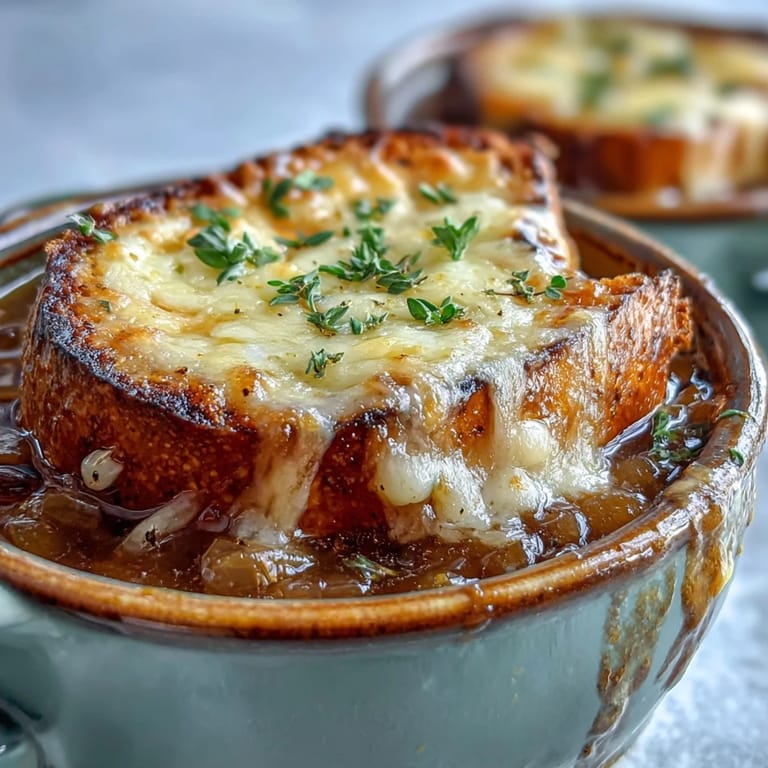
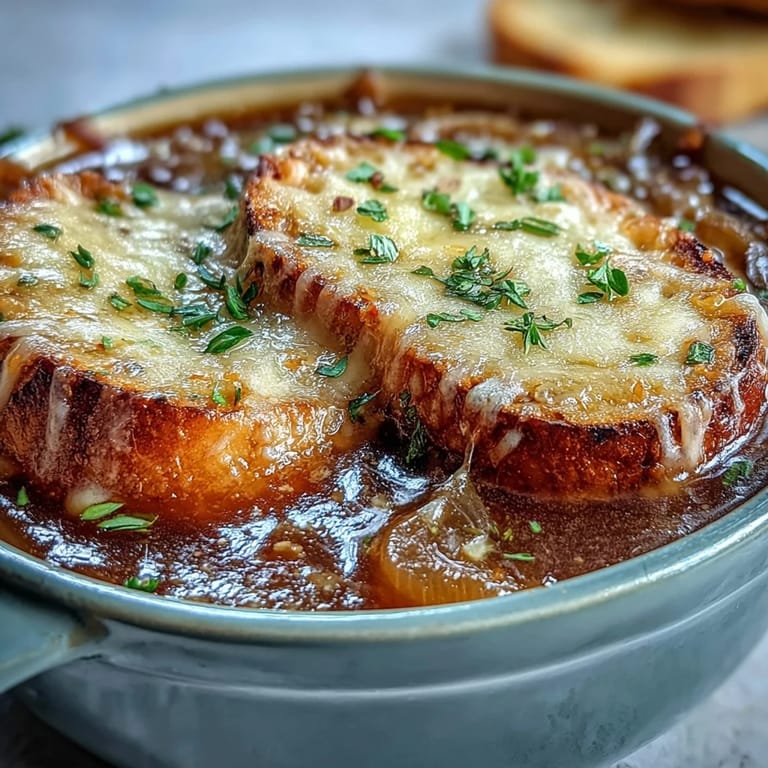
- Ladle your soup into oven-safe bowls, top each with a toasted baguette slice, and cover generously with grated Gruyère. Place the bowls on a baking sheet and broil for 2 to 4 minutes until the cheese is melted, bubbly, and just starting to brown on top.
- Serve it immediately while everything's still hot:
- This is the moment you've been waiting for—the cheese is stretching, the soup is steaming, and everything tastes like it was made in a Parisian bistro instead of your home kitchen.
 Save
Save  Save
Save My brother brought his date over and served this soup without mentioning he'd made it himself, and seeing her assume it came from a restaurant made him finally realize he could actually cook. That's when dishes stop being about following instructions and start being about what they mean to you.
The Art of Caramelization
Caramelization isn't just browning—it's a chemical transformation where the onions' natural sugars break down and create hundreds of new flavor compounds. Medium heat is crucial because high heat causes the sugars to burn rather than caramelize, which tastes acrid and bitter instead of sweet and complex. I learned this the hard way by trying to speed up the process, and the resulting soup tasted like burnt onions instead of liquid gold.
Choosing Your Cheese Wisely
Gruyère is traditional because it has a lower melting point and a naturally nutty flavor that complements the savory soup, but honestly, any good melting cheese works if that's what you have. I've used Swiss cheese, Emmental, and even a mixture of sharp cheddar and mozzarella, and while they're all slightly different, they all create that gorgeous melted topping. The one thing that doesn't work is pre-shredded cheese from a bag because the anti-caking agents prevent a smooth melt.
Making It Your Own
This recipe is sturdy enough to handle your creativity, which is partly why it's endured for centuries. Some cooks add a splash of sherry or brandy instead of white wine, others use vegetable broth and skip the Worcestershire to make it vegetarian, and I once added roasted mushrooms because I had them on hand and it was absolutely incredible.
- A touch of balsamic vinegar adds sweetness and complexity if you want to experiment.
- Fresh tarragon or sage can replace thyme if you're feeling adventurous with your herb choices.
- Don't skip toasting the baguette because soggy bread under melted cheese tastes disappointing no matter what.
 Save
Save 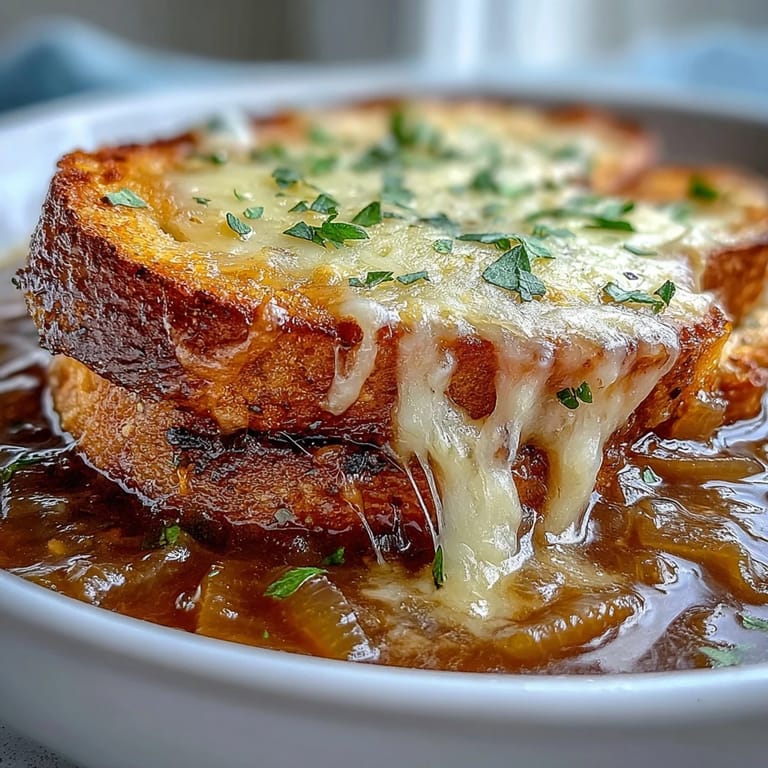 Save
Save This soup has a way of showing up at the right moments—winter dinners, comfort when someone needs it, or just a quiet Tuesday night when you want to feel like you're eating somewhere special. Once you've made it, it becomes part of your cooking repertoire forever.
Recipe Q&A
- → How long does it take to caramelize onions properly?
Plan for 40–45 minutes over medium heat, stirring frequently. This slow cooking transforms sharp onions into sweet, golden strands that form the soup's foundation. Don't rush this step—it's where most of the flavor develops.
- → Can I make this vegetarian?
Absolutely. Swap beef broth for a high-quality vegetable broth and either omit Worcestershire sauce or use a vegetarian version. The result remains deeply satisfying and full of umami flavor.
- → What cheese works best for the topping?
Gruyère is traditional for its nutty, complex flavor and excellent melting properties. Swiss or Emmental make great substitutes. Adding Parmesan creates a nice salty, savory contrast.
- → Can I make this ahead of time?
The soup base actually improves after a day or two in the refrigerator. Make it through step 4, cool completely, and store. Reheat gently, then add the bread and cheese just before serving for the best texture.
- → Why use a Dutch oven?
Heavy Dutch ovens provide even heat distribution essential for slow caramelization without burning. Their tight lids also work perfectly if you want to simmer the broth covered, though this version cooks uncovered for better concentration.
- → How do I get the cheese perfectly melted and browned?
Use oven-safe bowls and place them on a baking sheet for easy transfer. Broil on the upper rack, watching closely after 2 minutes. The cheese should be bubbly with golden-brown spots—about 3–4 minutes total.