 Save
Save I discovered this dish on a quiet Tuesday evening when my brother challenged me to reinvent leftover sushi rice into something crispy and unexpected. The moment those golden squares hit the hot oil, I knew I'd stumbled onto something special—the sound of that sizzle, the aroma of toasted rice mixed with sesame oil, it all felt like a small culinary victory. Building each stack became meditative, each layer adding texture and flavor in perfect proportion. What started as improvisation became the appetizer I'd make for anyone who wanted to feel impressed by something genuinely delicious.
I made this for my best friend's impromptu dinner party when she texted asking if I could whip up something that felt restaurant-quality but wouldn't keep me cooking all evening. She watched me fry the rice squares and kept saying the kitchen smelled like a high-end sushi bar, which may have been the highest compliment I've ever received in my own home. The stacks came together so quickly that I had time to chat, pour wine, and actually enjoy hosting instead of stressing in the kitchen.
Ingredients
- Sushi Rice: This is the foundation—use short-grain sushi rice specifically, as it has the right starch content to hold together when pressed and becomes beautifully crispy when fried.
- Rice Vinegar, Sugar, and Salt: These three create the seasoning that makes your rice sing; don't skip the vinegar folding step, as it's what transforms plain rice into something vibrant.
- Vegetable Oil: Keep it neutral and heat-tolerant for frying; I prefer light olive oil or refined vegetable oil to avoid competing flavors.
- Sushi-Grade Salmon: The quality matters here since it's raw; buy from a reputable fishmonger and ask specifically for sushi-grade, or substitute cooked salmon if you prefer.
- Soy Sauce and Sesame Oil: Low-sodium soy sauce prevents the salmon from becoming overly salty, while toasted sesame oil adds a nutty depth that ties everything together.
- Sriracha and Lime Juice: These add brightness and gentle heat; the lime cuts through the richness of the avocado and mayo beautifully.
- Avocado: Choose one that's ripe but still firm enough to slice cleanly; check by gently squeezing near the stem.
- Mayonnaise and Sesame Seeds: The mayo becomes a creamy sauce when mixed with sriracha, while sesame seeds add nutty flavor and visual appeal.
Tired of Takeout? 🥡
Get 10 meals you can make faster than delivery arrives. Seriously.
One email. No spam. Unsubscribe anytime.
Instructions
- Prepare the Foundation:
- Rinse your sushi rice until the water runs clear—this removes excess starch that would make the final rice gummy instead of crispy. Cook it covered on low heat for exactly 15 minutes, then let it rest for 10 minutes off the heat; this final rest ensures each grain is tender but still distinct.
- Season with Care:
- Warm the rice vinegar mixture slightly before folding it into the hot rice so the seasoning distributes evenly. Use a gentle hand and wooden spoon to fold rather than stir, which keeps the grains intact and prevents mashing.
- Set and Chill:
- Press the seasoned rice into your parchment-lined pan to a consistent 1/2-inch thickness, then refrigerate for exactly 20 minutes; this chilling makes it firm enough to cut cleanly and fry without falling apart. The parchment paper prevents sticking and makes removal effortless.
- Marinate the Salmon:
- While the rice chills, combine your diced salmon with the soy sauce, sesame oil, sriracha, lime juice, and green onion in a separate bowl. Keep it cold in the fridge until you're ready to assemble so the salmon stays fresh and the flavors meld beautifully.
- Make Your Spicy Mayo:
- Simply whisk together mayonnaise and sriracha to your heat preference; this becomes your binding sauce that brings cohesion to all the layers above.
- Fry to Golden Perfection:
- Cut your chilled rice into 2-inch squares and fry them in medium-high heat oil for 2 to 3 minutes per side until they're golden brown and crispy on the outside. You'll hear a gentle crackling sound that tells you they're ready; drain on paper towels to remove excess oil.
- Build Your Stacks:
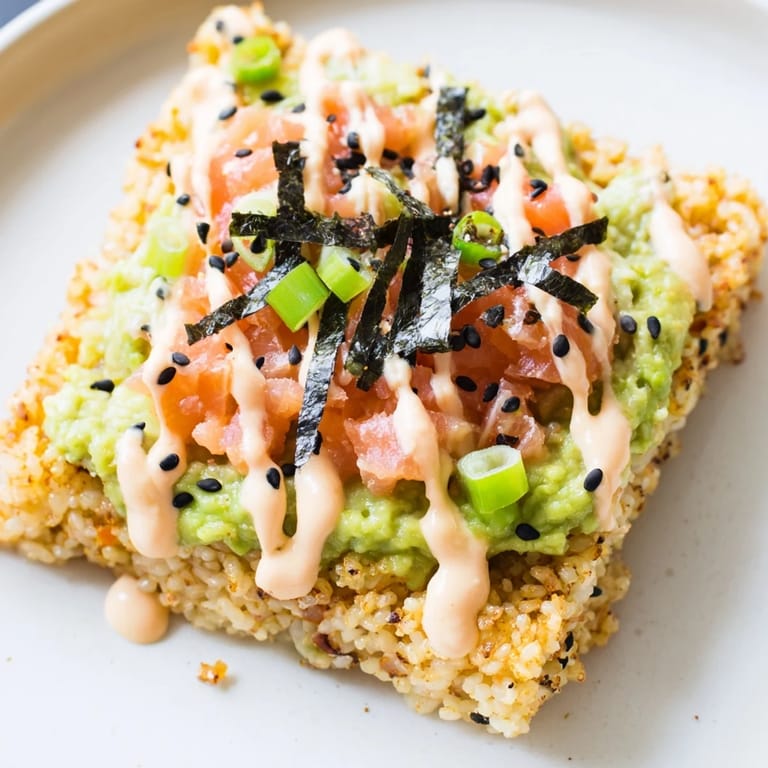
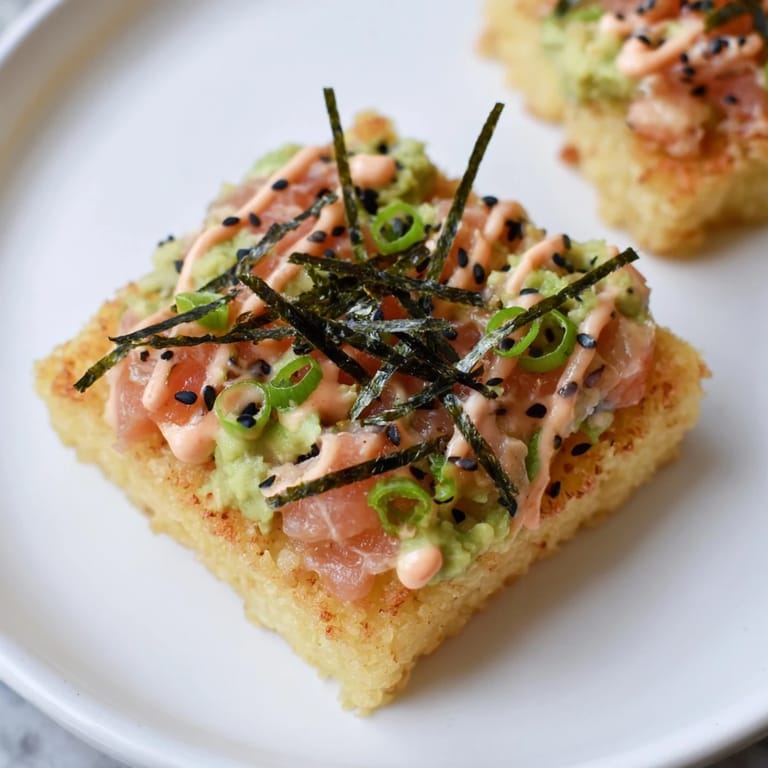
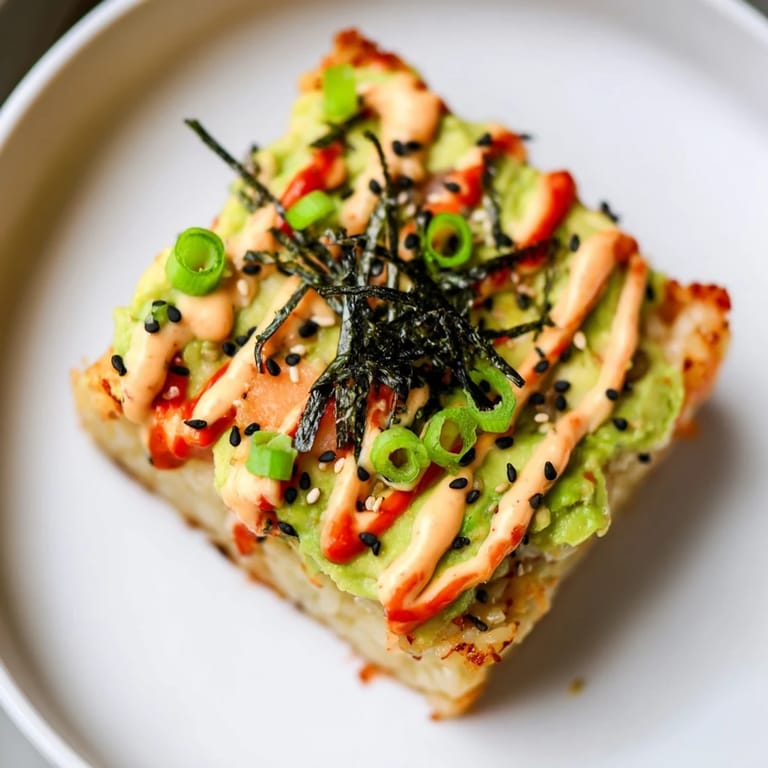
- Working quickly while the rice is still warm, top each square with a slice of avocado, a spoonful of salmon mixture, a light drizzle of spicy mayo, and a sprinkle of sesame seeds and chives. Think of it like building a very delicious Jenga tower—each layer matters, but keep it balanced and not overcrowded.
- Serve Immediately:
- The magic happens when contrasts are at their peak, so plate these right away while the rice is still crispy and everything is at its intended temperature. The warmth of the rice against the cool avocado and salmon is part of what makes this dish sing.
 Save
Save What struck me most while making this dish was how my quiet kitchen suddenly felt like a sushi restaurant—the oil singing in the pan, the salmon's fresh aroma mixing with toasted sesame, the precision of each assembly moment. It became less about feeding people and more about creating a small moment of beauty on a plate, something I could hand to someone and watch their face change as they tasted it.
Why Temperature Matters
The temperature contrast in this dish is actually what makes it sing—the warm, crispy rice against the cool, creamy avocado creates a sensation that keeps each bite interesting. I've learned that letting components sit at room temperature before serving ruins this effect, so I time everything to come together at the last possible moment. The salmon mixture benefits from staying cold right up until assembly, keeping it fresh and vibrant against the warm rice.
Customizing Your Stacks
One of my favorite things about this recipe is how adaptable it becomes once you understand the basic structure—I've added thinly sliced cucumber for crunch, pickled ginger for tang, and even thin strips of nori for an extra umami note depending on what I'm craving that day. The beauty is that you can play with toppings while keeping the foundation of crispy rice, salmon, and avocado absolutely solid. Think of the core as your canvas and everything else as your medium for expression.
Pairing and Serving Suggestions
I've found that serving this alongside a crisp white wine or chilled sake elevates the whole experience, as the acidity and subtle flavors in both complement the richness of the salmon and avocado without overpowering them. It works beautifully as an appetizer for a dinner party or as a light lunch served with a simple green salad and miso soup on the side.
- A very cold Sauvignon Blanc or Albariño pairs beautifully with the citrus and salmon flavors in each bite.
- If you're serving this for a more casual meal, even sparkling water with fresh lime feels refreshing and lets the food shine.
- Don't stress about making these look magazine-perfect; slight imperfection in how the toppings land actually makes them look more homemade and approachable.
 Save
Save Every time I make this dish, I'm reminded that the best cooking happens when you're willing to play with textures and flavors, when you understand the rules well enough to trust yourself in the moment. This stack has become my go-to when I want to impress without stress, when I want food that tastes like it came from somewhere special but actually came from my own kitchen.
Recipe Q&A
- → How do you achieve crispy rice layers?
After cooking and cooling sushi rice, press it into a pan and chill. Cut into squares, then pan-fry with vegetable oil until golden and crispy on both sides.
- → Can cooked salmon be used instead of raw?
Yes, canned or cooked salmon can replace raw salmon for a milder flavor and easier preparation.
- → What sauces complement this dish best?
Spicy mayo made from mayonnaise and sriracha, along with a drizzle of soy sauce and sesame oil in the salmon mix, enhances the layers well.
- → Are there optional toppings to add flavor or texture?
Optional toppings include nori strips, finely chopped chives, sesame seeds, and thinly sliced cucumber or pickled ginger for added freshness and crunch.
- → What beverages pair well with this dish?
A crisp white wine or chilled sake complements the savory and zesty flavors of the dish perfectly.
- → How long does the preparation take?
Total time is approximately 45 minutes, including cooking, cooling, frying, and assembly.