 Save
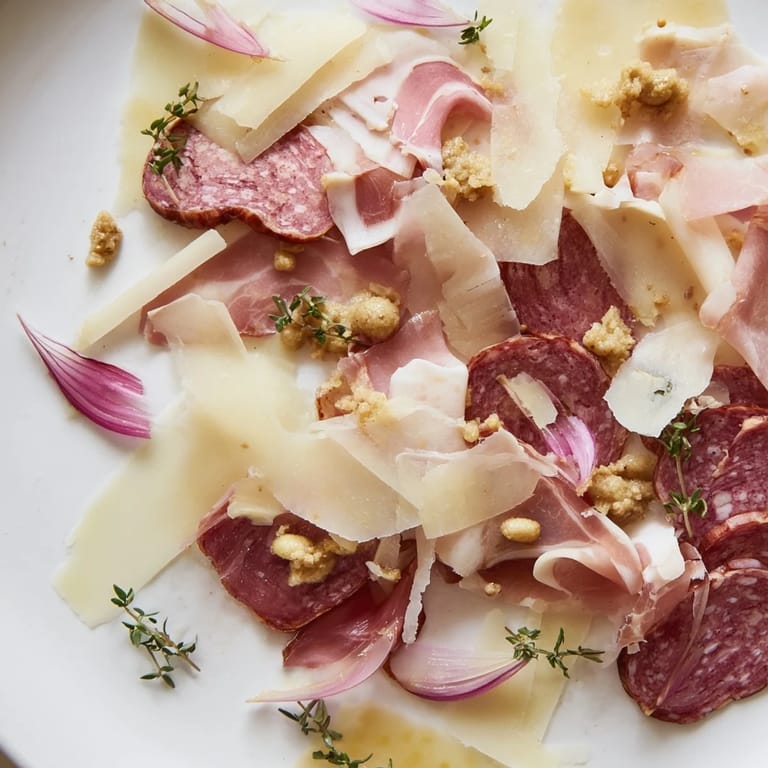
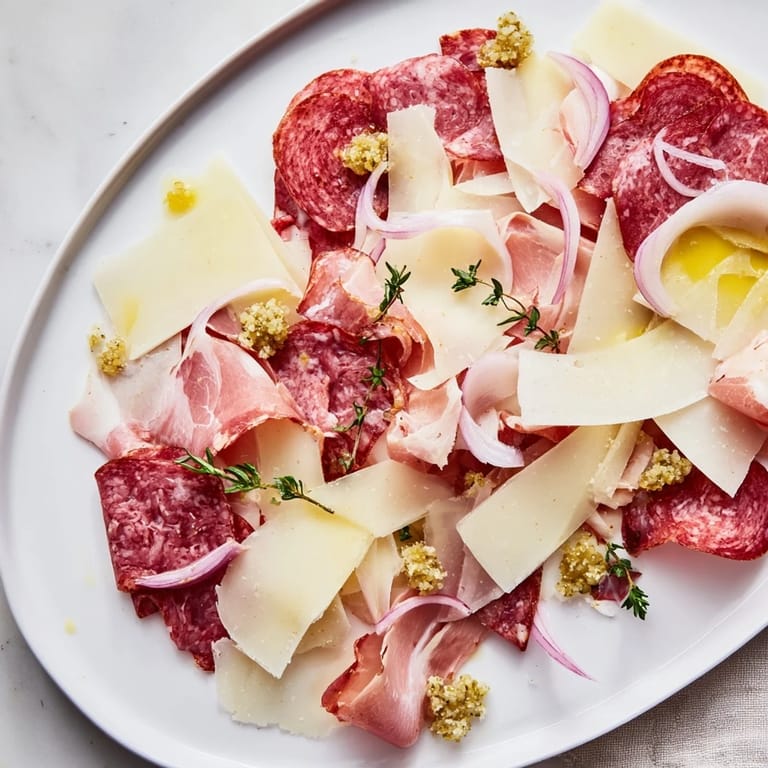
Save There's something about a charcuterie board that stops conversations mid-sentence. I learned this at a dinner party years ago when my friend casually assembled a wooden platter with some scattered meats and cheese shavings, and suddenly everyone abandoned their wine glasses to hover around it instead. The beauty of The Burlap & Lace—that name came to me watching how rough hunks of smoked beef played against those delicate, nearly translucent cheese ribbons—is that it requires almost no cooking, just an instinct for balance. It's the kind of dish that looks effortlessly sophisticated but actually teaches you something about how contrast makes food memorable.
I remember assembling this the first time for a small gathering on a grey October afternoon, and my partner asked why I was spending so much time arranging cheese shavings. But then they tasted it—that exact moment when the smoke from the beef hits your palate and then the nuttiness of aged Parmigiano softens it—and suddenly they understood why presentation mattered. The board became the centerpiece, the conversation starter, the thing everyone photographed without thinking.
Ingredients
- Smoked beef (120 g, thickly sliced or hand-torn): Buy this from a real charcuterie counter if you can; the texture matters more than you'd think, and hand-tearing gives it a rustic, intentional look.
- Rustic country ham (120 g, roughly chopped): The roughness of the chop is part of the charm—don't aim for uniform pieces, aim for a scattered, lived-in appearance.
- Smoked sausage (120 g, thick-cut rounds or wedges): This adds weight and smokiness; if you can find one with visible pepper or fennel seeds, even better.
- Parmigiano Reggiano (60 g, thinly shaved): Use a cheese plane or vegetable peeler to get those translucent ribbons; the thinness is what makes them elegant instead of chunky.
- Aged Manchego (60 g, thinly shaved): This Spanish cheese brings a slightly caramel note that balances the salt of the meats beautifully.
- Gruyère (60 g, thinly shaved): The nuttiness here ties everything together; it's the bridge between bold and refined.
- Cornichons (1 small handful): These tiny pickled cucumbers cut through the richness like a palette cleanser built into the platter.
- Red onion (1 small, thinly sliced): The sharpness of raw red onion against creamy cheese is almost musical in its balance.
- Grainy mustard (2 tbsp): A few small dollops scattered around let people choose their own flavor intensity rather than imposing it.
- Fresh thyme or rosemary sprigs (1 small bunch): These aren't just decoration; brush your finger against them and that aroma lifts the entire eating experience.
- Rustic country loaf or crusty baguette (optional): If you include bread, slice it thick enough to hold the toppings without crumbling.
Tired of Takeout? 🥡
Get 10 meals you can make faster than delivery arrives. Seriously.
One email. No spam. Unsubscribe anytime.
Instructions
- Build the meat foundation:
- Arrange your rough-cut meats in overlapping layers or loose mounds across your wooden board—think more gestural than geometric. You want people to see the variation in color and texture immediately, so don't compress everything into tight rows.
- Create the cheese moment:
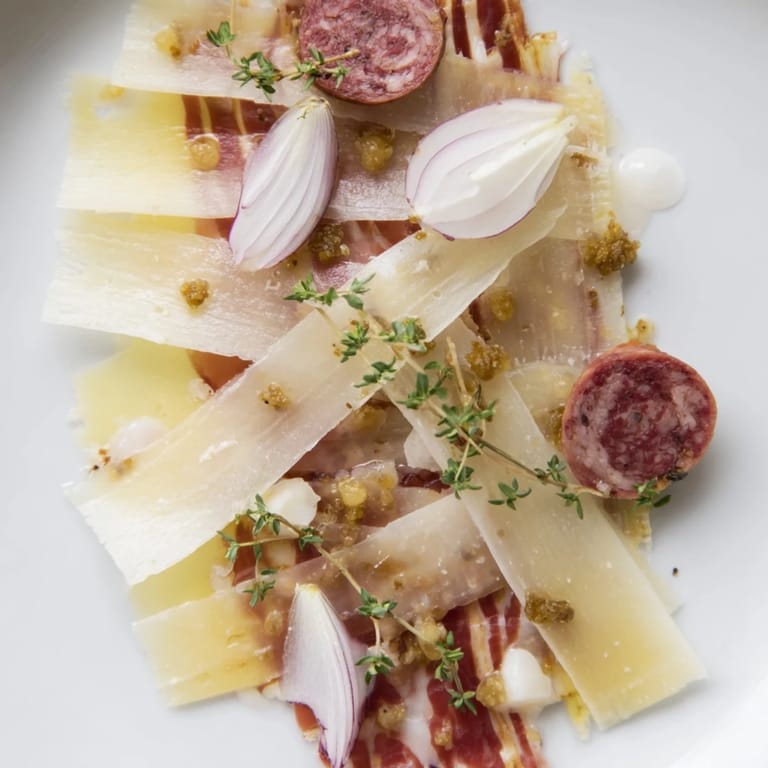
- Using a vegetable peeler or cheese plane, drag it across your cheeses to create those thin, almost transparent ribbons. Drape them artfully over and beside the meats, letting some fold naturally and others lay flat; this contrast of movement is what catches the eye.
- Add the scattered moments:
- Scatter your cornichons, red onion slices, and small dollops of mustard around the platter in pockets and gaps, treating them like accents in a painting rather than ingredients in a recipe.
- Finish with intention:
- Tuck your fresh thyme or rosemary sprigs into the arrangement so they're both visible and accessible; this adds color and releases that subtle herbal aroma when people lean in.
- Present immediately:
- Serve right away while the cheese shavings are still delicate and haven't begun to curl from the warmth of the board, and offer your bread alongside if you're using it.
 Save
Save There was this moment at midnight when the party had wound down to four people still standing in the kitchen, and someone reached over to grab the last piece of Manchego with a piece of smoked beef, and nobody said anything—we all just knew the board had done its job. It wasn't about being fancy; it was about creating a moment where texture and flavor mattered as much as conversation.
The Art of Contrast
This board works because of what it refuses to do—it doesn't try to blend everything into harmony. Instead, it celebrates the friction between textures: the rough torn meat against gossamer cheese, the sharp bite of raw onion against salty smoke, the snap of cornichons cutting through richness. This is what keeps people interested. Each bite can be different depending on what you layer together, which is why a charcuterie board never gets boring the way a single dish sometimes does.
Choosing Your Meats Wisely
Not all smoked meats are created equal, and this is where shopping at a proper counter makes a difference. I've learned that the best boards come from mixing one truly bold, smoky element with something more delicate—it's like a conversation between two people with different perspectives. The smoked beef is your anchor; the ham brings a rustic earthiness; the sausage adds weight and spice. Together, they tell a story of a European countryside, which is kind of the whole point.
Timing and Temperature Secrets
Timing is deceptively simple for something so elegant—you need 15 minutes and nothing more, which means you can pull this together while your guests shed their coats. The real secret is understanding that charcuterie boards actually improve slightly as they sit at room temperature for the first hour, as flavors open up and cheese begins to soften just slightly. If you're serving this outdoors in warm weather, keep it shaded; if it's cold, a covered board can sit longer without issue.
- Shave your cheese right before assembling, not hours ahead, so the ribbons stay delicate and haven't begun to curl or dry.
- Let your meats come to room temperature for 10 minutes before arranging—cold meat tastes flatter and less complex.
- Taste everything as you arrange; this is the only time you get to know what your guests will experience.
 Save
Save The Burlap & Lace is really just an invitation to slow down and taste things properly, without pretension or performance. It's there waiting for you whenever you want to create a moment.
Recipe Q&A
- → What types of meats are best for this platter?
Thickly sliced smoked beef, rustic country ham, and smoked sausage provide a hearty and balanced mix of flavors and textures.
- → How should the cheeses be prepared?
Cheeses like Parmigiano Reggiano, aged Manchego, and Gruyère should be thinly shaved into translucent ribbons to complement the meats without overpowering them.
- → What accompaniments enhance the platter's flavor?
Cornichons, thinly sliced red onions, dollops of grainy mustard, and sprigs of fresh thyme or rosemary add brightness and aromatic contrast.
- → Can this platter be made ahead of time?
It’s best assembled close to serving to maintain the freshness and texture of the meats and cheeses.
- → What are suitable beverage pairings?
Bold red wines or crisp, dry whites pair excellently, complementing the rich and savory elements of the platter.