 Save
Save The first time I made lemon posset, I was standing in my kitchen on a grey afternoon, wondering how three ingredients could possibly create something so elegant. I'd found the recipe tucked in an old cookbook someone had left at my flat, and the simplicity of it seemed almost suspicious. But there's something rather magical about watching cream and sugar transform into velvet when you add that bright squeeze of lemon—it's the kind of alchemy that makes you feel like you've discovered a secret.
I remember bringing a batch to my parents' dinner party last summer, nervous that something so simple wouldn't impress. My mum tasted it, went quiet for a moment, and then asked for the recipe before anyone else had even finished their first spoonful. That's when I realized posset isn't about complexity—it's about restraint and knowing exactly when to stop.
Ingredients
- Heavy cream (2 cups): This is the star, so use the best quality you can find—the richer it is, the silkier your final posset will be.
- Granulated sugar (2/3 cup): The heat dissolves it completely, creating that smooth, glossy base without any grainy texture.
- Freshly squeezed lemon juice (1/4 cup): Fresh is non-negotiable here; bottled juice won't give you the same brightness or the gentle thickening magic that happens when acid meets hot cream.
Tired of Takeout? 🥡
Get 10 meals you can make faster than delivery arrives. Seriously.
One email. No spam. Unsubscribe anytime.
Instructions
- Warm the cream and sugar:
- Pour your cream and sugar into a medium saucepan and turn the heat to medium-low. Stir occasionally as it warms, listening for that quiet murmur when it's about to simmer—you'll see tiny bubbles forming around the edges. Don't let it actually boil, or you'll lose that silky texture.
- Add the lemon juice:
- Take the pan off heat and stir in your lemon juice in one smooth motion. Watch as the cream visibly thickens and transforms—it's like witnessing something between a sauce and a cream, and it happens right before your eyes.
- Cool slightly and pour:
- Give it five minutes to cool just a touch, then divide it between your ramekins or glasses. The mixture will continue to set as it chills, so don't worry if it seems a bit loose at this stage.
- Chill until set:
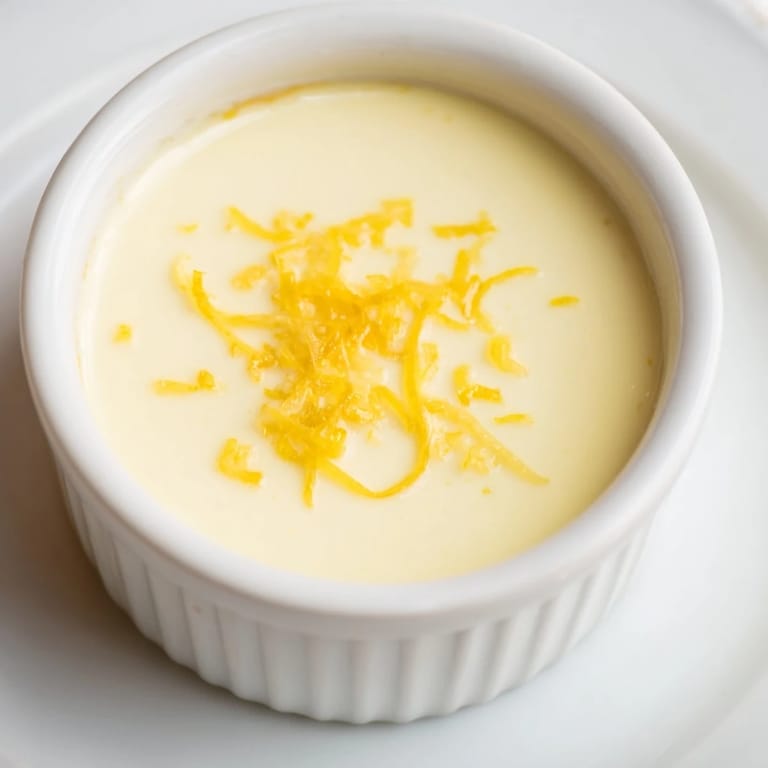
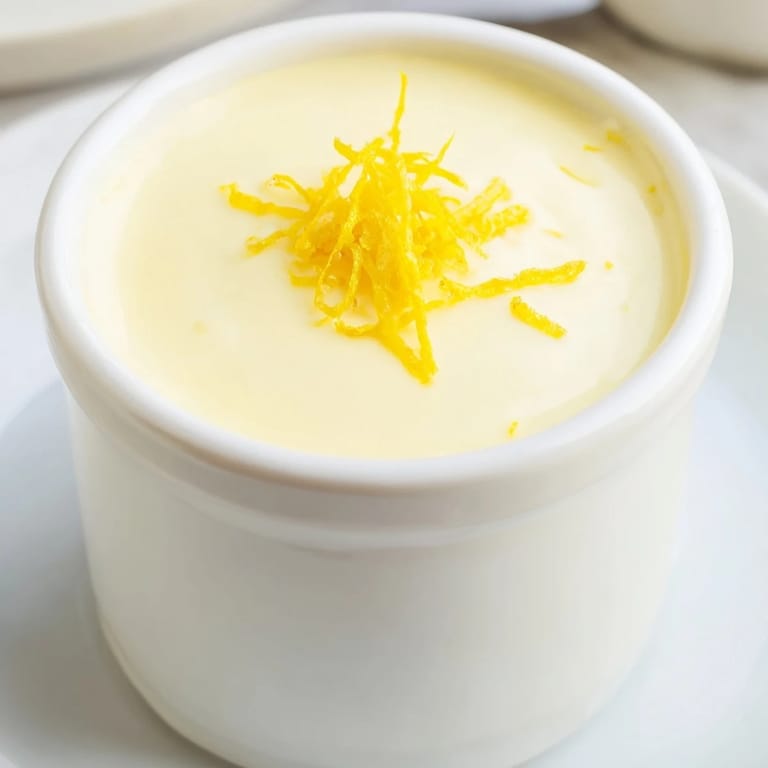
- Pop them in the fridge for at least three hours, or overnight if you've got the time. The posset should have that signature silky, creamy texture—not stiff like mousse, but definitely holding its shape with a gentle wobble.
 Save
Save There was a moment during that dinner party when everyone fell silent over their possets, spoons clinking quietly against glass, and I realized that sometimes the best dishes are the ones that let you taste the ingredients rather than hide them. That three-ingredient simplicity became my favorite thing about it.
Variations and Twists
Once you understand how posset works, the door opens to other citrus flavors. I've made it with lime for a sharper, more tropical feel, and with blood orange when they're in season for something deeper and more complex. Some friends swear by adding a tiny pinch of cardamom to the cream before heating, or even a whisper of vanilla. The formula stays the same; you're just playing with the top notes.
What to Serve It With
Posset is elegant enough to stand alone, but it genuinely sings alongside something crisp and buttery—shortbread, lemon thins, or those thin, crumbly almond biscuits. A few crushed amaretti stirred into the cream just before serving is another trick I picked up, adding a subtle almond bitterness that plays beautifully against the lemon sweetness.
The Magic of Simplicity
What draws me back to this recipe again and again is how it proves that good food doesn't need a long ingredient list or complicated techniques to feel special. When you're standing in your kitchen at the end of a long day with just cream, sugar, and a lemon, you realize that's often all you really need.
- Make sure your lemon is at room temperature for the smoothest thickening action.
- If you want extra elegance, top with a tiny curl of lemon zest or a couple of raspberries just before serving.
- These keep beautifully in the fridge for up to two days, so you can make them ahead without any stress.
 Save
Save This recipe taught me that restraint is its own kind of generosity, and that sometimes the most satisfying dishes are the ones that let quality ingredients speak for themselves. It's become my go-to proof that you don't need much to create something truly memorable.
Recipe Q&A
- → What gives this dessert its creamy texture?
The heavy cream, gently heated with sugar, sets into a smooth and silky texture when chilled for several hours.
- → Can other citrus fruits be used instead of lemons?
Yes, substituting limes or oranges provides a different but equally refreshing citrus twist.
- → How long should the dessert chill before serving?
Chilling for at least 3 hours is recommended to allow the dessert to fully set and develop its texture.
- → Is it possible to add more flavor enhancements?
Adding finely grated lemon zest before heating enhances the citrus aroma and depth of flavor.
- → What are good accompaniments for this dessert?
Pairing it with crisp shortbread or almond cookies complements the creamy and tangy profile nicely.