 Save
Save My first encounter with hojicha panna cotta happened during a quiet afternoon in a small Tokyo café where the dessert arrived almost apologetically, a trembling spoonful of cream barely holding its shape. The aroma of roasted tea hit me before I even tasted it—that comforting, almost toasted warmth that feels like a hug wrapped in silk. I spent the next week trying to recreate that exact moment in my own kitchen, learning that the magic lives in patience and restraint. There's something about the way hojicha's gentle bitterness softens against sweetness that transforms the simplest custard into something that feels genuinely special. Now I make this whenever I need to remember that elegance doesn't require complexity.
I served this to my mother on her birthday last spring, and she went quiet for a moment after that first spoonful—the kind of quiet that tells you something landed right. She asked for the recipe three times during dinner, which meant she was serious about it. Now she makes it for her book club, and I've stopped counting how many friends have asked me for the instructions because it seems to have taken on a life of its own in her kitchen. That's when I knew this recipe was worth holding onto.
Ingredients
- Heavy cream (1 1/2 cups): This is your foundation for that silky, luxurious mouthfeel—don't skimp on quality here because you'll taste the difference in every spoonful.
- Whole milk (1/2 cup): The milk lightens the cream just enough to keep things from feeling too rich, balancing the richness with delicate refinement.
- Granulated sugar (1/4 cup): Measure this carefully because the hojicha brings its own subtle bitterness and you want sweetness to be a gentle suggestion, not a shout.
- Hojicha loose leaf tea (2 tablespoons): Loose leaf gives you better flavor control than tea bags—you can fish out every leaf and nothing clouds your custard.
- Powdered gelatin (2 teaspoons): This is your setting agent, and the amount matters; too little and you'll have a puddle, too much and you lose that tender tremble that makes panna cotta special.
- Cold water (2 tablespoons): Always use the coldest water from your tap to bloom the gelatin properly—warm water will start dissolving it before you're ready.
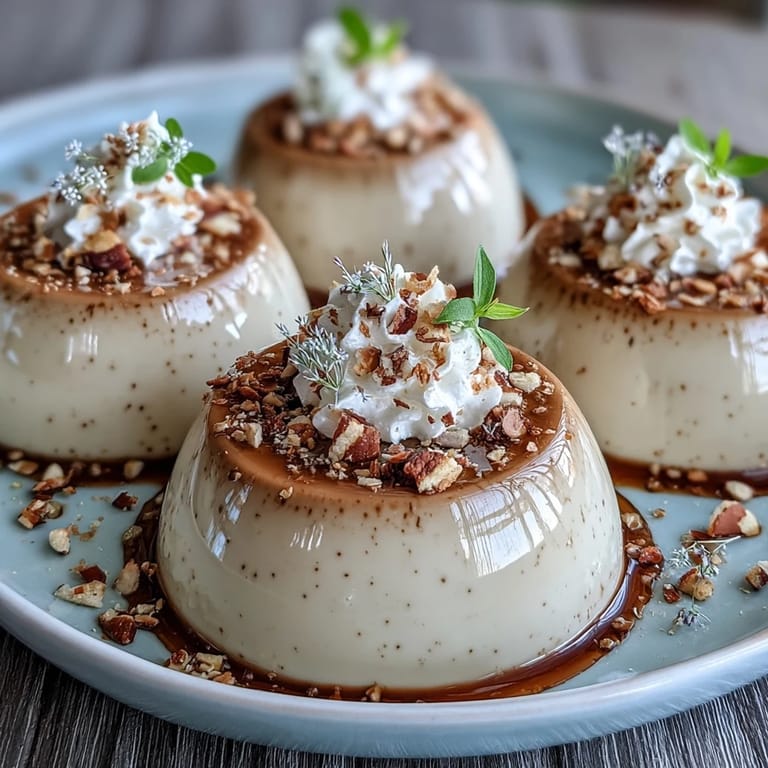
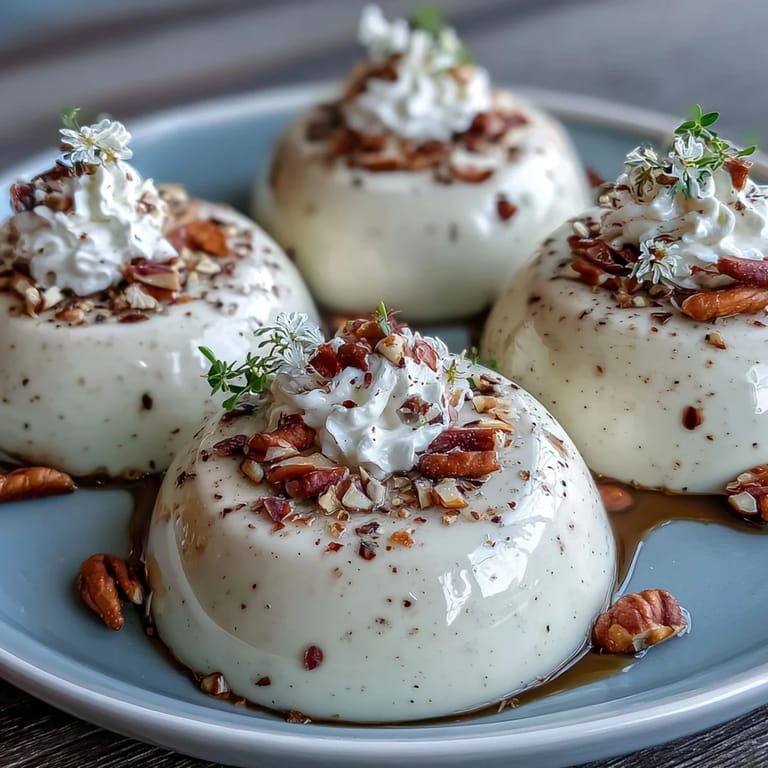
- Whipped cream, shaved chocolate, or roasted nuts for garnish: These are optional but they add a textural moment that elevates the whole experience.
Tired of Takeout? 🥡
Get 10 meals you can make faster than delivery arrives. Seriously.
One email. No spam. Unsubscribe anytime.
Instructions
- Bloom the gelatin:
- Sprinkle the gelatin over cold water in a small bowl and let it sit for exactly five minutes—this step prevents clumping and ensures smooth dissolving later.
- Heat the cream mixture:
- Combine cream, milk, and sugar in a saucepan and warm over medium-low heat until you see wisps of steam rising, watching carefully so it never actually boils because heat breaks down the cream's luxurious texture.
- Steep the hojicha:
- Remove from heat, add your hojicha tea, and let it sit for seven to eight minutes—you'll watch the liquid deepen to a beautiful amber color as the tea releases its gentle roasted character.
- Strain with intention:
- Pour everything through a fine-mesh sieve into a clean bowl, using the back of a spoon to coax every drop of flavor from the tea leaves without pressing so hard that you crush them.
- Rewarm and dissolve:
- Return the strained cream to the saucepan, heat it gently until warm, then whisk in your bloomed gelatin until it disappears completely—listen for the slight change in the sound as the mixture becomes perfectly smooth.
- Pour into vessels:
- Divide evenly between four ramekins or serving glasses, then let everything cool to room temperature on the counter before moving anything into the refrigerator.
- Chill and set:
- Cover with plastic wrap and refrigerate for at least four hours, though overnight is even better if you have the time.
- Unmold or serve:
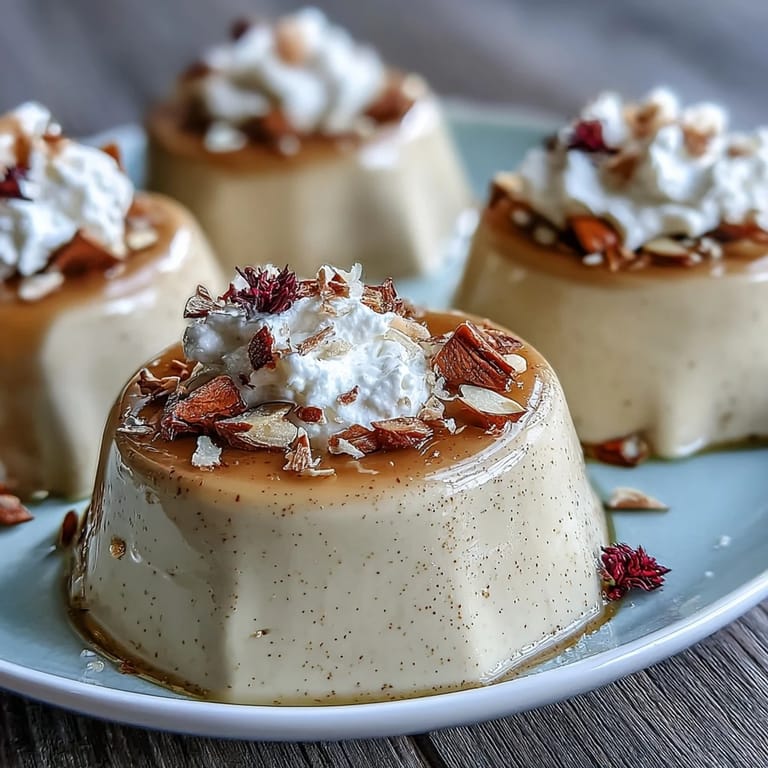
- If you want them unmolded, run a thin knife around the edges and give a gentle invert onto a plate; if you'd rather skip that step, just serve them straight from the glass with your chosen garnish on top.
 Save
Save There was a moment during the refrigeration—around hour three when I couldn't stop opening the fridge to peek at them setting—when I realized this dessert had captured something I'd been chasing in my cooking for years: the ability to make people pause. It's not about being fancy or difficult; it's about creating a texture and flavor combination so unexpected and gentle that everyone at the table has to stop and actually taste it. That's the whole point.
The Hojicha Difference
Hojicha is roasted green tea, which means it has this warm, almost coffee-like depth that somehow feels comforting rather than intense—it's the tea equivalent of a slow sunset. When you steep it in warm cream, it doesn't turn bitter the way other teas might; instead, it settles into the background like a quiet conversation, letting the custard shine while adding complexity that makes people ask what that flavor is. I've noticed that people who think they don't like tea often love this because the hojicha is more about mood than taste.
Make It Your Own
One afternoon I experimented with adding a tiny pinch of sea salt to the cream mixture, and it completely changed how the flavors unfolded—suddenly the hojicha came forward and the sweetness felt more balanced. I've also played with infusing the cream with cardamom or a whisper of vanilla, though honestly, the simplest version remains my favorite. The beauty of panna cotta is how forgiving it is with gentle additions; just remember that restraint is always your friend here.
Serving and Pairing Thoughts
I've learned that these are best served when they're still cool but not ice-cold straight from the fridge—let them sit on the counter for five minutes first so you can actually taste all the layers. A light dusting of finely ground hojicha tea on top echoes the flavor beautifully, while a small dollop of unsweetened whipped cream provides a cloud-like contrast. If you're feeling creative, try pairing these with cold-brewed hojicha or even a delicate Japanese white wine, or just enjoy them with silence and a small spoon.
- Always use a thin, sharp knife and warm water to loosen the edges before unmolding, or honestly, just serve them in the glass and skip the theatrical flip.
- Make these a day ahead if you want the gelatin to set fully and the flavors to mellow even further.
- Store covered in the refrigerator for up to three days, though they're genuinely best within the first two.
 Save
Save This dessert sits somewhere between comfort and sophistication, which is probably why it's become my go-to when I want to mark an occasion without any fuss. Every time I make it, I'm reminded that the smallest ingredients—cream, tea, sugar, gelatin—can create something that tastes like you spent hours in the kitchen, when really you just spent fifteen minutes and a lot of patience.
Recipe Q&A
- → What makes hojicha different from other Japanese teas?
Hojicha is roasted green tea that produces a deep, reddish-brown brew with naturally nutty and caramel notes. Unlike matcha or sencha, hojicha has lower caffeine content and a milder flavor profile that pairs beautifully with creamy desserts without overwhelming the palate.
- → Can I prepare this dessert in advance?
Absolutely—this dessert actually benefits from being made ahead. The custard needs at least 4 hours to set properly, and the flavors continue to develop over time. You can prepare it up to 2 days in advance, keeping it covered in the refrigerator until ready to serve.
- → What's the best way to achieve a smooth texture?
The key is straining the steeped cream mixture through a fine-mesh sieve before adding gelatin. This removes any tea leaves or lumps. Also, avoid boiling the cream at any point—gentle heating prevents scorching and ensures the gelatin dissolves properly for a silky finish.
- → How do I know when the gelatin is fully bloomed?
Sprinkle the powdered gelatin over cold water and let it sit undisturbed for 5 minutes. The mixture will absorb the liquid and transform from dry powder into soft, translucent sheets that break apart easily when touched with a whisk.
- → What beverages pair well with this dessert?
Cold-brewed hojicha creates a harmonious pairing that reinforces the tea flavor without sweetness. For wine lovers, a light Japanese white wine like Koshu or a dry Riesling complements the creaminess. The dessert also balances beautifully with a splash of sparkling sake.
- → Can I substitute agar-agar for gelatin?
Yes, agar-agar works well for a vegetarian version. Use approximately 1 teaspoon of powdered agar-agar instead of 2 teaspoons gelatin. Note that agar-agar sets more firmly and at room temperature, creating a slightly different texture—more jelly-like than the delicate wobble of traditional panna cotta.