 Save
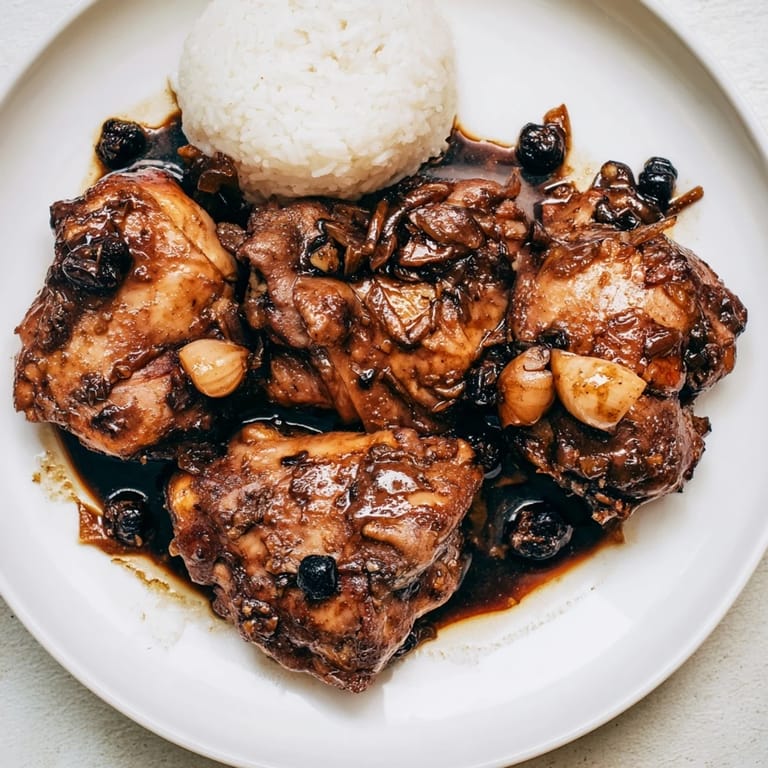
Save My tita taught me chicken adobo on a humid Saturday afternoon, the kind where the kitchen felt like a steam room and every surface gleamed with moisture. She moved through the cooking process with such ease that I couldn't tell if she was following a recipe or just listening to muscle memory. What struck me most wasn't her technique—it was how she'd taste the sauce between sips of coffee, adjusting it like she was tuning an instrument. That's when I realized adobo isn't just a dish; it's a conversation between vinegar and soy sauce, with garlic nodding in agreement.
I made this for my roommate on a Tuesday when she'd had a genuinely awful day, and watching her take that first bite made her go quiet in the way that matters. She asked for seconds without saying anything else, which told me everything. Now whenever I cook adobo, I remember that moment—how food can be a small act of rebellion against a bad day.
Ingredients
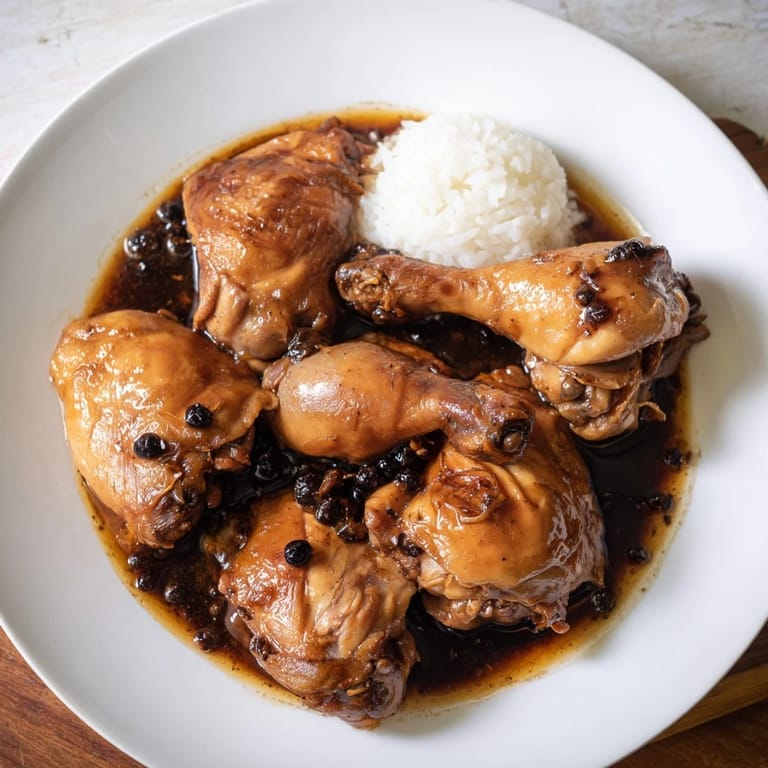
- Chicken thighs and drumsticks: Bone-in, skin-on pieces give you flavor you can't fake; they stay juicy while the skin renders down into something almost crispy.
- Soy sauce: This is your umami foundation, so don't reach for the cheap stuff—it really matters here.
- Cane vinegar: If you find it, use it; white vinegar works but cane has a gentler, almost fruity edge that makes the sauce taste rounder.
- Garlic cloves: Smash them so they release their oils and perfume the entire braise; don't bother mincing.
- Bay leaves: Two is enough to whisper their presence without overpowering anything.
- Black peppercorns: Whole peppercorns stay distinct rather than disappearing into the sauce, giving you little bursts of heat.
- Brown sugar: Optional, but a teaspoon balances the vinegar's sharpness without making the dish sweet.
- Water: Just enough to create braising liquid; too much dilutes your sauce.
- Cooking oil: Use something neutral that can handle medium-high heat without smoking up your kitchen.
Tired of Takeout? 🥡
Get 10 meals you can make faster than delivery arrives. Seriously.
One email. No spam. Unsubscribe anytime.
Instructions
- Build your marinade:
- Combine chicken with soy sauce, vinegar, garlic, bay leaves, peppercorns, and brown sugar in a large bowl, turning everything until the chicken is coated. If you have time, let it sit in the refrigerator—the flavors will sink in deeper, though even 30 minutes makes a difference.
- Prepare and sear:
- Pat the chicken dry with paper towels (this matters for browning), then heat oil in your skillet until it shimmers. Lay the chicken skin-side down and resist the urge to move it; let it sit for a few minutes until the skin turns golden.
- Braise low and slow:
- Pour in the reserved marinade and water, bring it to a boil, then drop the heat to low and cover. Let it simmer gently for 25 minutes, turning the chicken halfway through so it braises evenly.
- Reduce and taste:
- Uncover the pot and let it bubble away for another 10 to 15 minutes—you're looking for the sauce to thicken and deepen in color. Skim any excess fat if you want, taste it, adjust the seasoning, and remember to fish out the bay leaves before serving.
 Save
Save Years later, I brought this dish to a potluck where everyone expected something more complicated, and a stranger asked if it was a family recipe. I said yes, even though I'd only known it for a few years by that point—but that's how adobo works. It becomes family the moment you make it for people who matter.
The Vinegar and Soy Balance
The magic of adobo lives in how vinegar and soy sauce argue and eventually agree. Vinegar cuts through the saltiness and adds brightness; soy sauce brings depth and umami. They're equal partners here, not one overpowering the other. If you taste your sauce and it feels flat, it's usually because one of them needs a little boost—add vinegar if it feels too salty, or soy sauce if it tastes too sharp.
Customizing Your Adobo
The most interesting adobo I ever made came from improvisation—I added a splash of coconut milk near the end because it was on the counter, and suddenly the sauce became silky instead of glossy. Some cooks add dried chilies for heat, which shifts the whole personality of the dish. The beauty of adobo is that it's flexible enough to welcome these changes without losing its identity.
Serving and Storing
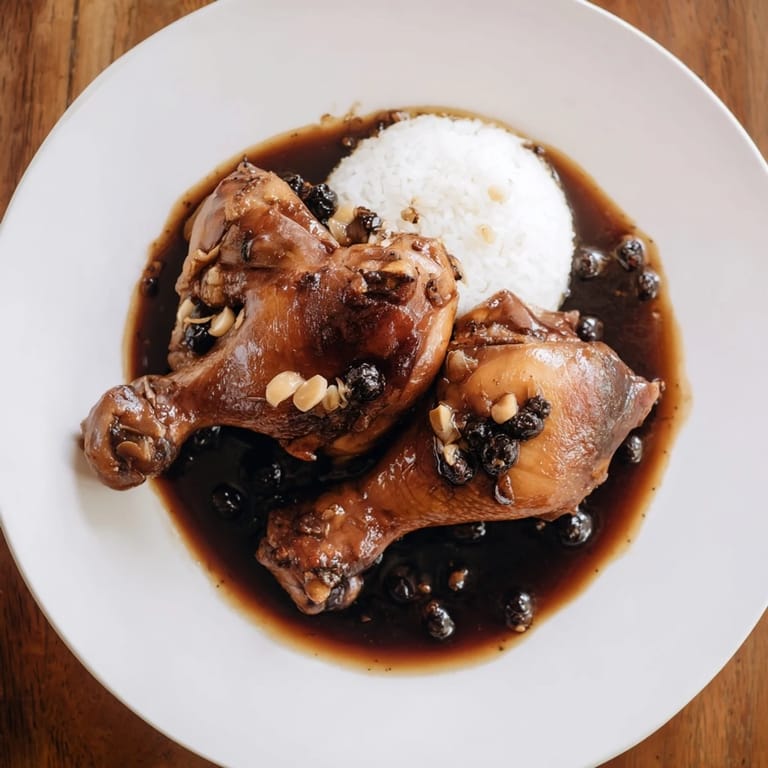
Adobo tastes even better the next day when the flavors have had time to settle, so don't hesitate to make it ahead. Serve it over steaming white rice, letting the sauce soak into every grain. The scallions are optional but worth adding for a hint of freshness that cuts through the richness.
- Store leftovers in an airtight container in the refrigerator for up to four days, and it reheats beautifully on the stovetop.
- You can swap pork for chicken and get an equally satisfying dish that cooks in almost the same time.
- Brown sugar is truly optional, but try it once to see if it adds the subtle sweetness that makes you reach for another spoonful.
 Save
Save Chicken adobo is proof that the simplest dishes often taste the best. Make it, feed it to people you care about, and watch how a bowl of braised chicken and rice becomes more than dinner.
Recipe Q&A
- → What cut of chicken works best for this dish?
Bone-in, skin-on thighs and drumsticks retain moisture and develop rich flavor when braised.
- → Can I marinate the chicken overnight?
Yes, marinating up to 8 hours enhances the depth of flavor as the chicken soaks in the savory sauce.
- → How do I achieve a thicker sauce?
Simmer uncovered in the final stage to reduce liquid and concentrate flavors, thickening the sauce.
- → Is brown sugar necessary in the sauce?
Brown sugar is optional but adds a subtle balance to the tangy and salty elements in the braise.
- → What can I serve alongside this dish?
Steamed white rice is traditional and helps soak up the flavorful sauce perfectly.