 Save
Save There's something about the way ginger and turmeric fill a kitchen that makes you feel like you're doing something right, even before the first spoonful touches your lips. I learned to make this soup during a particularly rough winter when it seemed like everyone around me was catching something, and I got tired of watching people suffer through it with nothing but sympathy. One afternoon, standing in my kitchen with a pounding head, I realized the best thing I could offer wasn't advice but a pot of something warm that actually tasted like care. This became my answer to that.
I made this for my neighbor Marcus when he called to say he wasn't feeling well, and he later told me it was the first meal in three days that didn't taste like cardboard. He asked for the recipe, and when I walked him through it over the phone, I realized how much I'd learned from small adjustments and accidents—like the time I added too much turmeric and discovered I actually liked it that way.
Ingredients
- Boneless, skinless chicken breasts (2, about 400 g): These cook quickly and shred easily, which means more time for the broth to develop flavor and less time spent standing at the stove.
- Olive oil (1 tablespoon): Just enough to get that quick golden sear on the chicken, which adds a subtle depth without making the soup heavy.
- Onion (1 medium, diced): The backbone of the whole thing, sweetening slightly as it softens into the broth.
- Carrots (2 large, peeled and sliced): They soften into tender coins that catch the turmeric's golden color.
- Celery stalks (2, sliced): A quiet flavor that rounds everything out without announcing itself.
- Garlic cloves (4, minced): Fresh garlic matters here, not the pre-minced kind that sits in jars.
- Fresh ginger (1 tablespoon, grated): The real thing brings a warmth that ground ginger can't quite match, and you'll taste the difference.
- Fresh turmeric (1 teaspoon, grated) or ground turmeric (1/2 teaspoon): Fresh turmeric is brighter and less earthy if you can find it, but ground works perfectly fine and lasts longer in your pantry.
- Low-sodium chicken broth (8 cups): The quality of your broth matters more than you'd think, so taste it before you commit to salt levels.
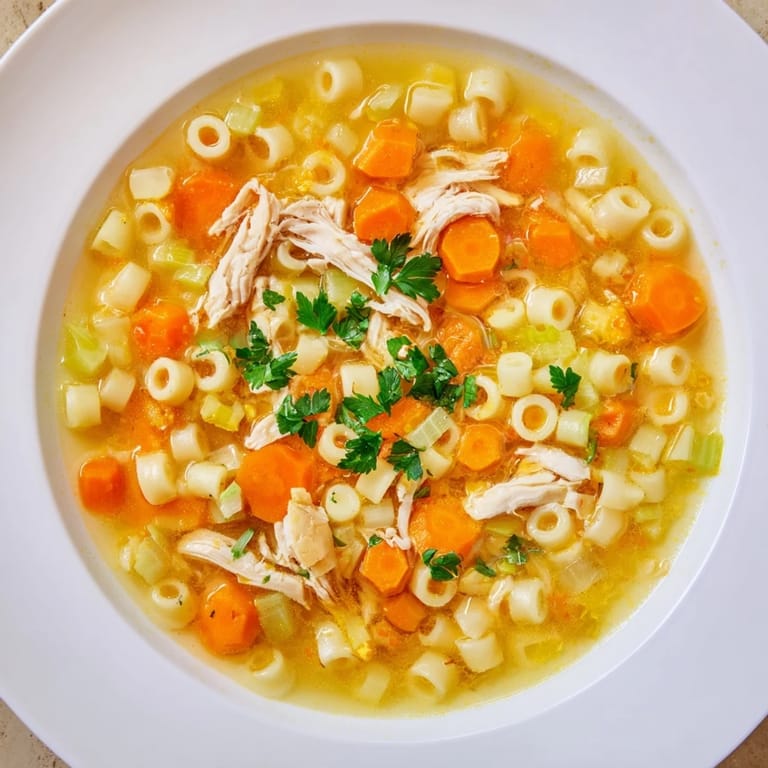
- Ditalini pasta (3/4 cup): Tiny tubes that catch the broth and hold it like little vessels of comfort.
- Bay leaf (1): Leave it in until the very end, then fish it out before serving.
- Salt (1 teaspoon, more to taste): Start conservative and taste as you go.
- Black pepper (1/2 teaspoon): Fresh cracked is nicer if you have it.
- Fresh parsley (2 tablespoons, chopped): Stir it in at the last moment so it stays bright and doesn't lose itself in the heat.
- Lemon juice (1/2 lemon): This is what makes people say the soup tastes alive, so don't skip it or your palate will know something's missing.
Tired of Takeout? 🥡
Get 10 meals you can make faster than delivery arrives. Seriously.
One email. No spam. Unsubscribe anytime.
Instructions
- Sear the chicken until it's golden:
- Heat oil in a large pot over medium heat, then lay the chicken breasts flat and let them sit for 2–3 minutes before flipping. You're not cooking them through, just giving them a light golden crust that will add subtle flavor to the broth as everything simmers together.
- Soften your base vegetables:
- In the same pot, sauté the onion, carrots, and celery for about 5 minutes until the edges start to soften and the onion turns translucent. The pot is still warm, so everything releases easily without sticking.
- Bloom the spices:
- Add garlic, ginger, and turmeric, then stir constantly for just 1 minute until the kitchen fills with a warm, earthy smell that tells you the spices are releasing their oils. This single minute changes everything.
- Build the broth:
- Return the chicken to the pot, pour in the broth, and add the bay leaf, then bring it all to a boil before lowering the heat to a gentle simmer. Cover and let it cook for 20 minutes while the chicken becomes so tender it practically falls apart.
- Shred and return the chicken:
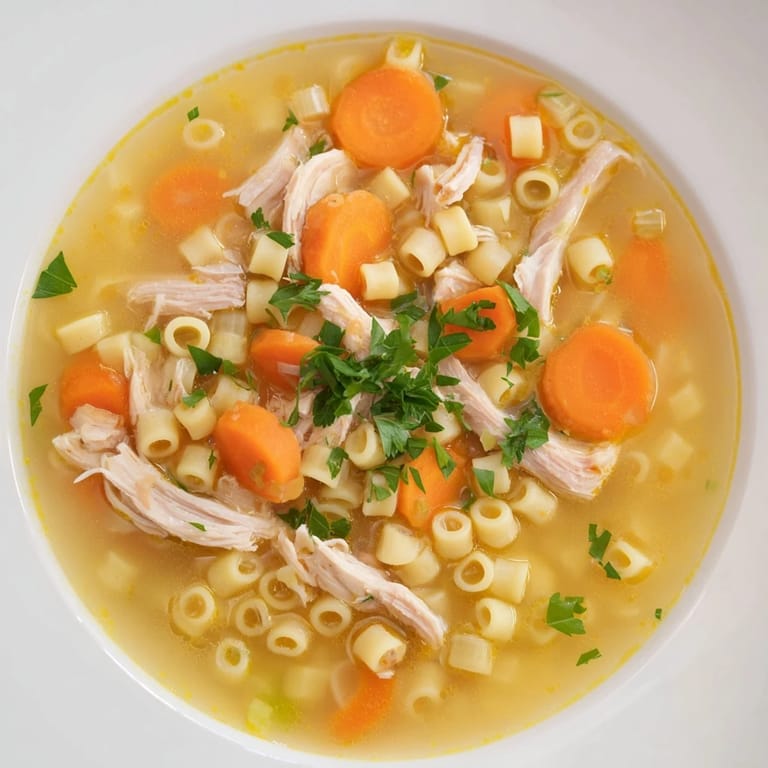
- Remove the chicken to a cutting board and use two forks to pull it into soft shreds, watching how easily it tears when it's been gently cooked. Return it to the pot where it will continue absorbing the flavors around it.
- Cook the pasta through:
- Add the ditalini, salt, and pepper, then let it bubble gently uncovered for 8–10 minutes until the pasta is tender but still holds its shape. The pasta will absorb some broth and thicken the whole thing slightly, which is exactly what you want.
- Finish with brightness:
- Stir in the parsley and lemon juice, taste, and adjust the salt if needed, then remove the bay leaf before serving. The lemon brings everything into focus, making the ginger and turmeric suddenly clearer and brighter.
 Save
Save My sister called me one evening while she was making this soup for her kids, and through the phone I could hear her laugh when one of them asked if it would really make them feel better. She said yes, and meant it in a way that had nothing to do with vitamins and everything to do with the fact that warm, simple food made with attention says something words can't quite capture.
Why Ginger and Turmeric Matter
Both of these ingredients have been used for centuries to support the body's natural defenses, and whether you believe in their full medicinal power or not, there's no denying that a warm cup of broth infused with them feels intentional. The ginger brings a subtle heat that opens your sinuses without overwhelming your palate, while turmeric adds an almost savory sweetness that deepens the whole flavor profile. Together, they transform basic chicken soup into something that feels like it was specifically designed to help you heal.
Making It Your Own
This soup is a foundation, not a strict formula, and some of my best results came from small experiments born out of what I had on hand or what I was craving. One evening I added a handful of fresh spinach in the last few minutes and discovered it wilts perfectly into the broth, adding color and nutrients without changing the essential character of the dish. Another time, a friend brought cayenne pepper and suggested a pinch, which gave the whole pot a subtle warmth that lingered pleasantly.
Serving and Storage
This soup tastes even better the next day when the flavors have had time to get to know each other, so make extra and refrigerate it in an airtight container for up to four days. Warm it gently on the stove over medium heat, adding a splash of broth if it's thickened more than you'd like, and always taste before serving to adjust the seasoning one more time. It also freezes beautifully—just skip the pasta if you're freezing, cook that fresh when you thaw and reheat the broth, so the texture stays exactly right.
- Pair it with crusty bread that you can tear and dunk without apology.
- A squeeze of fresh lemon juice at the table lets everyone brighten their own bowl.
- Serve it hot enough to feel therapeutic but cool enough that you can actually taste it.
 Save
Save There's a particular kind of quiet satisfaction that comes from offering someone a bowl of soup you made yourself, knowing that every choice you made was made with them in mind. This one has taught me that the simplest gestures often carry the most weight.
Recipe Q&A
- → What makes ginger and turmeric important in this dish?
Ginger and turmeric add warm, earthy flavors and are traditionally valued for their anti-inflammatory properties, enhancing both taste and health benefits.
- → Can I use a different pasta instead of ditalini?
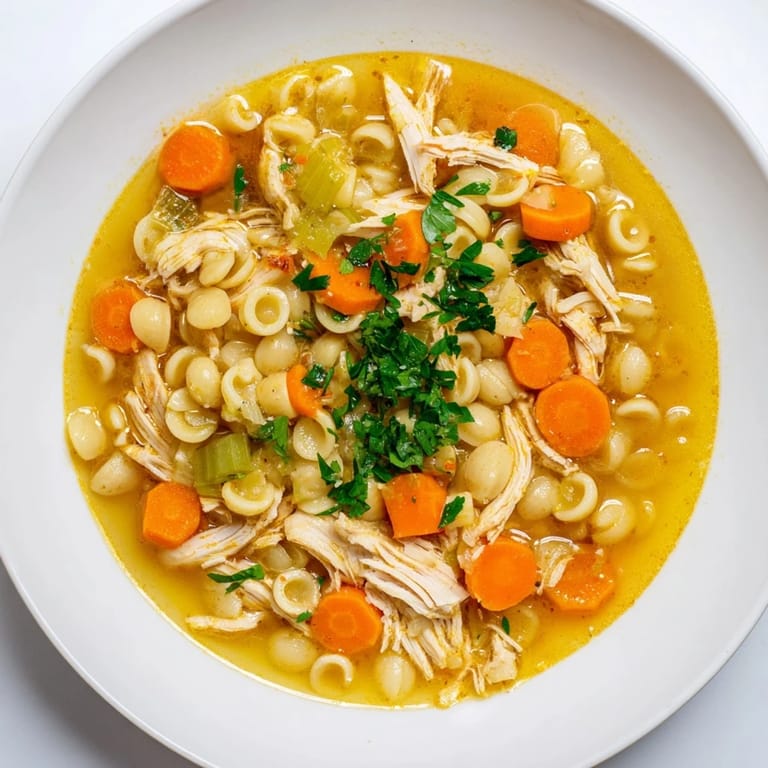
Yes, small pastas like orzo or small shells work well and maintain the comforting texture of the dish.
- → How do I ensure the chicken stays tender?
Sear the chicken breasts briefly before simmering, then shred after cooking to keep the texture moist and delicate.
- → Is it possible to adjust the seasoning for more spice?
Adding a pinch of cayenne or freshly ground black pepper can elevate the warmth without overpowering the delicate flavors.
- → What are good serving suggestions to complement this dish?
Pairing with crusty bread or a dry white wine enhances the meal, adding texture and balance.